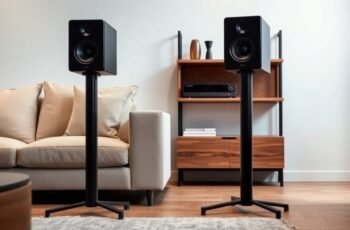
When evaluating bookshelf speakers, understanding the differences in latency and sound quality between Bluetooth and wired options is essential for ideal performance. While wired setups typically offer lower latency and higher fidelity, wireless connections provide convenience but may introduce delays and sound compression. These technical nuances can greatly impact your listening experience, especially in critical applications. To determine the best fit for your environment, it’s important to take into account how these factors influence overall audio performance.
Key Takeaways
- Wired speakers typically have minimal latency, ensuring better synchronization with audio sources compared to Bluetooth.
- Bluetooth sound quality can be affected by compression and interference, impacting audio clarity and tonal detail.
- Wired connections provide consistent, lossless sound without disruptions caused by wireless interference.
- Bluetooth latency varies with signal quality and environment, potentially causing noticeable audio delays.
- Proper setup and room acoustics significantly influence sound quality and latency performance for both wired and wireless options.
How Do Bluetooth and Wired Bookshelf Speakers Differ in Sound Quality?
When comparing Bluetooth and wired bookshelf speakers, the primary distinction lies in their sound quality, which is influenced by the transmission method. Wired speakers generally offer superior sound clarity due to direct, lossless connections that minimize signal degradation. This results in more accurate audio reproduction, especially in complex soundscapes. Bluetooth speakers, on the other hand, use compressed wireless transmission, often impacting frequency response and introducing subtle distortions. While modern Bluetooth technology improves sound fidelity, it still tends to have a narrower frequency response compared to wired options. This limits the reproduction of high and low frequencies, reducing overall sound precision. Consequently, wired speakers typically provide a more transparent and detailed listening experience, making them preferable for audiophiles prioritizing sound clarity.
Understanding Latency: Why It Matters for Audio Syncing
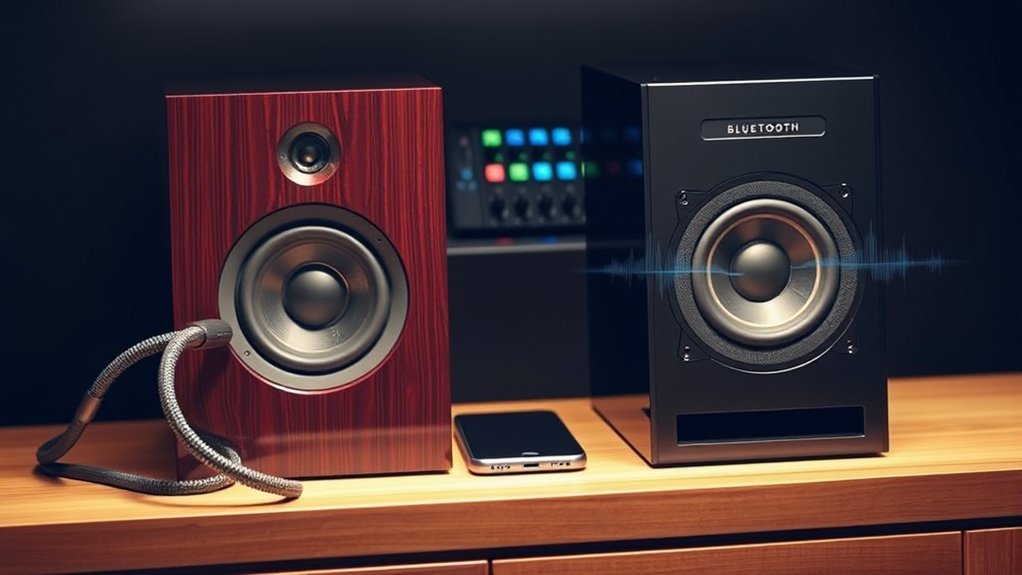
Latency directly affects audio synchronization, causing delays between the source and the sound output, which can disrupt viewing or gaming experiences. Understanding the causes of latency, such as transmission protocols and processing times, is essential for evaluating speaker performance. By examining these factors, we can better assess their impact on audio quality and user experience.
Impact on Audio Sync
Audio sync is crucial for an immersive listening experience, and understanding how different speaker connections influence timing is essential. Wireless interference can introduce unpredictable latency in Bluetooth speakers, causing audio delay that disrupts synchronization with visual cues or other audio sources. This delay varies depending on signal quality and environmental interference, impacting overall sound coherence. Conversely, wired speakers typically offer minimal latency, ensuring precise sync. Power consumption also plays a role; Bluetooth receivers require continuous energy, which can marginally affect processing speed and latency stability. Wired connections bypass these issues, providing consistent timing. Ultimately, wireless interference and power consumption factors considerably influence audio sync, making wired speakers more reliable for applications demanding tight synchronization, such as gaming or multi-channel setups.
Causes of Latency
Understanding what causes latency helps clarify why different connection methods impact audio sync. In wireless Bluetooth systems, interference issues from other electronic devices or Wi-Fi networks can introduce delays, as signals must be processed and retransmitted to maintain a stable connection. Additionally, Bluetooth devices often have higher power consumption, which influences their processing speed and latency levels. Power constraints can lead to longer buffering times to conserve energy, further increasing latency. Conversely, wired connections bypass these issues entirely, offering direct, low-latency data transfer. Recognizing these causes allows us to understand why Bluetooth often exhibits higher and more variable latency compared to wired setups, which deliver more consistent and immediate audio transmission essential for precise audio syncing.
Comparing Connectivity and Convenience for Daily Use
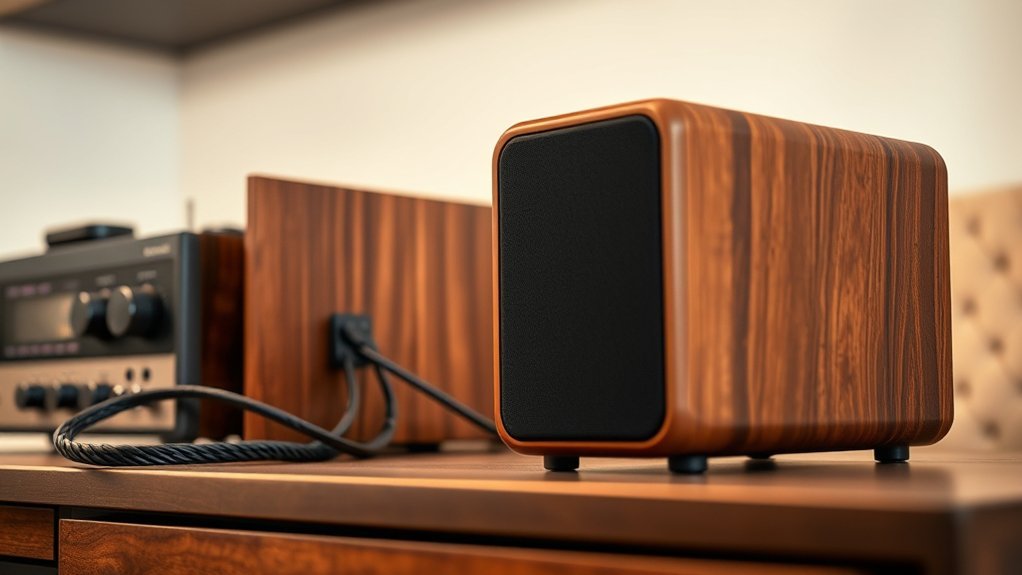
While wired bookshelf speakers offer a straightforward and reliable connection, Bluetooth models prioritize ease of use and flexibility in daily setups. Bluetooth speakers eliminate the need for physical cables, enabling quick pairing with various devices, which enhances user convenience. Battery life is a critical factor, as portable Bluetooth models depend on rechargeable batteries that determine usage duration between charges. Portability is a key advantage, allowing placement flexibility and easy transportation for different environments. Wired speakers, in contrast, require fixed connections to audio sources, limiting mobility but providing consistent power and signal stability. For daily use, Bluetooth’s wireless nature simplifies setup and repositioning, but wired options excel in stable, high-fidelity audio, especially in stationary configurations.
Which Speaker Type Offers Better Value and Durability?
When evaluating value and durability, wired bookshelf speakers generally offer a better long-term investment due to their construction and fewer vulnerable components. In a durability comparison, wired models tend to withstand wear and environmental factors more effectively, as they lack wireless modules and associated circuitry prone to failure. From a cost efficiency perspective, wired speakers often have lower initial purchase prices and reduced maintenance costs, since they don’t require software updates or battery replacements. Additionally, their simpler design minimizes potential points of failure, extending lifespan. While Bluetooth speakers offer convenience, their added electronics and batteries can compromise long-term reliability and increase total ownership costs. Consequently, wired bookshelf speakers provide superior durability and cost efficiency, making them a more sustainable choice for users prioritizing longevity and value.
How to Choose Based on Your Listening Environment and Setup
Selecting the right bookshelf speakers depends considerably on your listening environment and the setup you have in place. Room acoustics play a vital role, affecting sound clarity, bass response, and overall tonal balance. Hard surfaces reflect sound waves, causing echo and muddiness, while soft furnishings absorb frequencies, influencing speaker performance. Proper speaker placement is essential; positioning speakers at ear level, equidistant from walls, and avoiding corners minimizes boundary interference and enhances stereo imaging. Consider the room size: smaller spaces may benefit from close placement to reduce sound diffusion, whereas larger rooms require strategic spacing for uniform sound distribution. In both Bluetooth and wired setups, understanding your environment guarantees the best sound quality and latency management, enabling a tailored listening experience that leverages your specific spatial acoustics.
Common Issues With Bluetooth and Wired Speakers and How to Fix Them
Connection dropouts and audio sync issues are common challenges with both Bluetooth and wired speakers. These problems often stem from interference, signal degradation, or improper setup. Understanding the root causes enables us to apply targeted solutions for stable, high-quality audio performance.
Connection Dropouts
Connection dropouts can intermittently disrupt audio playback, impacting the listening experience. These interruptions often result from interference interference sources, which compromise connection stability. Bluetooth signals operate in the 2.4 GHz band, making them susceptible to interference from Wi-Fi networks, microwaves, or other wireless devices. Wired speakers, while generally more stable, can still experience dropouts due to loose connections or damaged cables. To mitigate these issues, we recommend ensuring a clear line of sight for Bluetooth devices and minimizing interference sources nearby. For wired setups, regularly inspect and secure connections and replace damaged cables. Improving connection stability involves optimizing device placement and reducing potential interference, which collectively help maintain a consistent audio stream and prevent dropouts.
Audio Sync Issues
Audio synchronization issues are a common challenge faced by both Bluetooth and wired bookshelf speakers, often disrupting the listening experience. Wireless interference from other devices can cause latency fluctuations in Bluetooth speakers, leading to audio delays. Proper speaker placement is critical; placing speakers too close to wireless routers or electronic devices increases interference risk. For wired speakers, incorrect cable connections or long cable runs can introduce phase delays, causing sound misalignment. To fix these issues, we recommend optimizing speaker placement away from potential sources of wireless interference and ensuring cables are securely connected with minimal length. For Bluetooth speakers, updating firmware and switching to less congested wireless channels can improve sync. Regularly testing and adjusting setup helps maintain precise audio alignment.
Final Tips: Making the Best Choice for Your Audio Needs
To select the most suitable bookshelf speakers for your setup, it’s essential to evaluate your specific listening environment and usage priorities. Consider potential wireless interference, which can cause signal disruptions in Bluetooth models, impacting audio clarity and synchronization. Wired speakers eliminate such issues but may limit placement flexibility. Additionally, assess power consumption: Bluetooth speakers often require more energy due to wireless transmission, which can affect long-term operational costs. Wired options typically consume less power and offer consistent performance. Think about your environment’s layout, your tolerance for interference, and your energy efficiency goals. Prioritize sound quality, latency, and connectivity stability to guarantee your choice aligns with your listening preferences and technical needs. This approach ensures ideal audio performance tailored to your setup.
Frequently Asked Questions
Can Bluetooth Speakers Support Multi-Room Audio Setups?
Yes, Bluetooth speakers can support multi-room audio setups through wireless synchronization and speaker pairing, but compatibility varies by device. For seamless experience, choose speakers with advanced multi-room features that prioritize stable wireless synchronization.
Do Wired Speakers Require Additional Amplification?
Wired speakers typically require an amplifier, depending on their power handling capacity, to deliver adequate volume and clarity. Proper amplifier matching guarantees ideal performance, prevents damage, and addresses specific impedance and power requirements for consistent sound quality.
How Does Interference Affect Bluetooth Audio Quality?
Interference acts like static in a radio signal, disrupting the harmony, causing wireless interference that leads to signal degradation. We observe this impact as diminished audio quality, making clear, stable Bluetooth connections essential for peak sound performance.
Are There Any Health Concerns With Bluetooth Radiation?
We believe Bluetooth radiation poses minimal health risks, as exposure levels are well below safety thresholds established by regulatory agencies. Nonetheless, ongoing research continues to monitor any potential long-term effects of radiation exposure from wireless devices.
Can I Upgrade Wired Speakers for Better Performance?
Yes, upgrading wired speakers improves performance by enhancing speaker durability and sound quality. We recommend evaluating wiring complexity beforehand, as better components may require more intricate setup, but the resulting audio fidelity justifies the effort.
Conclusion
Ultimately, choosing between Bluetooth and wired bookshelf speakers depends on your priorities. If you value precise sound and minimal latency, wired options are the way to go. For convenience and flexibility, Bluetooth offers practicality, though with some compromise in audio sync. Remember, “you get what you pay for”—investing in quality wiring or wireless technology guarantees better performance and longevity. Make your choice based on your environment, listening habits, and long-term needs.