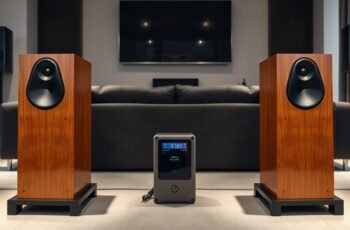
When choosing between speaker stands and shelves, we recognize that each option offers distinct advantages and limitations impacting sound quality, stability, and integration within a space. Our analysis considers technical factors such as vibration isolation and placement flexibility, along with aesthetic and budget considerations. Understanding these nuances can guide you toward the most suitable solution, but the decision often hinges on priorities that may not be immediately apparent—making it essential to explore each aspect thoroughly.
Key Takeaways
- Speaker stands provide better vibration isolation and stability, improving sound quality compared to shelves.
- Shelves are often more affordable and easier to install but may transmit vibrations that degrade audio performance.
- Stands allow precise speaker height positioning, enhancing acoustic accuracy, whereas shelves may require additional adjustments.
- Shelves offer more integrated, space-efficient aesthetic options suitable for various room styles.
- Stands typically ensure better cable management and reduce surface reflections than standard shelves.
How Do Speaker Stands Enhance Sound Quality?
Speaker stands considerably improve sound quality by optimizing the speaker’s placement at ear level, which minimizes unwanted distortions caused by vibrations and improper positioning. Proper speaker positioning ensures that sound waves are directed accurately toward the listener, enhancing clarity and stereo imaging. Elevated placement reduces the impact of surface reflections and standing waves, contributing to a more natural soundstage. Additionally, speaker stands facilitate better acoustic treatment by isolating the speakers from surface vibrations, preventing interference and resonance. This isolation diminishes low-frequency muddiness and improves transient response. Overall, using speaker stands allows for precise control over positioning and acoustic environment, resulting in a significant boost in sound fidelity and realism. Properly implemented, they are essential for achieving ideal listening accuracy.
What Are the Advantages of Using Shelves for Speakers?
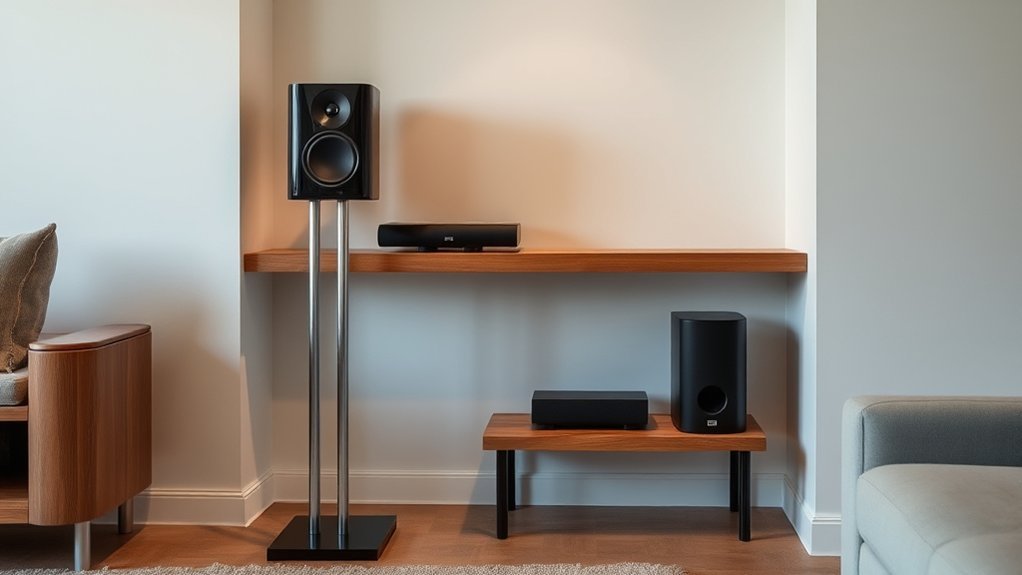
Shelves offer a practical alternative for positioning speakers, especially in environments where dedicated stands might not be feasible. Their aesthetic versatility allows seamless integration into various interior designs, enabling users to select materials and finishes that complement existing decor. This adaptability enhances the overall visual appeal of a space without sacrificing functionality. Additionally, shelves are often constructed from durable materials such as wood, metal, or composite, ensuring long-term stability and resistance to wear. Unlike specialized stands, shelves can support heavier or larger speakers, providing a sturdy platform that maintains consistent positioning. This combination of aesthetic flexibility and material durability makes shelves a compelling choice for those prioritizing both performance and interior harmony in their audio setup.
How Easy Is It to Install and Adjust Speaker Stands?
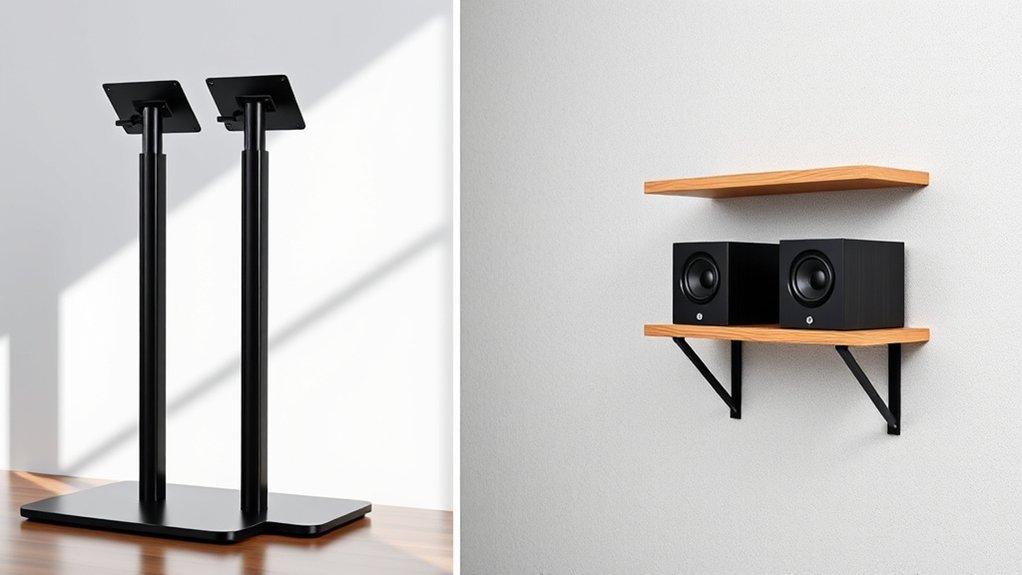
We find that speaker stands generally involve straightforward assembly with clear instructions, but the complexity varies depending on the model. Adjustment mechanisms, such as threaded rods or sliding platforms, differ in ease of use and precision. Evaluating these factors helps determine how efficiently we can install and fine-tune speaker height and orientation.
Ease of Assembly
Evaluating the ease of assembly for speaker stands involves examining the complexity of their installation process and the adjustability features. Generally, stands with straightforward assembly require minimal tools and time, facilitating quicker setup. Key considerations include how well the stand manages cables, which impacts both safety and aesthetics, and the weight capacity, determining if the stand can support heavier speakers without additional reinforcement.
- Quick-to-assemble components reduce installation time
- Clear, detailed instructions promote ease of use
- Modular parts simplify cable management setup
- Sturdy construction ensures stability at various weight capacities
Adjustment Mechanisms
How easily can we install and adjust speaker stands? The adjustment mechanisms are vital for ideal sound positioning. Many stands feature threaded rods or telescoping columns, allowing precise height adjustments, but some may require tools, impacting ease of use. Cable management options vary; integrated channels or clips help keep wiring organized, simplifying setup and reducing clutter. The weight capacity of the stands determines stability during adjustments—overloading can compromise safety and sound quality. Locking mechanisms like knobs or clamps ensure the speaker stays securely in position once adjusted, but their effectiveness varies. Overall, stands with user-friendly adjustment mechanisms facilitate quick, secure setup, while robust cable management and appropriate weight capacity contribute to long-term stability and ease of fine-tuning.
Can Shelves Fit Different Room Sizes and Styles?
Shelves are versatile furniture pieces that can adapt to a variety of room sizes and styles, provided their dimensions and design elements are carefully matched to the space. When considering furniture integration, flexibility depends on selecting appropriately scaled units that complement existing decor. Wall mounting enhances adaptability, allowing shelves to be positioned at ideal heights and configurations, regardless of room size. Factors influencing fit include:
Shelves adapt seamlessly to any space when carefully matched in size, style, and mounting options.
- Adjustable shelf heights to accommodate different objects
- Material and finish matching room aesthetics
- Size and depth aligning with available wall space
- Design style from minimalist to ornate, ensuring visual coherence
Such considerations ensure shelves can seamlessly integrate into diverse environments, balancing functionality with aesthetic harmony. Proper planning guarantees that shelves serve both practical and stylistic purposes across various room sizes and styles.
Which Option Offers Better Stability and Vibration Isolation?
When comparing the stability and vibration isolation of speaker stands versus shelves, it becomes clear that their designs and placement considerably influence performance. Speaker stands are engineered for superior stability, often featuring adjustable spikes or wide bases that minimize movement. This stability comparison shows that stands reduce vibrations more effectively, primarily through dedicated vibration damping materials and isolation pads. Shelves, however, may lack these specialized features, making them prone to transfer vibrations from the environment or supporting structure. Consequently, stands tend to offer better vibration damping, resulting in clearer sound and fewer distortions. Overall, for stability and vibration isolation, speaker stands outperform shelves, especially in environments where minimizing external vibrations and ensuring consistent speaker positioning are priorities.
Are Shelves More Cost-Effective Than Speaker Stands?
Although shelves generally cost less upfront than dedicated speaker stands, their overall cost-effectiveness depends on factors like material quality, installation complexity, and long-term durability. When conducting a cost comparison, consider these aspects:
- Material durability impacts longevity and replacement costs.
- Installation complexity affects labor expenses and setup time.
- Adjustability influences the need for additional accessories or modifications.
- Long-term performance determines whether the initial savings outweigh potential replacement or maintenance costs.
Ultimately, budget considerations must account for not just initial purchase price but also ongoing expenses related to stability, vibration control, and adaptability. While shelves may seem more economical initially, evaluating these factors ensures a thorough understanding of their true cost-effectiveness relative to speaker stands.
How Do Aesthetics Influence Your Choice Between Stands and Shelves?
Aesthetics considerably shape our selection by influencing the visual impact and how well each option aligns with existing decor. Space and layout considerations also play a vital role, as the form factor affects overall harmony and functionality. Ultimately, personal taste guides preferences, balancing style with practical integration in the environment.
Visual Impact and Style
The visual impact and style of speaker stands versus shelves play a crucial role in shaping the overall aesthetic of a space. Aesthetic considerations often hinge on how well these options integrate with existing decor, emphasizing factors like color coordination and material options. Speaker stands typically offer a sleek, minimalist profile that can complement modern interiors, especially when color and finish match the room’s palette. Shelves, on the other hand, provide a more integrated look, blending with furniture or wall treatments through varied materials. Material choices—such as wood, metal, or glass—affect texture and visual weight, influencing perceived style. Key considerations include:
- Compatibility of color schemes
- Material contrast or harmony
- Visual weight distribution
- Design consistency with decor
Space and Layout Compatibility
When considering space and layout, the choice between speaker stands and shelves hinges on how well each option integrates with the room’s spatial configuration and functional zones. Stands offer precise placement, enabling ideal acoustic treatment by positioning speakers at ideal ear level, reducing reflections, and minimizing sound distortion. Shelves, however, may require strategic positioning to avoid obstructing pathways or cluttering the space. Wiring management is also essential; stands typically feature built-in channels for cleaner, safer cable routing, whereas shelves might need discreet solutions to prevent visual clutter and tripping hazards. The layout’s constraints influence whether the flexibility of stands or the space-efficiency of shelves better supports both acoustic performance and overall room organization. Ultimately, compatibility depends on balancing spatial constraints with technical needs.
Personal Taste and Preferences
Choosing between speaker stands and shelves often comes down to personal taste, as visual harmony can considerably influence the overall room design. Aesthetic preferences, such as color choices and material selections, play a pivotal role in this decision. For instance, some prefer sleek, monochromatic stands that blend seamlessly, while others favor bold, contrasting shelves for visual impact. Material choices—metal, wood, or glass—also reflect individual style and influence the room’s ambiance. The decision hinges on how these elements complement existing decor and personal aesthetics.
- Color preferences dictate whether the furniture becomes a focal point or a subtle complement.
- Material choices affect the tactile feel and visual cohesion.
- Design style (modern, rustic, minimalist) guides the overall aesthetic.
- Personal taste guarantees the setup aligns with individual expression and comfort.
What Factors Should You Consider to Decide the Best Solution for Your Space?
Deciding between speaker stands and shelves hinges on evaluating several key factors that influence both functionality and space optimization. Material durability is critical; stands made from high-quality, vibration-resistant materials can enhance sound clarity and longevity, while shelves must support weight without warping or degradation. Budget considerations also play a significant role; speaker stands often involve higher upfront costs due to specialized materials and design, whereas shelves can be more economical but may compromise stability or acoustic performance. Additionally, we should assess available space, aesthetic integration, and ease of installation. Ultimately, the choice depends on balancing these factors—durability guarantees consistent performance, while budget constraints shape feasible options. A thorough analysis of these elements helps us select the most effective solution tailored to our specific environment.
Frequently Asked Questions
Do Speaker Stands Improve Overall Home Theater Audio Experience?
Yes, speaker stands enhance home theater audio by optimizing speaker placement, which improves sound clarity and directionality. Proper positioning reduces vibrations and echoes, delivering a more precise and immersive listening experience for viewers.
Can Shelves Support Larger or Heavier Speakers Safely?
Shelves can support larger speakers if they have a high weight capacity and are made from durable materials, but they might risk instability or damage under extreme weight, unlike specialized stands designed for heavy, high-performance audio equipment.
Are There Specific Room Acoustics Considerations for Stands Versus Shelves?
Room acoustics favor stands over shelves, as stands minimize reflections and acoustic treatment issues, reducing room reflection problems. Shelves tend to cause more sound diffraction and reflection, potentially compromising sound clarity and requiring additional acoustic adjustments.
How Does Speaker Height Impact Listening Comfort and Sound Quality?
Like Goldilocks, we find perfect speaker height vital for ideal listening ergonomics and sound quality; proper speaker positioning minimizes distortion, enhances clarity, and guarantees comfort, making your audio experience both precise and enjoyable.
What Maintenance Is Required for Speaker Stands Compared to Shelves?
We find speaker stands demand regular dust cleaning and checking material durability to maintain stability, while shelves require minimal upkeep beyond occasional dusting; both need routine inspection to guarantee sound quality and structural integrity over time.
Conclusion
Ultimately, the choice between speaker stands and shelves hinges on your room’s acoustic demands and aesthetic preferences. Imagine your ideal listening environment—crisp clarity, minimal vibrations, seamless integration. Will you prioritize precision and stability or versatility and cost-efficiency? As you weigh these factors, remember that the right decision could transform your listening experience, revealing nuances you never knew existed. The perfect setup is within reach—are you ready to make it happen?