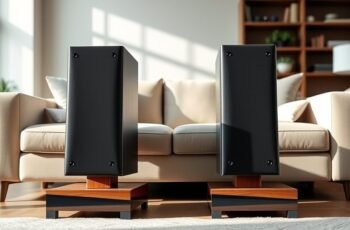
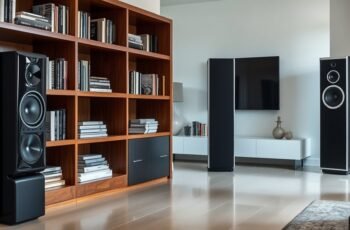
Imagine selecting a speaker is like choosing a vehicle—some come with built-in engines, while others require an external power source. As we compare powered and passive bookshelf speakers, we find that each has distinct advantages and limitations that can substantially impact sound quality, setup, and flexibility. Understanding these differences is essential for making an informed choice tailored to your audio preferences and technical expertise. Let’s explore what makes each type suitable for different environments and users.
Key Takeaways
- Powered speakers have built-in amplification, offering easier setup and more compact design, ideal for casual or straightforward setups.
- Passive speakers require external amplification, providing greater customization and flexibility for audiophiles and complex audio systems.
- Powered speakers simplify installation but may consume more power and have limited sound customization options.
- Passive speakers allow precise placement and tuning but need technical knowledge for optimal system integration.
- Both types deliver high-quality sound; the best choice depends on user preferences, setup complexity, and desired system flexibility.
How Do Powered and Passive Bookshelf Speakers Differ in Design?
While both powered and passive bookshelf speakers serve the same fundamental purpose of delivering sound, their internal designs differ considerably. Powered speakers integrate amplification components directly within the enclosure, creating a streamlined design that often emphasizes compactness and modern aesthetics. Their material construction typically involves sealed enclosures with built-in crossovers and amplifiers, reducing external wiring and components. Conversely, passive speakers lack internal amplification, relying on external amplifiers, which influences their design aesthetics to favor modularity and customization. Material construction in passive models often emphasizes durable cabinet materials like MDF or wood veneer to optimize acoustic performance. These structural differences impact not just appearance but also ease of setup and potential sound quality, with powered models offering a cohesive design and passive models allowing more flexibility for system integration.
What Are the Main Advantages of Powered Bookshelf Speakers?
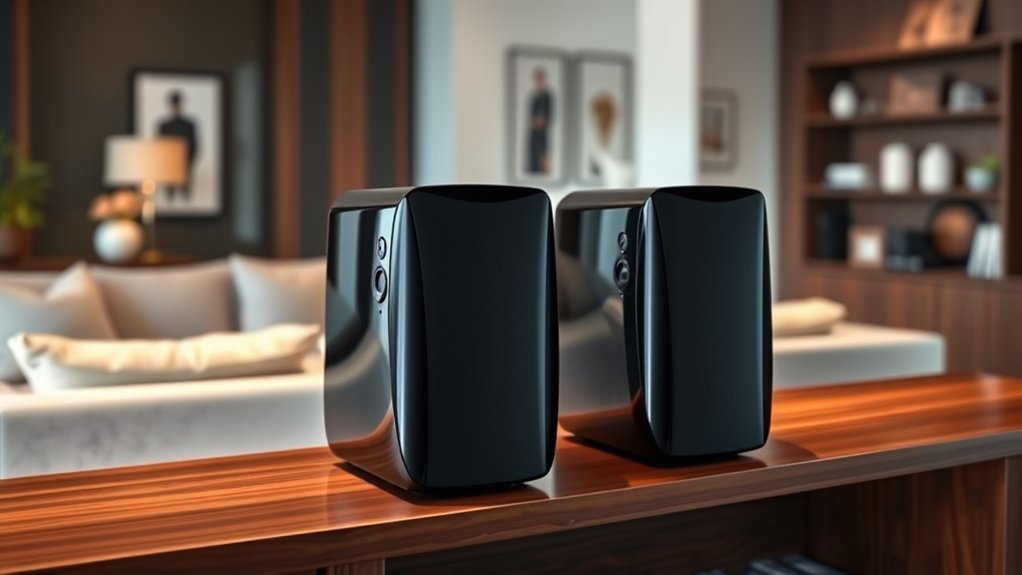
Powered bookshelf speakers offer several notable advantages rooted in their integrated design. This setup simplifies speaker placement, as built-in amplifiers reduce the need for external components, allowing for more flexible positioning. The design enhances acoustic flexibility, enabling precise tuning of sound parameters directly within each speaker, which improves overall audio clarity. Additionally, the self-contained nature streamlines setup and reduces cable clutter, facilitating easier customization of speaker placement for ideal sound distribution.
| Advantage | Explanation | Impact |
|---|---|---|
| Simplified setup | Built-in amplification eliminates external equipment | Easier speaker placement and integration |
| Acoustic flexibility | Adjustable internal tuning for perfect sound | Enhanced audio clarity and balance |
| Reduced clutter | Fewer cables and external devices | Cleaner, more adaptable listening space |
What Are the Drawbacks of Powered Bookshelf Speakers?
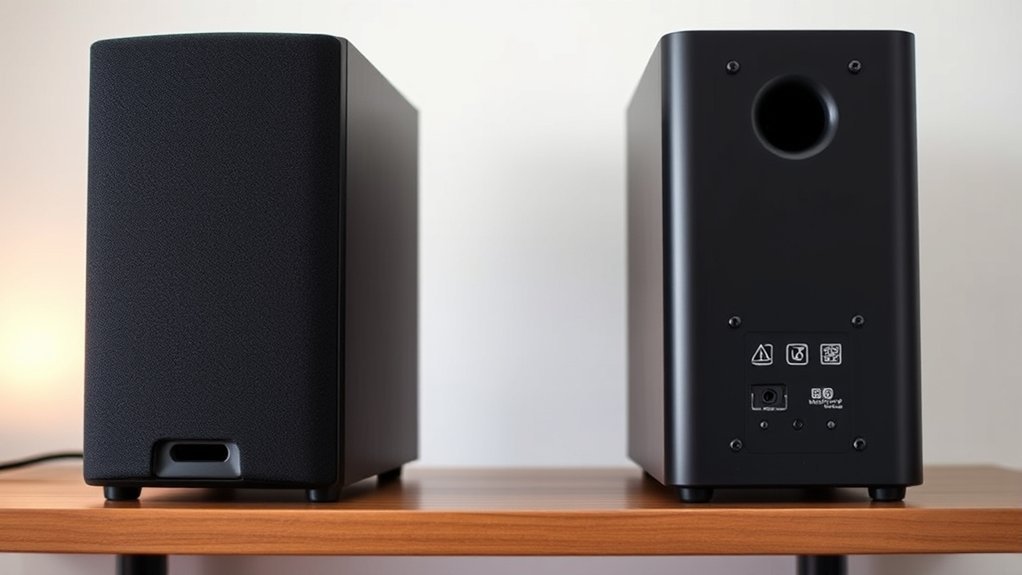
Powered bookshelf speakers often consume more electricity than passive models, which can lead to higher energy costs over time. They also carry a risk of overheating if not properly ventilated, potentially damaging internal components. Additionally, their built-in amplification limits customization, restricting users who prefer tailored sound setups.
Increased Power Consumption
Because they contain built-in amplifiers, powered bookshelf speakers inherently require a continuous supply of electrical energy, leading to higher energy consumption compared to passive models. This increased power demand impacts overall energy efficiency, especially when used over extended periods. Efficient power management becomes critical to minimize unnecessary energy drain and optimize operational costs. Unlike passive speakers that rely on external amplification, powered models convert electrical power directly within the unit, making them less adaptable to energy-saving measures. Consequently, users should consider the implications for electricity use and operational expenses, particularly in environments where energy consumption is a concern. While the convenience of integrated amplification simplifies setup, it emphasizes the need for effective power management strategies to mitigate the drawbacks of increased power consumption.
Potential Overheating Risks
The integrated amplifiers within powered bookshelf speakers generate heat during operation, which can pose significant overheating risks if not properly managed. Adequate ventilation is essential to prevent thermal buildup that could damage components or degrade sound quality.
Key concerns include:
- Ventilation concerns: Insufficient airflow can lead to heat accumulation, necessitating well-designed cabinet openings or placement.
- Heat dissipation strategies: Incorporating heat sinks or active cooling can effectively manage temperature levels.
- Operational safety: Overheated internal components may cause system shutdowns or long-term damage, emphasizing the need for proper thermal management.
Understanding these factors helps mitigate overheating risks, ensuring reliable performance and longevity for powered bookshelf speakers.
Limited Customization Options
While integrated amplifiers simplify setup and reduce the need for external components, they also limit the ability to customize audio configurations. Powered bookshelf speakers typically have fixed internal components, which restricts adjustments to sound profiles or crossover settings. This results in fewer customization options, making it challenging to tailor the system precisely to individual preferences or room acoustics. Additionally, the integrated design often constrains aesthetic flexibility, as the entire unit must maintain a unified appearance, limiting customization of external finishes or form factors. For users seeking precise control over sound parameters or aesthetic modifications, powered speakers may fall short. Overall, this lack of flexibility can hinder optimization efforts and reduce the ability to adapt the system to evolving listening environments.
When Should You Choose Passive Bookshelf Speakers?
Choosing passive bookshelf speakers makes sense when you already have a compatible amplifier or receiver and want to customize your audio setup. They offer greater flexibility for room placement, enabling precise positioning to optimize soundstage and imaging. Additionally, passive speakers often provide a wider range of aesthetic options, allowing seamless integration into various decor styles without the bulk of built-in components.
Consider these points:
- You have an existing amplifier that matches the speaker impedance and power requirements.
- You aim for precise room placement to enhance sound quality and minimize acoustic issues.
- Aesthetic appeal matters, and you prefer sleek, customizable designs over integrated powered units.
This combination suits audiophiles seeking tailored sound and visual harmony in their listening environment.
What Are the Benefits and Limitations of Passive Bookshelf Speakers?
Passive bookshelf speakers offer notable advantages, primarily in their flexibility and customization potential. Since they lack built-in amplification, users can tailor their amplifier and source components, enhancing overall sound quality. This flexibility extends to speaker placement, allowing precise positioning to achieve ideal stereo imaging and soundstage. Acoustic tuning becomes more effective, as external crossovers and adjustable components enable fine-tuning of frequency response. However, limitations exist; passive speakers require a compatible amplifier, adding complexity and potential cost. Proper speaker placement is vital to maximize performance, and acoustic tuning may demand additional effort and technical knowledge. Overall, passive speakers excel in customizable setups but require careful integration and attention to detail to realize their full benefits.
Which Type of Bookshelf Speaker Is Best for Your Listening Needs?
Selecting the appropriate bookshelf speaker depends on your specific listening preferences, room environment, and technical requirements. To determine which type suits you best, consider these factors:
- Aesthetic appeal: Powered speakers often feature modern designs with integrated components, appealing for sleek setups, while passive speakers offer customizable aesthetics aligned with your decor.
- Brand reputation: Established brands typically ensure consistent quality and durability, influencing long-term satisfaction regardless of speaker type.
- Technical compatibility: Powered speakers include built-in amplifiers, simplifying setup for casual listening, whereas passive speakers require external amplification, suitable for audiophiles seeking detailed control.
Ultimately, your choice hinges on balancing aesthetic preferences, technical needs, and brand reliability to match your listening environment.
Frequently Asked Questions
How Does the Cost of Powered and Passive Speakers Compare Long-Term?
We find that the cost comparison shows powered speakers often have higher initial expenses but may require less maintenance, whereas passive speakers tend to be cheaper upfront but could incur higher long-term costs due to additional equipment and potential upgrades.
Can Powered Speakers Be Easily Upgraded or Customized?
Powered speakers typically offer limited speaker customization and upgrade options due to integrated components, making upgrades more complex. We find passive speakers more adaptable, allowing easier modifications and upgrades to components like amplifiers or drivers for personalized sound improvements.
What Are the Ideal Room Sizes for Each Speaker Type?
Like Goldilocks’ quest, the ideal room size depends on speaker type; smaller rooms suit passive speakers with room acoustics considerations, while larger spaces accommodate powered speakers, which tolerate furniture interference and promote clearer sound distribution.
Do Powered Speakers Require Special Placement Considerations?
Powered speakers do require careful speaker placement to optimize sound quality, considering room acoustics. We analyze placement to minimize reflections and standing waves, ensuring the built-in amplification performs effectively without interference from room characteristics.
How Do Maintenance and Repair Differ Between the Two Types?
We find that powered speakers tend to require simpler repairs due to integrated components, enhancing speaker durability, while passive speakers often involve more complex repairs, usually needing external amplification fixes, impacting maintenance approaches and long-term reliability.
Conclusion
Ultimately, selecting between powered and passive bookshelf speakers depends on your setup and preferences. Imagine a sleek, self-contained unit ready to deliver clear, balanced sound instantly—ideal for simplicity. Or picture a customizable system, with components precisely tuned for your space—perfect for audiophiles. Both options offer distinct advantages, but understanding their technical differences helps you make an informed choice, ensuring your listening environment aligns with your goals, whether casual enjoyment or detailed sound mastery.