Proper cable management is critical for achieving a professional speaker setup, as it directly impacts safety, airflow, and overall aesthetics. We recognize that organizing numerous cables can be complex, requiring careful planning and the right tools. By implementing effective strategies, you can prevent tangling, reduce electrical hazards, and facilitate maintenance. Yet, mastering these techniques involves more than just bundling wires—considering specific tools and methods can make all the difference in maintaining a clean, efficient environment.
Key Takeaways
- Use cable clips and velcro straps to secure and organize speaker cables along surfaces.
- Bundle cables into sleeves or raceways for a neat, concealed setup.
- Position power strips centrally and label cables for easy identification and troubleshooting.
- Avoid sharp bends and regularly inspect cables for wear or damage.
- Incorporate wireless options or decorative covers to reduce visible clutter and enhance aesthetics.
Why Proper Cable Management Matters for Speaker Setups
Proper cable management is essential for ensuring ideal performance and safety in speaker setups. Well-organized cables enhance cable aesthetics, creating a clean, professional appearance that minimizes visual clutter. This organization also reduces the risk of accidental disconnections or damage caused by tangled or loose wires. From an electrical safety perspective, proper cable routing prevents potential hazards like shorts or overheating, which can occur with exposed or frayed cables. Securely fastened cables minimize strain on connectors, reducing wear and tear over time. Additionally, managing cables effectively improves airflow around equipment, decreasing the chance of heat buildup. Overall, meticulous cable management supports both best sound quality and safety, ensuring your speaker system operates reliably while maintaining a neat, professional setup.
Assess Your Space and Choose the Right Cable Management Tools
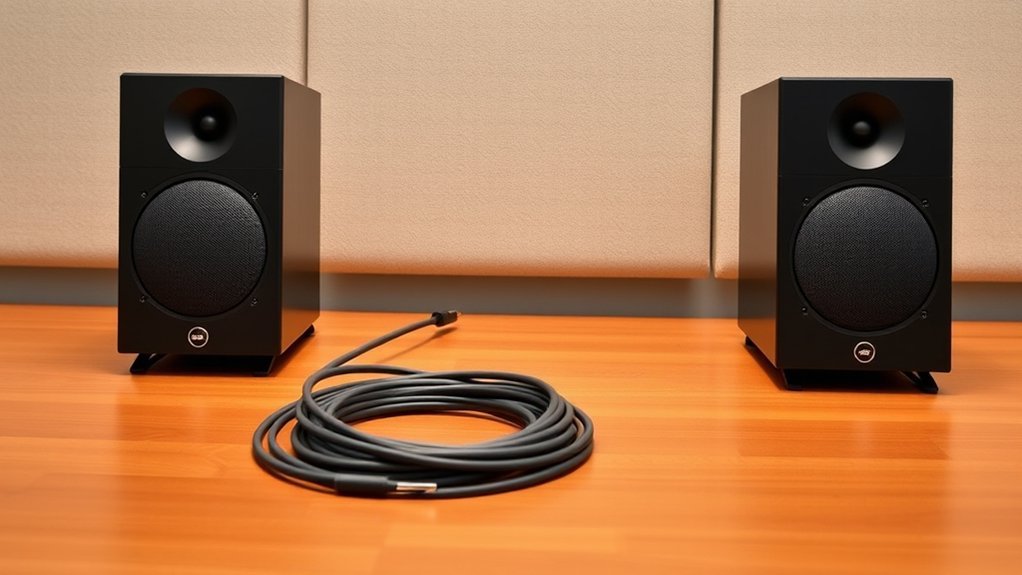
Before selecting cable management tools, it’s essential to evaluate the specific characteristics of your space. Consider cable length requirements, proximity of power sources, and the overall layout. Proper cable labeling during this appraisal helps identify and trace connections, reducing confusion during setup or troubleshooting. Pay attention to power strip placement; positioning it centrally or near the audio equipment minimizes cable clutter and prevents overextension. Use vertical or horizontal cable trays if space allows, and choose tools like cable sleeves or channels suited to your environment’s dimensions. Assessing these elements ensures your chosen cable management solutions are effective, facilitating easy access, minimizing tangles, and optimizing airflow around your speakers and components. This strategic evaluation lays the foundation for a clean, professional-looking setup.
Organize and Hide Cables Using Cable Clips, Sleeves, and Channels
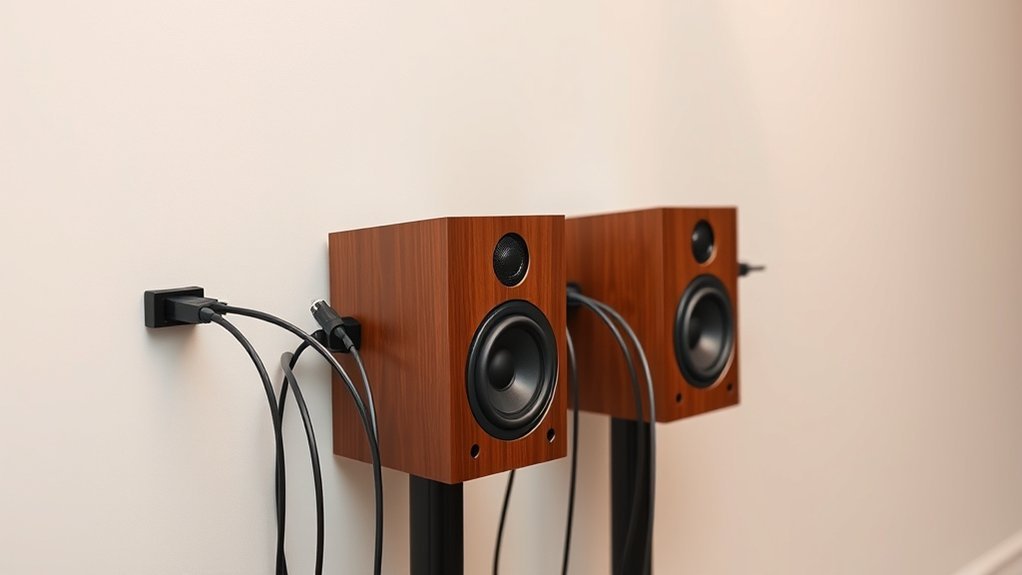
To effectively organize and conceal cables, we should leverage a combination of cable clips, sleeves, and channels to create a streamlined setup. Cable clips secure individual wires along surfaces, minimizing movement and preventing tangling, while enhancing cable aesthetics through neat, unobtrusive placement. Sleeves allow for cable customization by bundling multiple cables into a single, tidy conduit, reducing clutter and protecting wires from abrasion. Channels, such as raceways, provide a dedicated pathway for cables, keeping them hidden behind walls or along baseboards for a clean appearance. This layered approach ensures cables are both visually appealing and functionally organized. Precise placement of clips, sleeves, and channels allows for effective cable management, simplifying maintenance and improving overall speaker setup aesthetics.
Implement Tips for Keeping Cables Safe and Tangle-Free
Once cables are organized and concealed using clips, sleeves, and channels, the next step is to guarantee they remain safe from damage and free from tangles. We recommend securing cables with cable ties or velcro straps, ensuring they don’t shift or pinch over time. Incorporate decorative cable covers to add an extra layer of protection and improve aesthetics, especially around high-traffic areas. To minimize clutter, consider wireless alternatives for speakers and peripherals, reducing physical cable length and complexity. When bundling, avoid sharp bends that can damage internal wiring. Regularly inspect connections for wear or fraying, replacing damaged cables immediately. Properly secured and protected cables prevent accidental disconnections, reduce interference, and prolong their lifespan, maintaining a clean, professional-looking setup.
Maintain Your Clean Setup With Regular Cable Management Checks
Regularly inspecting your cable management setup is essential to maintaining its cleanliness and functionality over time. Frequent checks prevent cable wear, reduce signal interference, and preserve cable aesthetics, guaranteeing your setup remains visually neat and efficient. These inspections help identify slack, loose connections, or potential damage that could compromise sound quality. Use a systematic approach to verify cable routing, securing loose cables with clips or ties, and cleaning dust buildup.
| Aspect | Focus Point |
|---|---|
| Cable Aesthetics | Keep cables tidy and hidden |
| Signal Integrity | Prevent interference and noise |
| Maintenance | Regularly check for wear/damage |
This routine ensures excellent sound quality and a visually clean environment.
Frequently Asked Questions
How Often Should I Update My Cable Management System?
We recommend updating your cable management system every six months to maintain ideal cable visibility and aesthetic enhancements, ensuring your setup remains organized, functional, and visually appealing while preventing cable wear, damage, and tangling over time.
What Are the Best Cable Management Products for Heavy Speakers?
Like a sturdy bridge, cable raceways and heavy-duty speaker cable connectors support weight and prevent sagging. We recommend robust cable raceways for routing, paired with high-quality connectors to guarantee secure, long-lasting connections for heavy speakers.
Can DIY Cable Management Solutions Be Effective for Speaker Setups?
DIY cable management solutions can be effective if we incorporate wireless alternatives where possible and use decorative cable covers for aesthetics, ensuring a technically sound, organized setup that minimizes interference and maintains the integrity of your speaker system.
How Do I Prevent Cable Damage Over Time?
We prevent cable damage by using proper cable insulation and strain relief techniques, ensuring cables are not bent sharply or exposed to excessive tension, which minimizes wear and tear over time and maintains ideal audio performance.
Are There Specific Cable Types Recommended for High-Quality Audio?
We recommend high-quality speaker wire selection with oxygen-free copper for clarity, paired with audio cable shielding to prevent interference, ensuring ideal sound performance and durability over time. Proper cable choice enhances overall audio fidelity considerably.
Conclusion
In conclusion, effective cable management not only enhances the aesthetics of your speaker setup but also boosts safety and equipment longevity. Studies show that properly managed cables can reduce electrical hazards by up to 40%. By assessing your space, using the right tools, and conducting regular checks, we can maintain a professional, organized environment that minimizes downtime and maximizes performance. Prioritizing these practices ensures your setup remains clean, safe, and easy to troubleshoot.