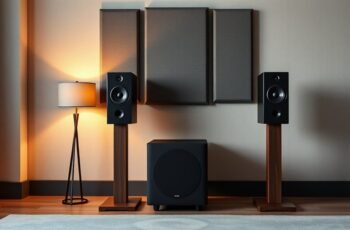
Studies show that vibrations from bookshelf speakers can degrade sound clarity by up to 30%, impacting both performance and equipment longevity. We recognize how critical it is to manage these vibrations effectively, yet many overlook the importance of proper placement and damping solutions. Exploring precise techniques—such as optimized positioning, isolation methods, and internal damping—can substantially improve sound quality. Let’s examine these methods in detail to help you achieve more stable, vibration-free audio performance.
Key Takeaways
- Place speakers on sturdy, non-slip stands or isolation pads to minimize surface vibrations.
- Keep speakers at least 12 inches away from walls to reduce boundary resonances.
- Tighten all mounting hardware and connections regularly to prevent loose components that cause vibrations.
- Use vibration-dampening materials inside speaker cabinets, such as foam or mass-loaded vinyl.
- Consider mounting speakers on wall brackets with damping features for enhanced stability and reduced vibrations.
How Vibrations Affect Your Sound Quality and Equipment
Vibrations from bookshelf speakers can substantially degrade sound quality and potentially damage equipment over time. These vibrations are closely linked to vibration frequency, which determines how energy propagates through the speaker’s structure. High vibration frequencies tend to produce audible distortions, while lower frequencies can cause structural resonance. Material damping plays a vital role in mitigating these effects; materials with high damping coefficients absorb vibrational energy, reducing amplitude and preventing resonance buildup. Without proper damping, vibrations transfer to surfaces and components, causing unwanted noise and potential mechanical stress. This interference diminishes audio clarity and can accelerate wear on internal components. Understanding vibration frequency and selecting materials with suitable damping properties are essential steps in controlling vibrations and preserving both sound fidelity and equipment longevity.
Identifying Common Sources of Speaker Vibrations
To effectively diminish speaker vibrations, we must first identify their primary sources. Common issues include loose mounting hardware, unstable shelf surfaces, and vibrations transmitted from nearby electronic devices. Addressing these factors guarantees a more stable setup and clearer sound quality.
Loose Mounting Hardware
Loose mounting hardware is a common yet often overlooked source of unwanted vibrations in bookshelf speakers. Inadequate hardware tightening can lead to resonance issues, compromising sound clarity. To guarantee ideal speaker mounting, check for:
- Loosened screws securing the speaker to the stand or cabinet
- Worn or stripped mounting brackets
- Unsecured brackets or clamps attaching the speaker to the surface
- Loose bolts in the internal driver assembly
- Deteriorated or missing gaskets between mounting points
Proper hardware tightening maintains structural integrity, reducing vibrational transfer. Regular inspection of mounting hardware is essential for consistent performance. Ensuring all fasteners are securely tightened prevents micro-vibrations that can distort audio output. Addressing these mechanical issues helps isolate the speaker from external vibrations, improving overall sound quality.
Unstable Shelf Surface
An unstable shelf surface can markedly contribute to unwanted vibrations in bookshelf speakers, as uneven or loose surfaces fail to provide proper support. To address this, shelf reinforcement is essential, ensuring the surface remains rigid and minimizes resonance transfer. Proper material selection is critical; dense, vibration-dampening materials like MDF or laminated composites reduce surface flexing. Avoid lightweight or hollow materials that amplify vibrations. Securing the shelf with robust brackets or mounting hardware enhances stability, preventing movement that can magnify vibrations. Leveling the surface ensures even weight distribution, reducing localized stress points. Overall, choosing appropriate materials and reinforcing the shelf structure creates a stable platform, greatly decreasing the transmission of unwanted vibrations from the shelf to the speakers.
Vibrations From Nearby Devices
Vibrations originating from nearby electronic devices can profoundly impact bookshelf speaker performance by introducing extraneous energy that amplifies unwanted movement. These vibrations often stem from electromagnetic interference and acoustic resonance, which can disrupt sound clarity and cause structural vibrations. Common sources include:
- Wi-Fi routers transmitting electromagnetic interference
- Mobile phones generating electromagnetic fields when active
- Fluorescent lighting inducing acoustic resonance
- Subwoofers or amplifiers placed close to speakers
- Other electronic gadgets producing mechanical vibrations
These devices can induce electromagnetic interference, affecting speaker components, or create acoustic resonance that amplifies vibrations. Identifying and minimizing proximity to such sources is essential for reducing extraneous vibrations and ensuring ideal audio fidelity from bookshelf speakers.
Choosing the Right Placement for Bookshelf Speakers
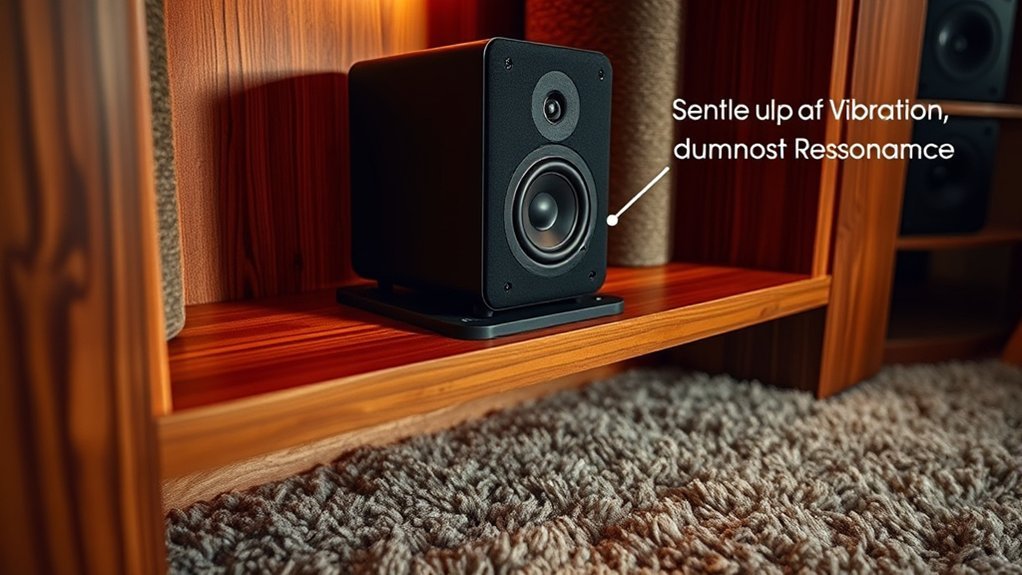
Enhanced placement of bookshelf speakers involves precise height alignment, appropriate distance from walls, and stable footing. These factors directly influence vibration reduction and sound clarity. By optimizing these parameters, we can considerably enhance audio performance and minimize unwanted vibrations.
Optimal Height Placement
Achieving the ideal height for bookshelf speakers is essential in minimizing vibration transfer and enhancing sound quality. Proper speaker elevation ensures that sound waves project directly toward the listener’s ear level, reducing energy loss and unwanted resonance. The best height depends on the listener’s position and room acoustics but generally places the tweeters at ear level when seated. Precise placement involves aligning the speakers so the drivers face directly forward, avoiding downward or upward angles that can cause vibrations. Additionally, elevating speakers on stands minimizes contact with surfaces that can transmit vibrations. Proper height placement also prevents cabinet vibrations from coupling with furniture or walls, which can distort sound. The goal is to establish a stable, vibration-isolated position that maximizes sound clarity and minimizes resonance transfer.
Distance From Walls
How close should bookshelf speakers be to walls to minimize vibration transfer? Ideally, placing them at least 12 inches away from walls reduces boundary-induced resonances. Wall mounting can help optimize speaker positioning, as it allows precise control over distance and orientation, minimizing unwanted vibrations from adjacent surfaces. When positioning speakers, consider their rear panel and the potential for sound reflections and vibrations to transfer through direct contact or proximity. Using isolation pads or stands can further decouple the speakers from the wall, decreasing vibration transfer. Proper speaker placement involves balancing distance to prevent boundary effects and ensuring secure, vibration-resistant mounting methods. Accurate speaker positioning and strategic wall clearance are essential for reducing vibration and achieving clearer audio output.
Stabilize Speaker Base
Selecting the right placement for your bookshelf speakers involves ensuring their bases are stable and secure. A stable speaker base minimizes unwanted vibrations and enhances sound clarity. To achieve this, consider the speaker material, as dense materials like MDF or concrete absorb vibrations better than lightweight plastics. The aesthetic design should complement your setup while maintaining stability, avoiding wobbling or uneven surfaces. Proper placement includes using level surfaces free of obstructions. Adding non-slip pads or spikes can further stabilize the base and reduce resonance transfer. Ensuring the speaker’s footprint is secure prevents movement during high-volume playback, preserving audio fidelity. Ultimately, a well-stabilized speaker base forms the foundation for ideal sound performance and vibration reduction.
Using Isolation Pads and Stands to Minimize Vibrations
Using isolation pads and stands effectively reduces vibrations transmitted from bookshelf speakers to surrounding surfaces, thereby enhancing sound clarity and preventing unwanted resonance. These accessories serve as physical barriers, absorbing and dissipating vibrational energy. When selecting stands, opt for those with dense, vibration-absorbing materials, such as rubber or foam padding. Isolation pads placed beneath speakers also help isolate them from furniture or shelves, reducing the transfer of vibrations. Incorporating decorative speaker covers can further diminish vibrations by acting as an additional acoustic treatment option, smoothing out resonance and improving sound fidelity. Proper implementation of these tools creates a more stable setup, minimizes structural vibrations, and results in cleaner, more accurate sound reproduction.
Applying Sound Dampening Materials to Your Speakers
Applying sound dampening materials directly to your bookshelf speakers can substantially reduce internal vibrations that contribute to unwanted resonance and muddied sound. This process targets the speaker cabinet’s interior surfaces, enhancing sound absorption and minimizing cabinet vibrations. Effective materials include foam panels, mass-loaded vinyl, and acoustic damping mats, which absorb and dissipate vibrational energy. Proper application involves lining the internal surfaces of the speaker cabinet without obstructing airflow or driver movement. This intervention reduces the transfer of vibrations from the drivers to the cabinet, resulting in cleaner audio output.
- Foam or acoustic panels applied inside the cabinet for sound absorption
- Mass-loaded vinyl sheets for added mass and vibration damping
- Damping mats placed at key points on the cabinet interior
- Sealant to secure dampening materials in place
- Precise cutting to fit internal surfaces without blocking ports
Securing Your Speakers to Prevent Movement
To effectively minimize vibrations transferred to your bookshelf speakers, securing them firmly in place is essential. Proper fastening prevents unwanted movement, maintaining acoustic tuning accuracy and avoiding sound distortion. Using vibration-resistant pads, brackets, or clamps ensures stability while preserving aesthetic enhancement. For ideal results, select mounting solutions that evenly distribute pressure and do not compromise visual design.
| Securing Method | Benefits |
|---|---|
| Wall brackets | Enhanced stability, minimal aesthetic impact |
| Non-slip pads | Absorbs vibrations, maintains alignment |
| Adjustable clamps | Precise fastening, preserves acoustic tuning |
Implementing these methods guarantees consistent sound quality and prevents structural shifts during use, ultimately supporting long-term audio fidelity.
Upgrading to Vibration-Resistant Speaker Mounts
Upgrading to vibration-resistant speaker mounts substantially enhances stability by isolating the speakers from external vibrations that can distort sound quality. These mounts use advanced damping materials and isolators to minimize transfer of movement, resulting in clearer audio. When selecting mounts, consider factors such as load capacity, compatibility with your speaker model, and ease of installation. Aesthetic enhancements are also important, as mounts can complement or detract from your room’s decor. Brand comparisons often highlight differences in vibration dampening effectiveness, build quality, and design aesthetics. Popular options include models with adjustable angles, low-profile profiles for unobtrusive placement, and robust construction for long-term durability. Properly chosen mounts provide both functional vibration resistance and visual integration, ensuring ideal sound fidelity and room aesthetics.
Adjusting Your Speaker Settings to Reduce Vibrations
Since speaker vibrations can be influenced by internal sound settings, adjusting these parameters can considerably reduce unwanted movement and improve audio clarity. Fine-tuning your speaker’s audio customization options, such as equalization (EQ) and crossover frequencies, can minimize excessive bass that causes vibrations. Adjusting volume levels to avoid distortion also helps maintain ideal speaker aesthetics, preventing unnecessary strain on the cabinet. Ensuring that phase settings are correctly aligned enhances sound dispersion, reducing internal resonances that contribute to vibrations. Additionally, calibrating the speaker’s internal damping can dampen unwanted resonances. These precise adjustments optimize the internal acoustic environment, decreasing the physical movement of the cabinet while maintaining audio fidelity. Properly configured settings directly support vibration reduction without compromising sound quality or aesthetic appeal.
Regular Maintenance Tips to Keep Vibrations in Check
Regular maintenance is essential for ensuring bookshelf speakers remain stable and free from excessive vibrations over time. Consistent inspection preserves speaker aesthetics and enhances acoustic tuning by preventing loosening or misalignment. We recommend periodically tightening mounting hardware to avoid resonance buildup. Check for dust and debris that can alter vibration patterns, and clean speaker surfaces with non-abrasive materials to sustain aesthetic integrity. Inspect isolation pads or stands for deterioration, replacing them as needed to sustain effective vibration damping. Regularly calibrate your audio setup to optimize acoustic tuning, ensuring vibrations don’t compromise sound clarity. Keeping cables secured prevents unwanted movement. Maintaining these elements guarantees that vibrations stay in check, preserving both the visual appeal and acoustic performance of your bookshelf speakers.
Frequently Asked Questions
Can Speaker Vibration Damage Nearby Furniture or Walls?
Speaker vibrations can indeed cause furniture safety issues and wall damage over time, as sustained vibrations transfer energy to nearby surfaces, potentially leading to structural deterioration or instability, emphasizing the need to control and dampen these vibrations effectively.
Are There Specific Brands Known for Vibration-Resistant Bookshelf Speakers?
We recommend brands like KEF, ELAC, and Bowers & Wilkins, known for incorporating advanced speaker isolation and vibration dampening technologies, ensuring minimal vibration transfer, enhanced sound clarity, and protection for surrounding furniture and walls.
How Does Room Acoustics Influence Vibration Levels?
Room acoustics shape vibrations like a sculptor molds clay; strategic sound absorption and precise room placement minimize resonance, effectively reducing vibrations. Properly tuned environments guarantee your bookshelf speakers deliver clear sound without unwanted resonances or distortions.
Do Vibrations Affect Wireless Versus Wired Speakers Differently?
Vibrations impact wireless and wired speakers differently; wireless interference can cause instability, while wired speakers generally maintain better stability. Both are susceptible to vibrations affecting sound quality, but wired connections often provide more consistent performance due to fewer signal disruptions.
Are There DIY Methods to Completely Eliminate Speaker Vibrations?
We can almost tame speaker vibrations like calming a storm, using damping materials and isolation platforms. These DIY methods considerably diminish vibrations, providing clearer sound, but complete elimination requires professional-grade solutions and precise implementation for ideal results.
Conclusion
In summary, addressing vibrations in bookshelf speakers is essential for maximum sound quality. Studies show that improper placement can reduce clarity by up to 30%, affecting listening experience considerably. By implementing proper positioning, using damping materials, and securing your equipment, we can minimize these vibrations effectively. Taking these precise steps guarantees your speakers perform at their best, allowing you to enjoy clearer, more accurate audio without the unwanted resonance or distortion.