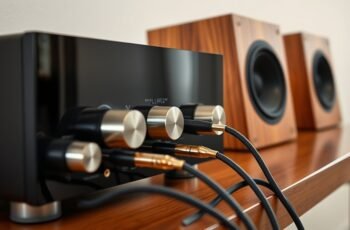
When choosing between wired and wireless speakers for home audio, we recognize that each offers distinct advantages and challenges rooted in their connectivity, sound quality, and convenience. Understanding these differences is vital to making an informed decision aligned with your room layout, audio expectations, and lifestyle needs. As we explore the technical nuances and practical considerations, it becomes clear that the best choice depends on factors that may not be immediately obvious—and that’s where a closer look becomes essential.
Key Takeaways
- Wired speakers offer superior audio stability and lower latency, ideal for high-fidelity home audio systems.
- Wireless speakers provide greater placement flexibility and easier setup, enhancing user convenience.
- Wired setups are generally more cost-effective and require less maintenance over time.
- Wireless speakers are more susceptible to interference, which can affect sound quality and reliability.
- The choice depends on your room size, aesthetic preferences, and whether prioritizing stability or convenience.
How Do Wired and Wireless Speakers Differ in Connectivity?
While both wired and wireless speakers serve the same fundamental purpose of audio playback, their connectivity methods differ considerably. Wired speakers rely on physical connections, where cable length directly influences placement flexibility and signal stability. Longer cables can introduce signal degradation or interference, impacting audio quality, whereas shorter cables minimize these issues. Wireless speakers primarily depend on Bluetooth pairing, which establishes a wireless link between devices. Bluetooth technology simplifies setup, but connection stability can fluctuate due to interference or range limitations, typically around 10 meters. Unlike wired setups, wireless connectivity offers greater placement flexibility without physical constraints. However, the reliability and ease of connection are heavily influenced by factors such as Bluetooth version and device compatibility, making wireless connectivity more dynamic but potentially less stable than wired alternatives.
Which Audio Quality Is Better: Wired or Wireless Speakers?
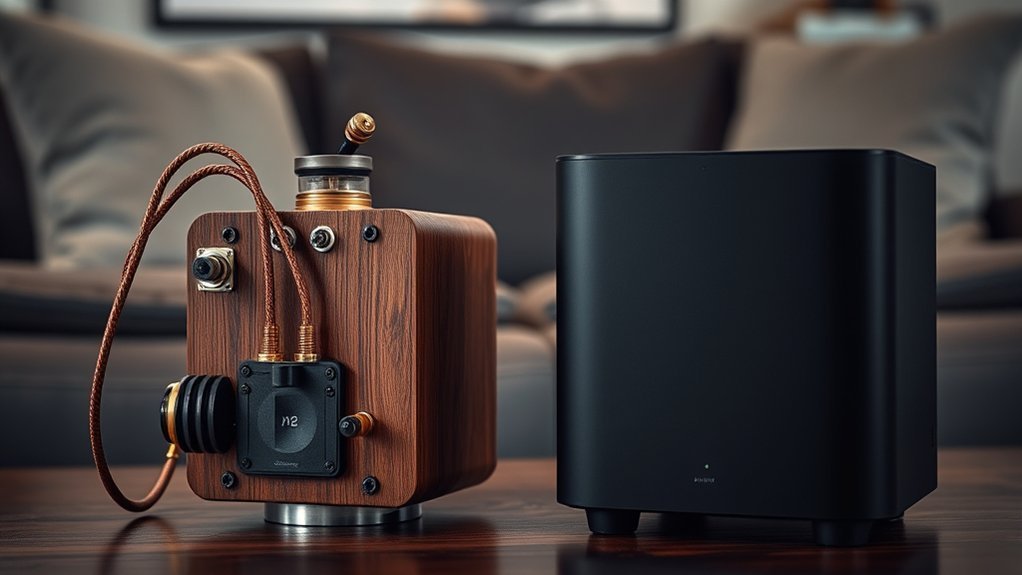
When comparing audio quality between wired and wireless speakers, signal stability and transmission integrity are key factors. Wired connections typically offer lower latency and fewer artifacts, leading to more precise sound reproduction, while wireless signals are more susceptible to interference and noise. Analyzing these technical differences helps determine which setup provides superior audio fidelity in various environments.
Signal Stability Differences
Wired speakers generally offer superior signal stability compared to their wireless counterparts due to direct physical connections that minimize interference. This connection reliability reduces issues caused by signal interference, ensuring consistent audio transmission. Wireless systems, however, are susceptible to environmental factors like walls, other wireless devices, and electromagnetic interference, which can cause dropouts or fluctuations. To visualize, consider the following:
| Connection Type | Susceptibility to Signal Interference | Stability Over Distance |
|---|---|---|
| Wired | Low | High |
| Wireless | Moderate to High | Variable |
| Bluetooth | Moderate | Limited |
| Wi-Fi | High | Moderate |
Understanding these differences helps us appreciate the importance of connection reliability in overall audio performance.
Audio Transmission Quality
Wireless speakers have advanced considerably, enabling high-quality audio transmission comparable to wired systems under ideal conditions. The core of this improvement lies in refined audio encoding and signal compression techniques, which reduce data size while preserving fidelity. Modern codecs, such as aptX or LDAC, facilitate efficient signal compression, minimizing latency and maintaining audio clarity. Unlike traditional analog signals in wired setups, wireless systems rely on digital transmission, which can introduce subtle artifacts if compression is aggressive. However, advancements in encoding algorithms now allow for near-lossless quality, narrowing the gap between wired and wireless audio. While wired connections inherently transmit uncompressed signals, the sophistication of contemporary wireless audio encoding ensures that, under perfect conditions, the audio transmission quality remains high, making wireless options increasingly viable for discerning listeners.
Interference and Noise
Advancements in audio encoding have considerably narrowed the quality gap between wired and wireless speakers, but interference and noise remain critical factors that influence overall sound fidelity. Wireless signals are susceptible to electromagnetic interference from other electronic devices, causing disruptions and audio degradation. This interference can introduce static, dropouts, or signal distortions that compromise sound clarity. Conversely, wired speakers eliminate electromagnetic interference, offering a more stable audio path. However, modern wireless systems often incorporate noise cancellation technologies to mitigate external interference, improving sound quality. Despite these measures, wireless setups still face challenges in environments with dense electromagnetic activity. Ultimately, while wireless speakers have improved in handling noise, wired connections tend to deliver more consistent audio fidelity, especially in interference-prone environments.
What Are the Setup and Installation Processes for Each Type?
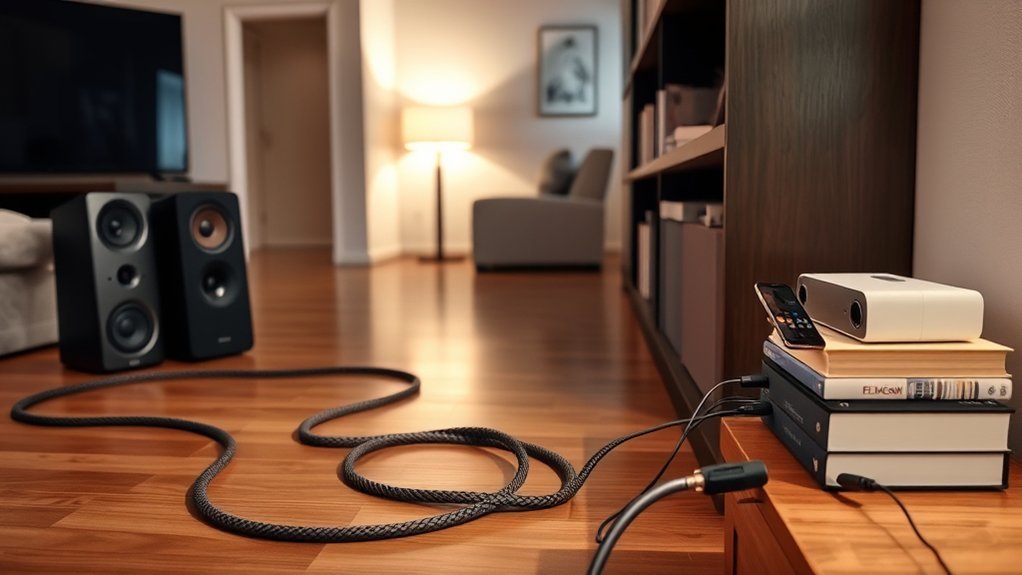
Setting up speakers involves distinct procedures depending on whether they are wired or wireless, each requiring specific considerations to guarantee peak performance. Wired installation generally involves physical connections, which can pose installation challenges such as cable management and ensuring proper placement for ideal sound quality. Aesthetic considerations are essential here, as visible cables can detract from interior design. Wireless speakers, on the other hand, typically require network configuration, including pairing and signal calibration, which can present connectivity challenges. Their installation process is often simpler, with fewer physical constraints, but may demand attention to Wi-Fi coverage and interference. Both types necessitate careful planning to avoid aesthetic compromises and technical issues, ensuring seamless integration within the home environment.
How Do Wireless Speakers Offer Flexibility and Convenience?
Wireless speakers enable seamless device connectivity through Bluetooth or Wi-Fi, reducing setup time and simplifying integration with various sources. Their flexible placement options allow us to position them ideally without cable constraints, enhancing acoustic performance and room design. Additionally, remote control access via smartphones or voice assistants provides convenient management, streamlining user interaction with the system.
Seamless Device Connectivity
Because of their built-in connectivity features, wireless speakers enable users to effortlessly pair multiple devices and switch between them without interruption. This seamless device connectivity hinges on advanced Bluetooth pairing protocols, which facilitate quick, stable connections. Users can switch sources instantly, enhancing usability for multi-device environments. To optimize this experience:
- Use Bluetooth pairing to connect smartphones, tablets, or computers efficiently.
- Maintain minimal cable management by avoiding physical connections, reducing clutter.
- Leverage multi-device pairing features to enable quick toggling between sources without disconnecting.
These capabilities provide significant flexibility, allowing users to control their audio environment dynamically. The technical robustness of wireless protocols ensures reliable performance, making seamless device connectivity a core advantage over wired alternatives.
Easy Placement Options
The absence of physical cables grants wireless speakers remarkable flexibility in placement, enabling users to maximize audio experience without being constrained by traditional wiring limitations. This flexibility directly impacts speaker placement, allowing for strategic positioning that enhances sound quality by better adapting to room acoustics. Without the need for extensive cabling, users can experiment with speaker locations to reduce sound reflections and dead zones, improving clarity and stereo imaging. Additionally, wireless speakers can be easily moved to accommodate changes in room layout or furniture arrangement, maintaining ideal acoustic performance. This ease of placement not only simplifies setup but also allows for fine-tuning of audio distribution, ensuring a more immersive listening environment tailored to the specific acoustics of the space.
Remote Control Access
Remote control access considerably enhances the convenience and flexibility of wireless speakers by allowing users to manage their audio environment effortlessly. With remote controls, users can adjust volume, change tracks, or mute sound without physical interaction with the speaker itself. Additionally, voice commands integrated into smart speakers enable hands-free operation, further increasing convenience.
Key benefits include:
- Remote control: Precise adjustments and device management from a distance, minimizing interruptions.
- Voice commands: Natural language processing allows for seamless control over playback, volume, and source selection.
- Multi-device control: Centralized management through apps or voice assistants streamlines multiple speakers simultaneously.
These features collectively provide a highly adaptable and user-friendly audio experience, emphasizing the importance of remote control access in wireless speaker systems.
What Are the Cost Differences Between Wired and Wireless Options?
Wired speakers typically involve lower initial costs compared to their wireless counterparts, primarily because they rely on basic cabling and standard components. The price comparison reflects this, with wired systems often being more affordable upfront. However, wireless options tend to have higher initial costs due to integrated wireless technology and associated hardware. Brand variety influences overall expenses; more established brands may charge a premium for quality and features, regardless of wired or wireless. The table below highlights key cost factors:
| Aspect | Wired | Wireless |
|---|---|---|
| Initial Cost | Lower due to simple setup | Higher due to tech integration |
| Long-term Cost | Minimal maintenance | Potential upgrade expenses |
| Brand Variety | Extensive, budget-friendly | Fewer options, premium-priced |
Which Speakers Are More Suitable for Different Room Sizes and Layouts?
Selecting the appropriate speakers depends heavily on room size and layout, as these factors influence sound dispersion, clarity, and overall listening experience. In smaller rooms, compact speakers with controlled dispersion work best, minimizing reflections caused by room acoustics. Medium-sized rooms benefit from strategically placed speakers that fill space without overwhelming it. Larger rooms require high-power speakers with wide dispersion patterns to guarantee even sound coverage.
Key considerations include:
- Room acoustics: Hard surfaces increase echo, necessitating speakers with directional sound.
- Speaker placement: Proper positioning minimizes sound reflections and maximizes clarity.
- Room size and layout: Larger spaces demand more powerful, wide-dispersion speakers, while smaller spaces benefit from focused, compact options.
Understanding these factors helps optimize sound quality tailored to specific room environments.
How Do Maintenance and Durability Compare for Wired vs Wireless Speakers?
When evaluating maintenance routines and durability factors, it becomes evident that wired and wireless speakers each have unique considerations. Wired speakers typically require less ongoing maintenance, as their fixed connections reduce the risk of component failure. However, their cables and connectors can degrade over time, necessitating periodic inspections. Wireless speakers demand more active maintenance routines, such as software updates and battery management, which can influence longevity. Durability factors also differ: wired models are generally robust due to fewer electronic components, but cables are vulnerable to wear and tear. Wireless units, while eliminating cable damage, face challenges from battery degradation and internal component aging. Overall, wired speakers tend to offer longer-term durability with lower maintenance complexity, whereas wireless options require proactive upkeep to maintain performance over time.
What Are the Common Troubleshooting Challenges for Each?
Troubleshooting wired and wireless speakers presents distinct challenges rooted in their design and technology. For wireless models, issues often stem from Bluetooth pairing failures, which can be caused by interference, signal range, or outdated firmware. Ensuring a stable connection requires systematic troubleshooting of device compatibility and signal obstacles. In contrast, wired speakers typically face cable management problems, such as loose connections or damaged cables, leading to audio dropout or distortion.
Common challenges include:
- Diagnosing Bluetooth pairing issues, including interference and device recognition.
- Managing cable clutter to prevent connection problems.
- Updating firmware or drivers to resolve connectivity glitches.
Understanding these technical hurdles helps us streamline troubleshooting and maintain ideal audio performance.
Which Home Audio Solution Best Fits Your Lifestyle and Budget?
Choosing the right home audio solution depends on evaluating your specific lifestyle needs and budget constraints. If you prioritize flexible speaker placement and minimal wiring, wireless options excel, but they require a reliable power supply and stable connectivity. Wired systems demand precise speaker placement for best sound but offer consistent power without interference. Consider your environment: open spaces favor wireless flexibility, whereas fixed positions benefit wired stability. Budget considerations also influence choice; wireless systems often incur higher initial costs, but wired setups may involve more extensive installation.
| Aspect | Consideration |
|---|---|
| Speaker placement | Wireless offers flexibility; wired requires fixed positioning |
| Power supply | Wired units rely on direct connection; wireless need stable power sources |
Assess these factors to align your home audio setup with your lifestyle and budget.
Frequently Asked Questions
Can Wireless Speakers Work Without Wi-Fi or Bluetooth?
Wireless speakers typically rely on Bluetooth pairing or Wi-Fi, so they can’t work entirely without these signals. Signal interference can disrupt Bluetooth connections, highlighting the importance of a stable environment for seamless audio playback.
Are Wired Speakers More Secure From Hacking Than Wireless Options?
Wired speakers generally have fewer security vulnerabilities, reducing hacking risks because they don’t rely on wireless networks. We find that their direct connections make them more secure, but wireless options require robust encryption to mitigate hacking risks effectively.
How Does Power Consumption Differ Between Wired and Wireless Speakers?
We find wireless speakers typically consume more energy due to their need for constant connectivity and power for wireless modules, whereas wired speakers have lower energy demands, making them more energy-efficient based on power comparison and overall energy consumption.
Can Wireless Speakers Be Integrated Into Existing Home Automation Systems?
Wireless speakers seamlessly integrate into smart home systems, offering acoustic customization and remote control. We find their compatibility with automation platforms highly effective, enhancing user experience through precise, flexible audio management within intelligent environments.
Do Wired Speakers Require Professional Installation for Optimal Sound?
Wired speakers often benefit from professional setup for ideal sound calibration, ensuring precise audio performance. While not always mandatory, expert installation helps achieve the best sound quality through meticulous calibration and proper wiring, especially in complex or high-end systems.
Conclusion
Ultimately, whether wired or wireless, your choice hinges on balancing sound fidelity against convenience. Wired speakers demand meticulous setup but offer unwavering stability—perfect for audiophiles craving perfection. Wireless options, on the other hand, promise effortless placement but risk signal hiccups. So, if you enjoy sacrificing reliability for a sleek look, go wireless; if you prefer sound that’s always on point, wired remains king. Either way, your home’s audio future is in your hands—literally.