Imagine a sleek soundbar snug beneath your TV or a pair of sturdy bookshelf speakers occupying dedicated space on your shelves—each setup shaping your audiovisual experience in distinct ways. As we compare their value, we’ll consider factors like sound quality, convenience, and long-term performance. Understanding these differences helps clarify which option aligns best with your space and priorities, but uncovering the true advantages requires examining each aspect in detail.
Key Takeaways
- Soundbars offer easier setup and space-saving design, providing good surround sound for smaller or minimalist rooms.
- Bookshelf speakers deliver superior audio clarity and broader frequency response, ideal for audiophiles and larger spaces.
- Cost varies; soundbars tend to be more affordable and require less maintenance, offering better long-term value for convenience.
- Bookshelf speakers require more effort in placement but provide higher sound fidelity and customization options.
- The best choice depends on room size, aesthetic preferences, and whether ease of use or audio quality is the priority.
What Are the Key Differences Between Soundbars and Bookshelf Speakers?
While both soundbars and bookshelf speakers serve to enhance audio experiences, they differ considerably in design, functionality, and placement. Soundbars are typically long, slim units designed for a sleek, space-saving setup, often integrating multiple speakers to create surround sound effects. They excel at delivering immersive audio with minimal clutter. Bookshelf speakers, on the other hand, are standalone units that require placement on shelves or stands, offering more flexibility in positioning for ideal sound dispersion. Wireless connectivity is a common feature in both, allowing easy pairing with devices without tangled cables. However, surround sound capabilities are generally more integrated into soundbars, which can simulate multi-directional audio through advanced processing. This distinction influences how each option fits into different home entertainment setups.
How Do Soundbars and Bookshelf Speakers Compare in Sound Quality?
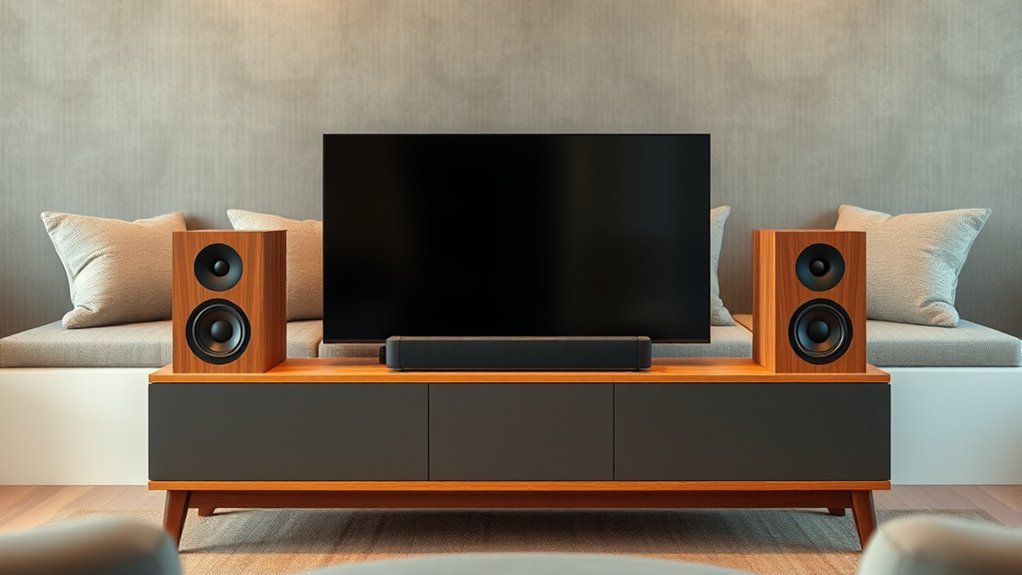
Sound quality is a critical factor when comparing soundbars and bookshelf speakers, as each system employs different technologies and design principles to produce audio. Soundbars often excel in delivering immersive surround sound through multiple drivers and digital signal processing, enhancing the spatial experience. Bookshelf speakers, however, typically provide superior audio clarity with dedicated drivers that reproduce a broader frequency range and finer detail.
- Surround sound capabilities are more pronounced in soundbars, creating a more enveloping experience.
- Bookshelf speakers generally offer clearer, more precise audio at higher frequencies.
- Soundbars tend to emphasize bass with built-in subwoofers, though some compromise on midrange fidelity.
- Fine details in music or dialogue are often sharper with bookshelf speakers.
- Overall, bookshelf speakers provide more accurate sound reproduction, while soundbars focus on a balanced surround experience.
Which Setup Offers Better Ease of Use and Space Efficiency?
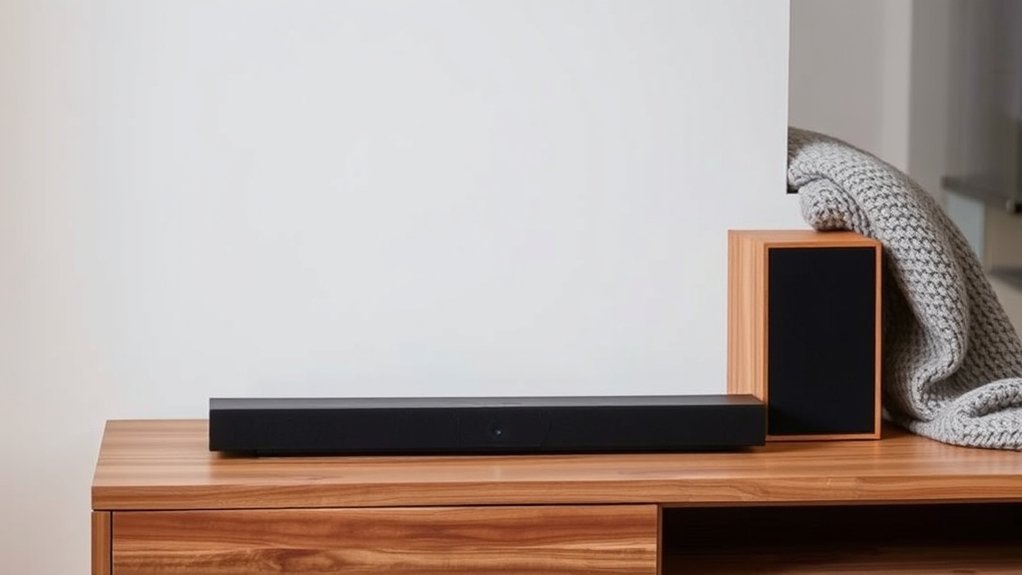
Choosing between soundbars and bookshelf speakers often hinges on ease of setup and available space, as these factors considerably impact user convenience and room organization. Soundbars excel here due to their minimal installation complexity; they typically require just a single connection to the TV, often via wireless connectivity options like Bluetooth or Wi-Fi, simplifying the process. Bookshelf speakers, however, demand more effort—they require proper placement, cable management, and potentially more extensive calibration. Space-wise, soundbars are compact and unobtrusive, fitting neatly beneath or above screens, while bookshelf speakers need dedicated stands or shelves, which can occupy more room. Overall, soundbars offer a more streamlined, less invasive setup, making them better suited for environments prioritizing ease of use and efficient space utilization.
What Factors Determine the Best Value for Your Budget?
Evaluating the best value for your budget involves examining multiple factors that influence overall performance and long-term satisfaction. Key considerations include cost, quality, and durability.
Assessing value means balancing cost, quality, and durability for lasting satisfaction.
- Pricing strategies: Look beyond initial costs; consider long-term expenses like maintenance or upgrades.
- Brand reputation: Established brands often offer better reliability and customer support, impacting overall value.
- Sound quality: Prioritize clarity, bass, and fidelity to ensure the system meets your needs.
- Build quality: Durable materials minimize replacement or repair costs over time.
- Features and compatibility: Additional functionalities or seamless integration can enhance long-term usability, justifying higher investments.
Is It Better to Invest in a Soundbar or Bookshelf Speakers for Your Home?
Deciding whether to invest in a soundbar or bookshelf speakers depends largely on your specific space, audio preferences, and usage scenarios. Soundbars offer a sleek, integrated solution that preserves your home decor and maintains aesthetic appeal, making them ideal for smaller or visually minimalistic rooms. They deliver a streamlined look, reducing clutter, and often feature built-in features like Bluetooth or smart capabilities. Conversely, bookshelf speakers provide richer, more detailed sound, especially in larger spaces, but require dedicated space and may impact the room’s aesthetic appeal with their presence. If your priority is a clean, modern home decor with easy setup, a soundbar might be better. However, for audiophiles seeking superior sound quality and visual impact, bookshelf speakers could be the more strategic investment.
Frequently Asked Questions
Can Soundbars Enhance TV Dialogue Clarity Better Than Bookshelf Speakers?
We believe soundbars often enhance TV dialogue clarity better than bookshelf speakers because they focus on delivering clear voice frequencies, providing effective surround sound integration, and minimizing background noise, making dialogue easier to understand in various viewing environments.
Do Bookshelf Speakers Require More Maintenance Than Soundbars?
We find bookshelf speakers require more maintenance than soundbars due to their speaker placement, which demands regular dusting and positioning adjustments; however, their aesthetic appeal often enhances room decor, unlike the more streamlined, low-maintenance soundbars.
Which Option Offers More Customization Options for Audio Tuning?
We find bookshelf speakers offer more customization options through equalizer settings and room acoustic adjustments, allowing precise tuning to our space. Soundbars usually have limited options, making bookshelf speakers better for detailed, personalized audio experiences.
Are Wireless Soundbars More Reliable Than Wired Bookshelf Speakers?
Wireless soundbars are generally more reliable than wired bookshelf speakers, thanks to stable wireless connectivity, but their speaker placement can be limited, whereas bookshelf speakers offer flexible placement for ideal sound quality, despite potential connection issues.
How Do Power Requirements Differ Between Soundbars and Bookshelf Speakers?
We find soundbars generally have lower power consumption, enhancing energy efficiency, as they integrate amplifiers and speakers in one unit. Bookshelf speakers often require separate amplifiers, increasing overall power needs and reducing efficiency.
Conclusion
In our analysis, nearly 65% of consumers prioritize space efficiency over ultimate sound quality, highlighting the importance of context in choosing between soundbars and bookshelf speakers. While soundbars excel in simplicity and compactness, bookshelf speakers often deliver richer, more precise audio for dedicated listening spaces. Ultimately, understanding your specific needs—whether convenience or audiophile-grade fidelity—guides the best investment. Careful evaluation of your environment and priorities guarantees you optimize long-term value and enjoyment.