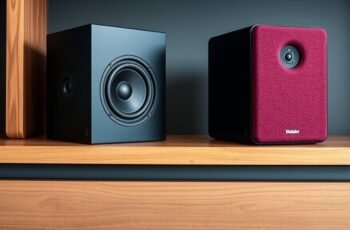
We examine build quality, sound clarity, and durability; we compare materials, components, and design intricacies; we evaluate whether higher prices truly correlate with performance and longevity. Recognizing these distinctions helps clarify whether investing in premium models justifies the cost or if budget options suffice for smaller spaces or specific needs. Understanding these factors is essential when selecting the right bookshelf speakers for your setup; but the question remains—what truly makes the difference?
Key Takeaways
- Expensive bookshelf speakers use higher-quality materials and construction for better durability and reduced resonance, enhancing sound clarity.
- Premium models offer broader frequency response, cleaner audio, and more nuanced detail compared to budget options.
- Costlier speakers typically have advanced drivers and components that improve transient response and reduce distortion.
- High-end speakers are better suited for larger rooms and complex acoustic environments, providing more immersive sound.
- Budget speakers can perform satisfactorily in small spaces with proper placement and acoustic treatments, despite lower build quality.
How Do Cheap and Expensive Bookshelf Speakers Differ in Build Quality?
While both cheap and expensive bookshelf speakers are designed to reproduce sound accurately, their build quality varies markedly, impacting durability and acoustic performance. Material construction plays a critical role; high-end models typically utilize dense MDF or plywood with internal bracing to minimize resonance, whereas budget options often rely on cheaper particleboard or lower-quality MDF, which can vibrate and distort sound. Aesthetic design also differs considerably—premium speakers feature precise CNC-machined cabinets with refined finishes, while cheaper alternatives may have rough edges or inconsistent paintwork. These differences influence not only visual appeal but also long-term stability. Overall, the superior material construction and thoughtful aesthetic design of expensive speakers contribute to their enhanced durability and acoustic fidelity.
What Sound Characteristics Set Budget Speakers Apart From High-End Models?
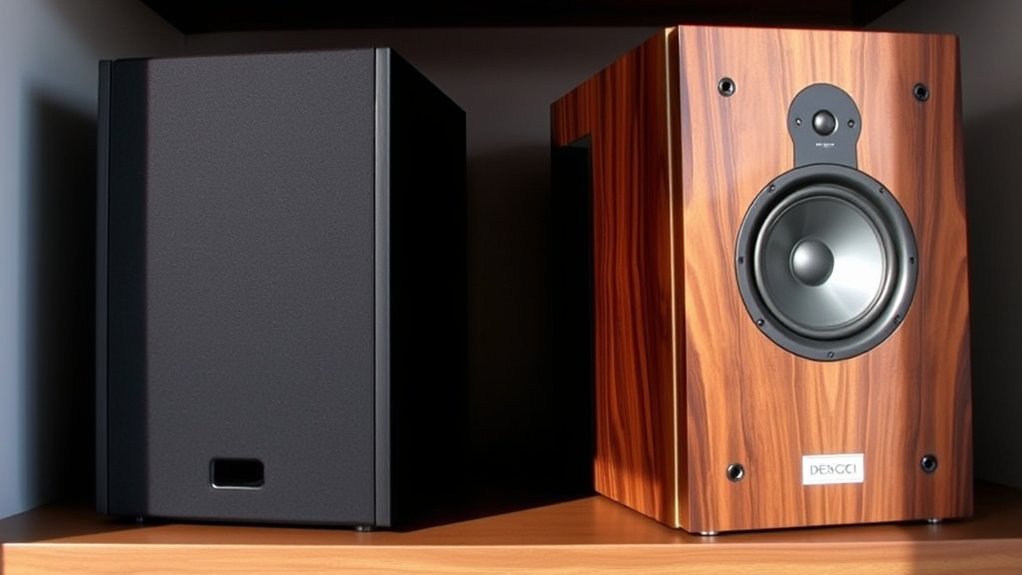
Budget bookshelf speakers often exhibit noticeable differences in sound characteristics compared to their high-end counterparts, primarily due to limitations in driver quality, crossover design, and enclosure tuning. These constraints typically result in compromised bass response, with less depth and control, making low frequencies sound less punchy and more boomy. Vocal clarity also tends to suffer, as lower-quality drivers and less refined crossover networks can cause vocal reproduction to be less detailed, with muddier midrange tones. High-end models employ advanced materials and precise tuning to deliver cleaner, more accurate sound across the spectrum. Consequently, budget speakers often struggle to produce the nuanced details and dynamic range that define high-fidelity sound, leading to a less immersive listening experience.
Are Costlier Speakers Worth the Investment for Your Listening Experience?
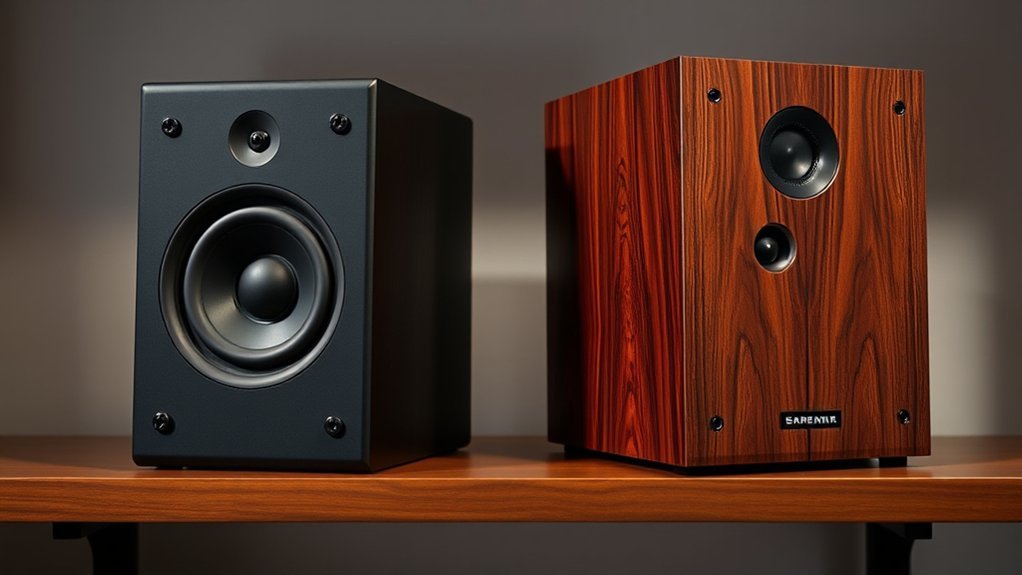
When evaluating whether higher-cost bookshelf speakers justify their price, we focus on sound quality improvements such as increased clarity, broader frequency response, and reduced distortion. These enhancements often translate into a more accurate and immersive listening experience, especially with high-resolution audio. Ultimately, we must weigh the long-term durability and performance consistency against the initial investment to determine if the added value aligns with our listening priorities.
Sound Quality Differences
Costlier bookshelf speakers often deliver superior sound quality due to higher-quality drivers, advanced crossover networks, and more precise cabinet construction. These technical improvements result in clearer, more accurate audio reproduction across the frequency spectrum, with better transient response and reduced distortion. Premium materials and refined acoustic engineering enable detailed sound staging and richer tonal balance. Additionally, vintage appeal and aesthetic design play subtle roles; higher-end models often feature craftsmanship that minimizes resonance and cabinet coloration, preserving audio fidelity. The combination of these factors creates a listening experience where nuances in music are more perceptible, and sound depth is enhanced. While more expensive speakers tend to excel in clarity and realism, whether they justify the investment depends on your pursuit of audiophile-grade fidelity versus casual listening.
Long-Term Value
While higher-end bookshelf speakers often demand a larger initial investment, their long-term value hinges on several factors that can justify the expense. Premium models typically feature superior build quality, more durable components, and refined driver technology, which contribute to sustained audio performance over time. Additionally, vintage charm and aesthetic appeal can enhance a room’s decor, adding character that remains timeless. These speakers often incorporate advanced crossover networks and damping materials that preserve audio fidelity, reducing degradation with prolonged use. Costlier units may also offer better compatibility with future upgrades, ensuring longevity in your sound system. Ultimately, the investment pays off if the speaker’s durability, aesthetic appeal, and ability to maintain sound integrity justify the higher upfront cost, providing a richer, more enduring listening experience.
How Do Materials and Components Impact Speaker Performance?
The materials and components used in constructing bookshelf speakers directly influence their acoustic performance and durability. Material composition determines the resonance characteristics and stiffness of drivers, affecting clarity and accuracy. For example, high-quality cone materials like aluminum or Kevlar offer better rigidity and damping, reducing distortion. Component quality, such as the quality of crossovers and internal wiring, impacts signal integrity and overall sound fidelity. Precision in assembly and the use of durable, low-resistance materials minimize energy loss and improve transient response. Cheaper speakers often utilize lower-grade components, leading to increased harmonic distortion and compromised sound clarity. Conversely, premium materials and components guarantee consistent performance, better transient response, and longevity, making them essential factors in differentiating sound quality between budget and high-end bookshelf speakers.
Does Price Reflect Durability and Longevity in Bookshelf Speakers?
Higher-quality materials and components not only enhance immediate sound performance but also contribute substantially to the long-term durability of bookshelf speakers. Price perception often correlates with build quality, but this isn’t always consistent; some high-priced brands may rely on reputation rather than tangible enhancements. Brand reputation influences consumer confidence, suggesting that well-regarded manufacturers tend to use more durable materials and rigorous testing processes. However, affordability does not inherently mean compromised longevity—many budget options employ resilient components designed for extended use. Ultimately, durability hinges on material selection, construction quality, and design integrity, rather than price alone. While higher prices often reflect better durability, it’s essential to scrutinize brand credibility and specific component quality when evaluating long-term performance prospects.
Can Budget Speakers Deliver Sufficient Sound for Different Room Sizes?
We need to take into account how budget speakers perform across various room sizes, focusing on their ability to fill space without distortion. Sound clarity can diminish as room dimensions increase, especially if speaker output is limited by cost constraints. Financial limitations often influence driver quality and amplification power, which directly impact the speaker’s capacity to deliver adequate sound in different environments.
Room Size Compatibility
Budget bookshelf speakers can often suffice in small to medium-sized rooms, but their effectiveness diminishes as room size increases due to limited power handling and driver size. Larger spaces demand more robust sound dispersion, which budget models typically can’t deliver without distortion. Proper speaker placement becomes critical; positioning too close or too far can result in uneven sound coverage, especially in expansive rooms. Additionally, aesthetic design influences placement options, impacting sound directionality. To better understand, consider this comparison:
| Room Size | Required Power | Ideal Speaker Placement |
|---|---|---|
| Small | Low to Moderate | Near-wall, centered |
| Medium | Moderate | Equidistant corners |
| Large | High | Elevated, spaced apart |
In larger rooms, investing in higher-quality speakers ensures sound clarity and even distribution.
Sound Clarity Variations
Sound clarity is a critical consideration when determining whether a bookshelf speaker can adequately fill a room with high-quality audio, especially as room sizes vary. Budget speakers often struggle with maintaining clarity in larger spaces due to limited driver quality and frequency response. Proper speaker placement becomes essential; positioning speakers closer to walls or corners can enhance perceived bass but may distort overall clarity. Acoustic treatment, such as diffusers or absorbers, can mitigate room reflections that muddy sound quality, but budget models typically lack the dynamic range to compensate fully. In smaller rooms, even lower-cost speakers can deliver sufficient clarity if placed correctly and paired with basic acoustic treatments. Ultimately, the clarity variation hinges on both speaker design and environmental factors, influencing whether budget options meet room-specific demands.
Budget Limitations Impact
While affordability often limits the components and materials used in budget bookshelf speakers, their ability to produce sufficient sound depends heavily on room size and acoustic conditions. Small spaces typically allow budget-friendly options to deliver adequate sound, but larger rooms challenge their output and clarity. To optimize performance, consider room acoustics and speaker placement. For larger areas, cost-effective alternatives like adding a subwoofer or choosing speakers with higher sensitivity ratings can enhance sound distribution. Here’s a comparison:
| Room Size | Suitable Budget Options | Recommended Enhancements |
|---|---|---|
| Small (up to 150 sq ft) | Basic bookshelf speakers | No additional gear needed |
| Medium (150-300 sq ft) | Mid-range bookshelf speakers | Subwoofer for bass boost |
| Large (over 300 sq ft) | High-quality budget speakers | Additional speakers, acoustic treatment |
| Open Plan | Larger, efficient speakers | Multiple units, soundproofing |
This analysis highlights that, with the right adjustments, budget-friendly options can deliver sufficient sound across varied room sizes.
What Features Do Premium Speakers Offer That Cheaper Alternatives Lack?
Premium bookshelf speakers typically incorporate advanced driver technologies, such as high-quality tweeters and woofers constructed from materials like beryllium or silk-dome composites, which deliver superior transient response and broader frequency ranges. These drivers enable more accurate sound reproduction, especially in the high and mid frequencies, creating a clearer, more detailed audio experience. Additionally, premium models often feature vintage design elements that blend aesthetics with acoustic engineering, appealing to both audiophiles and style-conscious consumers. Brand reputation also plays a critical role, as established brands invest heavily in research and development, ensuring consistent quality and durability. Cheaper alternatives often lack these refined driver materials and design considerations, resulting in compromised sound fidelity and longevity. Overall, premium speakers provide a combination of technological sophistication and timeless craftsmanship that cheaper options can’t match.
How to Decide Between Cheap and Expensive Bookshelf Speakers for Your Needs?
Choosing between cheap and expensive bookshelf speakers requires a clear understanding of your specific audio needs, listening environment, and budget constraints. Critical factors include speaker placement, which influences soundstage and clarity, and how acoustic treatment affects room reflections and bass response. Higher-end speakers often deliver more precise imaging and frequency response, but their performance can be maximized through strategic speaker placement and acoustic treatments like diffusers or bass traps. For budget options, focus on minimizing reflective surfaces and positioning speakers to reduce phase cancellations. In contrast, premium models may compensate for less suitable placement, but the best results still depend on proper room setup. Ultimately, your decision hinges on balancing technical performance with practical room considerations and available resources.
Frequently Asked Questions
Do Expensive Bookshelf Speakers Require Special Amplification?
Expensive bookshelf speakers often demand higher-quality amplification to fully resolve their detailed sound, but proper speaker placement and acoustic treatment are equally essential for ideal performance, ensuring the amplifier complements the speakers without distortion or loss of clarity.
Can Budget Speakers Be Upgraded for Better Sound Quality?
We believe you can upgrade budget speakers for better sound quality by adding external amplifiers, improving room acoustics, and replacing internal components, but sound quality improvements are often limited by budget constraints and technical compatibility.
How Important Is Brand Reputation in Choosing Speakers?
Brand reputation substantially influences our perception of speaker quality, often driven by marketing influence and perceived reliability. We analyze technical specifications alongside brand perception, understanding that reputable brands might guarantee consistency, but performance ultimately depends on individual model features.
Are Wireless Features Available in High-End Bookshelf Speakers?
Wireless features are common in high-end bookshelf speakers, offering seamless wireless connectivity and Bluetooth compatibility. We find these options enhance setup flexibility, allowing cleaner aesthetics and advanced streaming capabilities, essential for audiophiles seeking both quality and convenience.
What Is the Typical Warranty Period for Cheap Versus Expensive Models?
We find that cheaper bookshelf speakers often offer shorter warranty coverage, usually one to two years, reflecting lower speaker durability, while high-end models typically provide extended warranties of up to five years, indicating greater confidence in durability and performance.
Conclusion
In steering the spectrum from budget to premium bookshelf speakers, we see that price often mirrors build quality, component precision, and acoustic fidelity—like a finely tuned instrument versus a basic one. While high-end models offer clarity and durability that can elevate your listening experience, budget options can still deliver satisfying sound in smaller or less critical spaces. Ultimately, your choice hinges on balancing technical performance, room acoustics, and long-term investment—crafting a symphony tailored to your specific needs.