Many assume that speaker impedance is a minor detail, but in reality, it plays a critical role in audio system performance. The theory that matching impedance isn’t essential often leads to overlooked issues and potential equipment damage. Understanding how impedance influences power transfer and sound clarity reveals why proper matching is fundamental. Recognizing its importance can help prevent distortions and system failures, prompting us to explore how impedance impacts your setup and what steps to take for peak performance.
Key Takeaways
- Speaker impedance measures resistance to electrical current, affecting sound output and system performance.
- Proper impedance matching ensures efficient power transfer and prevents damage to the amplifier and speakers.
- Impedance varies with frequency, influencing sound quality and consistency across different audio ranges.
- Incorrect impedance configurations can cause distortion, reduced clarity, and system instability.
- Understanding impedance helps optimize audio setup, prolong equipment lifespan, and achieve better sound quality.
What Is Speaker Impedance and How Does It Affect Sound Quality
Speaker impedance refers to the resistance a speaker offers to the electrical current supplied by an amplifier, measured in ohms (Ω). Proper impedance matching between amplifier and speaker guarantees ideal power transfer, which directly influences sound quality. When impedance is correctly matched, the speaker operates efficiently, reducing strain on both components. Conversely, mismatched impedance can lead to increased distortion, compromised sound clarity, and potential damage, affecting speaker durability over time. Maintaining appropriate impedance levels helps prevent overheating and electrical stress, prolonging the lifespan of the speaker. Precise impedance matching is essential for achieving accurate sound reproduction and ensuring reliable performance, making it a critical factor in high-quality audio systems.
Understanding Ohms: The Basics of Speaker Impedance
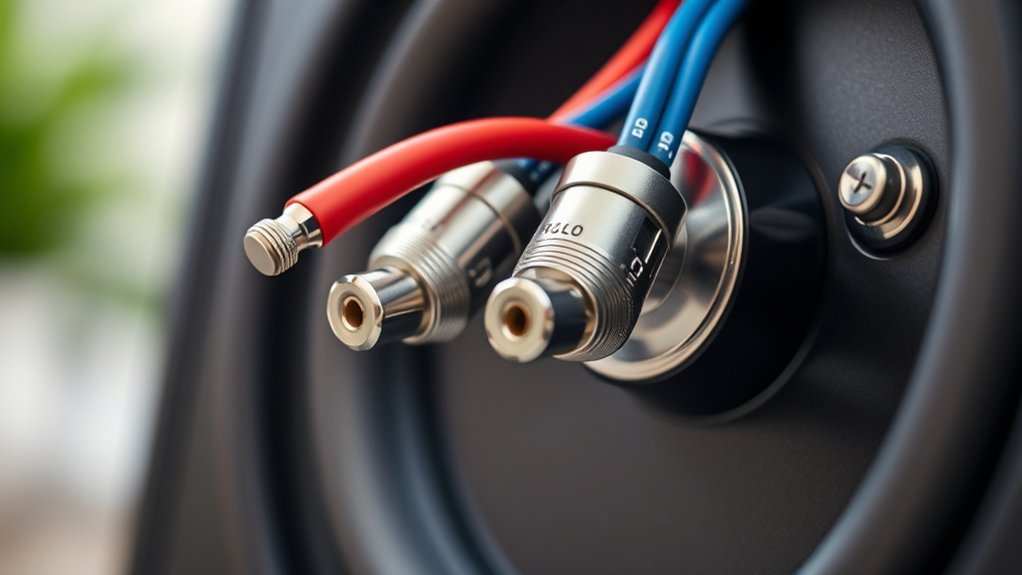
Understanding ohms is fundamental to grasping how impedance affects audio systems. Ohms measure the resistance a speaker offers to electrical current, known as speaker resistance. Lower ohms indicate less resistance, allowing more current to flow, which can produce louder sound but risks overloading the amplifier. Conversely, higher ohms reduce current flow, ensuring compatibility with most amplifiers. Proper impedance matching guarantees maximum power transfer and prevents damage to components. Key points include:
- Speaker resistance is expressed in ohms and influences system compatibility.
- Impedance varies with frequency, affecting sound quality.
- Mismatched impedance can cause distortion or damage.
- Matching impedance involves aligning speaker resistance with amplifier output specifications.
Understanding these principles helps in selecting suitable speakers and maintaining system integrity.
Why Matching Impedance Matters for Your Amplifier and Speakers
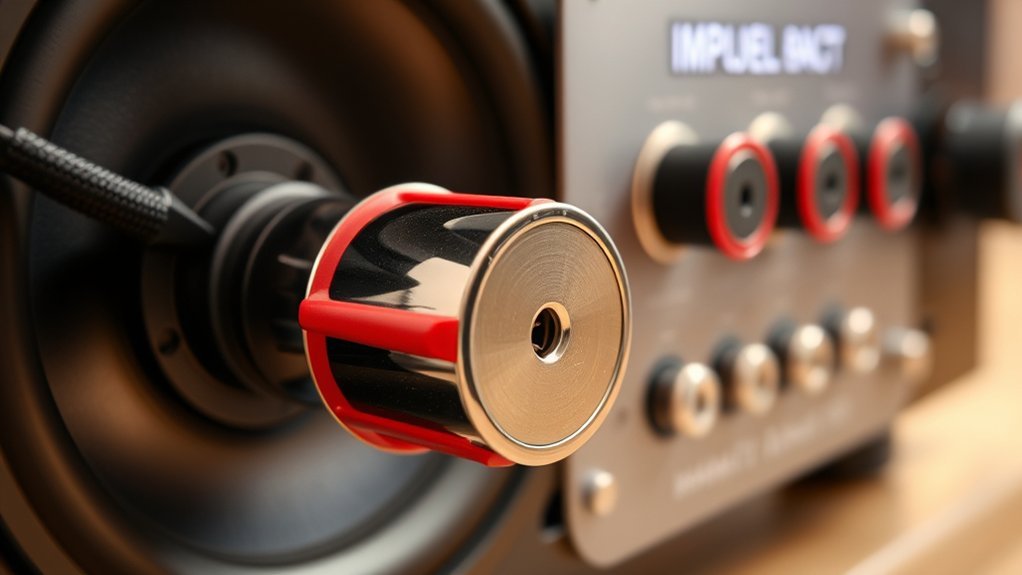
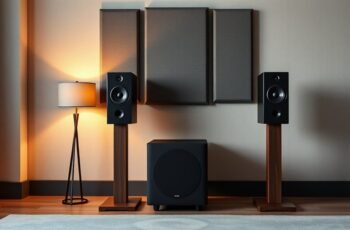
Matching impedance between your amplifier and speakers guarantees peak power transfer and system reliability. Proper impedance alignment guarantees your amplifier operates efficiently without distortion or risk of damage, maintaining ideal sound quality. When impedance mismatches occur, it can lead to amplifier stress, reduced clarity, and potential overheating. Additionally, speaker placement and acoustic treatment influence how impedance interacts with your environment, affecting overall system performance. Correct speaker placement minimizes impedance-related issues by reducing strain on the amplifier, while acoustic treatment helps manage reflections that can distort signals. Ensuring impedance compatibility, combined with strategic placement and environment control, maximizes your audio system’s effectiveness, preserves component longevity, and delivers a more accurate, dynamic listening experience.
How to Check Your Speaker and Amplifier Impedance Ratings
To accurately determine the impedance ratings of your speaker and amplifier, start by consulting their specifications, typically found in user manuals or manufacturer datasheets. This provides a reliable baseline for matching components. To verify impedance, use an impedance calculator or multimeter designed for audio equipment, connecting your speaker cable to the device. Consider these key points:
- Confirm your multimeter or impedance calculator is set to the correct frequency range.
- Measure the resistance across the speaker terminals; impedance may vary slightly under load.
- Check the amplifier’s specifications directly, often listed as minimum and maximum impedance ratings.
- Use consistent speaker cable gauge and quality to prevent measurement inaccuracies.
This process guarantees compatibility and peak performance in your audio setup.
Common Impedance Values and What They Mean for Your Setup
Most audio systems utilize speakers with impedance ratings that typically fall within specific standard values, which directly impact performance and compatibility. Common impedance values include 4 ohms, 8 ohms, and 16 ohms. Lower impedance speakers, such as 4 ohms, allow more speaker power to flow from the amplifier, resulting in higher volume but increased risk of overheating if impedance matching isn’t maintained. Conversely, higher impedance speakers like 16 ohms restrict current, reducing speaker power and potentially limiting output. Correct impedance matching guarantees ideal power transfer, preventing damage to your components. Understanding these values helps you select compatible speakers and amplifiers, maximizing audio clarity and efficiency, while avoiding performance issues caused by impedance mismatches.
What Happens When Impedance Compatibility Isn’t Maintained
When impedance compatibility is ignored, the results can be damaging to both the amplifier and the speakers. An impedance mismatch causes increased strain on the amplifier, leading to potential overheating or failure. It also induces audio distortion, degrading sound quality and clarity. Mismatched impedance can cause the amplifier to work harder, reducing efficiency and lifespan. Conversely, speakers may not receive the appropriate power levels, resulting in subpar performance. The following points highlight key consequences:
- Excessive current flow damages components
- Reduced audio fidelity due to distortion
- Amplifier overheating from overload
- Shortened equipment lifespan due to stress
Maintaining proper impedance matching is crucial to guarantee system stability and peak audio performance, preventing damage and distortion.
Tips for Choosing Speakers With the Right Impedance for Your System
Selecting speakers with the appropriate impedance requires careful consideration of your amplifier’s specifications and the desired audio performance. Begin by matching the speaker impedance to your amplifier’s rated load to prevent damage and guarantee best power transfer. Evaluate speaker placement, as proximity to walls and corners influences room acoustics, which can affect perceived impedance and sound clarity. Proper positioning minimizes reflections and standing waves that can distort audio, allowing the speaker’s impedance characteristics to perform as intended. Additionally, consider the room’s size and acoustic treatment to maximize sound quality without overloading your system. By aligning impedance ratings with amplifier capabilities and accounting for room acoustics and speaker placement, you guarantee reliable operation and clear, accurate sound reproduction.
Troubleshooting Impedance-Related Sound Issues
When troubleshooting impedance-related sound issues, we start by identifying potential impedance mismatches between components. We then examine and adjust equipment settings to guarantee proper impedance matching and peak performance. Accurate diagnosis requires precise measurement and systematic testing of each connection point.
Identifying Impedance Mismatches
How can we effectively identify impedance mismatches that cause sound issues? The key is systematic troubleshooting, focusing on cable connectors and acoustic damping. Mismatched impedance often manifests as distorted sound or reduced clarity. We should inspect cable connectors for secure, proper connections—loose or incompatible connectors can introduce impedance errors. Testing with a multimeter helps confirm electrical continuity and impedance consistency. Additionally, evaluate acoustic damping materials; improper damping can reflect or absorb sound improperly, exacerbating impedance mismatches.
- Verify cable connector compatibility and tightness
- Measure impedance with an appropriate meter
- Check for consistent impedance across connections
- Assess acoustic damping effectiveness in the enclosure
Adjusting Equipment Settings
Adjusting equipment settings is a critical step in resolving impedance-related sound issues, as improper configurations can greatly impact audio clarity and performance. Proper speaker placement ensures ideal impedance matching by minimizing cable length and avoiding placement near electrical interference. Additionally, implementing effective acoustic treatment reduces reflections and standing waves, stabilizing the sound environment and preventing impedance fluctuations caused by acoustic anomalies. We recommend verifying the amplifier’s output impedance settings to align with speaker specifications, ensuring compatibility. Using precise crossover and filter adjustments can also prevent impedance mismatches that distort sound. Regularly checking and calibrating these settings within your audio system maintains impedance harmony, enhances clarity, and prevents performance issues linked to improper configuration.
Frequently Asked Questions
How Does Impedance Affect Overall Speaker Performance?
Impedance influences speaker efficiency and acoustic damping, affecting how effectively a speaker converts power into sound and manages vibrations. Proper impedance matching ensures ideal performance, minimizing distortion and maximizing fidelity in your audio system.
Can Mismatched Impedance Damage My Audio Equipment?
Mismatched impedance can cause damage to your audio equipment, especially if the speaker wire isn’t properly impedance matched. Always guarantee impedance matching to prevent overloads, distortion, or potential component failure, safeguarding your system’s longevity and performance.
Are Higher Impedance Speakers Better Than Lower Ones?
Higher impedance speakers aren’t inherently better; they demand more power and precise impedance matching through proper wiring. We emphasize correct speaker wiring and impedance matching to avoid equipment damage and optimize audio clarity in your setup.
What Tools Are Best for Measuring Speaker Impedance Accurately?
We recommend using a multimeter or impedance meter for accurate impedance measurement, ensuring proper tool calibration beforehand. These tools provide precise readings essential for technical assessments, making them the best choices for measuring speaker impedance reliably.
Does Impedance Influence Power Consumption in Audio Systems?
Impedance acts like a gatekeeper, controlling how much audio signal flows, directly affecting circuit resistance and power consumption. Lower impedance demands more power, making system efficiency vital for ideal audio signal transmission and performance.
Conclusion
Understanding speaker impedance is essential for peak audio performance. When we guarantee proper matching, we prevent distortion and protect our equipment—like a well-tuned orchestra avoiding discord. By paying attention to impedance ratings and compatibility, we reveal the true potential of our systems. In the world of sound, impedance isn’t just a number; it’s the key that harmonizes our listening experience, transforming technical precision into auditory excellence.