When it comes to achieving the clearest, most accurate sound from bookshelf speakers, the question of height becomes central—yet it’s often overlooked. Proper placement isn’t just about aesthetics; it directly impacts imaging, frequency response, and overall sound clarity. Determining the ideal height involves understanding how speaker design, room acoustics, and listening position interact. To optimize your setup, it’s essential to evaluate these factors carefully, as the right height can make all the difference in your listening experience.
Key Takeaways
- Position speakers with tweeters at ear level for optimal sound clarity and imaging.
- Adjust height to minimize boundary effects and reflections for natural, balanced sound.
- Use adjustable stands or mounts to precisely align speakers with your seated listening position.
- Consider room size, shape, and furnishings to determine the best vertical placement.
- Fine-tune speaker height through small adjustments to improve stereo imaging and overall sound quality.
How Height Affects Sound Clarity and Imaging
The height at which bookshelf speakers are positioned considerably influences sound clarity and imaging precision. When placed at ear level, the drivers directly align with our listening position, enhancing treble detail and soundstage accuracy. Proper height minimizes diffraction and boundary effects, resulting in a more coherent audio experience. Additionally, speaker aesthetics and furniture integration play crucial roles; ideal placement ensures the speakers complement room decor while maintaining acoustic integrity. Elevated or lowered positions can cause phase shifts and frequency response anomalies, degrading imaging. Precise height adjustment ensures sound sources appear anchored and well-defined within the listening environment. Ultimately, aligning speaker height with listening ear height maximizes clarity and spatial imaging, creating a balanced and immersive audio presentation.
Ideal Height Based on Speaker Design and Size
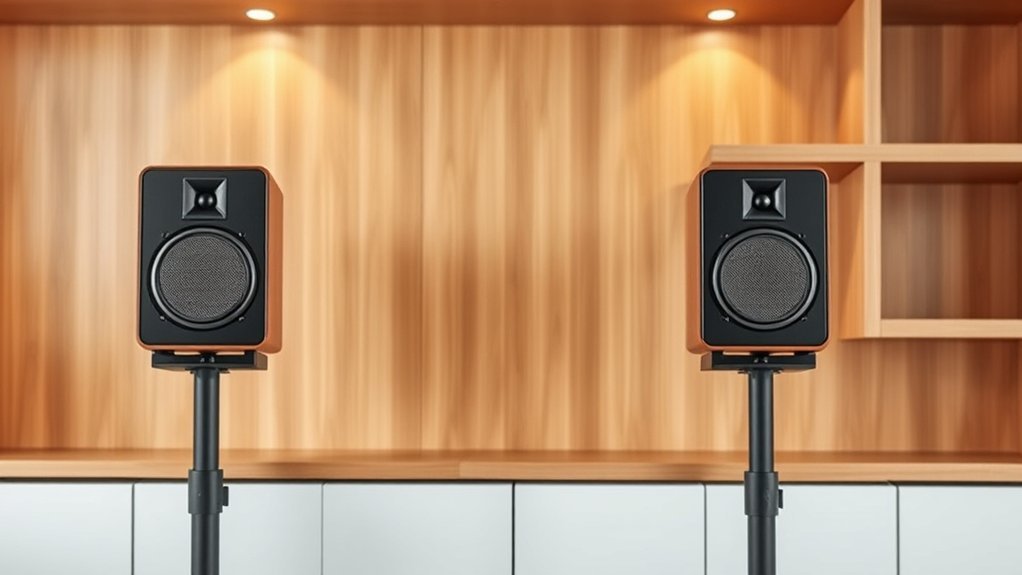
The ideal height for bookshelf speakers depends on their driver alignment and size, which directly influence sound dispersion and phase coherence. Proper placement ensures the drivers are aligned with the listener’s ear level at the chosen listening position, enhancing clarity. Additionally, the speaker’s dimensions affect how their acoustic output interacts with the environment, guiding precise height adjustments for peak performance.
Speaker Driver Alignment
Since speaker driver alignment greatly influences sound quality, selecting the ideal height depends on the design and size of the speaker itself. Proper vertical positioning ensures the drivers are aimed toward the listener’s ear, enhancing sound dispersion and clarity. The alignment of the speaker drivers, whether concentric or offset, impacts the ideal height for accurate imaging and tonal balance. For example, coaxial drivers require minimal vertical adjustment, while offset drivers benefit from precise height calibration. To clarify, consider this table:
| Driver Type | Recommended Vertical Position | Alignment Focus |
|---|---|---|
| Coaxial | Ear level | Driver convergence |
| Offset | Slightly above ear level | Driver angle adjustment |
| Conventional | Ear level or slightly below | Driver height for balance |
| Flared Enclosure | Slightly below ear level | Minimize diffraction effects |
| Line Array | Adjust based on array length | Uniform vertical dispersion |
This table guides us in tailoring vertical positioning for top-notch sound.
Optimal Listening Level
Determining the most suitable listening level involves considering the specific design and size of the bookshelf speakers, as these factors directly influence the ideal height for placement. The best listening level depends on several technical aspects:
- Speaker symmetry: Ensuring equal distance from the listener maintains balanced sound dispersion.
- Driver placement: Aligning tweeters at ear level maximizes clarity and detail.
- Aesthetic considerations: Proper height maintains visual harmony within the room without compromising sound quality.
- Room acoustics: Adjusting placement to minimize reflections enhances sound fidelity at the chosen level.
How Room Size and Acoustics Influence Placement Height
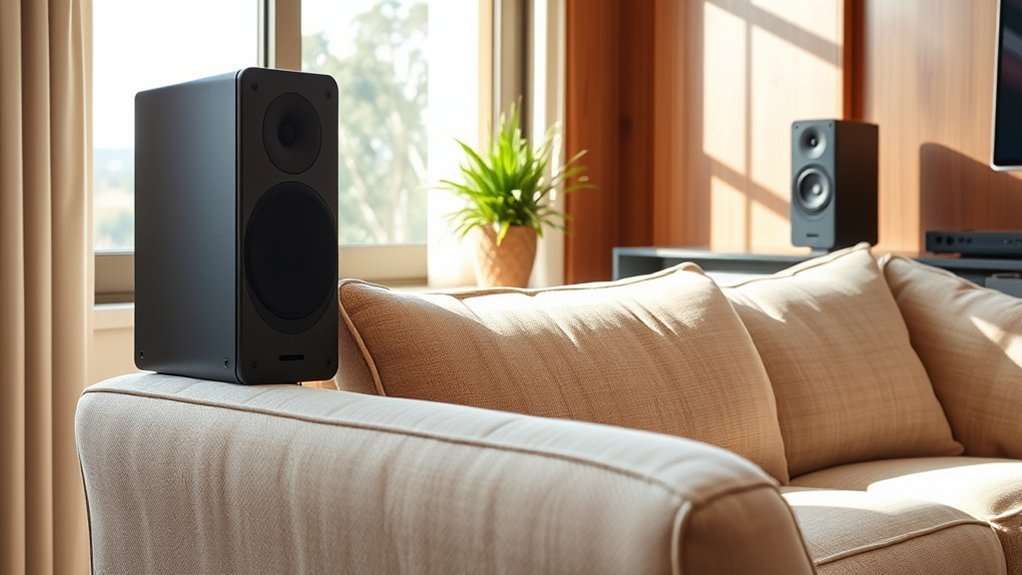
Room dimensions directly influence sound distribution and ideal speaker height, as larger spaces tend to diffuse sound differently than smaller ones. Acoustic treatments, such as panels or diffusers, modify sound reflections and can necessitate adjustments in placement height to achieve clarity. Understanding these factors allows for precise speaker positioning tailored to specific room characteristics.
Room Dimensions Impact Sound
The size and acoustic properties of a room directly influence how sound waves interact with speaker placement, making it essential to consider room dimensions when positioning bookshelf speakers. Sound behavior varies markedly depending on room volume, shape, and surface materials, affecting clarity and resonance. Key factors include:
- Room Volume – Larger spaces require careful speaker height adjustments to prevent sound dilution.
- Ceiling Height – Higher ceilings can cause sound dispersion issues, influencing ideal placement.
- Surface Materials – Hard surfaces reflect sound, necessitating strategic positioning to minimize echo.
- Room Decor – Soft furnishings and decor impact sound absorption, guiding speaker height for balanced acoustics.
Proper placement also considers the speaker cable length and aesthetic integration, ensuring the speakers harmonize with the room decor for consistent sound quality.
Acoustic Treatments Affect Placement
Acoustic treatments considerably influence the ideal placement height for bookshelf speakers by altering how sound waves interact within a space. Soundproofing techniques, such as bass traps and diffusers, modify room acoustics, reducing reflections and standing waves that can distort sound quality. These adjustments often require tweaking speaker height to optimize sound clarity and imaging. Additionally, effective speaker cable management ensures that cables do not introduce acoustic interference or clutter, allowing for precise positioning. When room size and acoustics are optimized through treatments, the placement height becomes more predictable, generally aligning with the ear level for the best listening experience. Considering these factors guarantees that speakers are positioned to maximize sound fidelity while minimizing acoustic anomalies caused by room reflections and resonances.
Adjusting Speaker Height for Different Listening Positions
Adjusting speaker height based on different listening positions guarantees ideal sound imaging and clarity. Proper height alignment guarantees that the tweeters are at ear level when seated, optimizing sound dispersion. To achieve this, consider these factors:
- Listening distance: Closer positions may require slightly lower heights, while distant seats benefit from higher placements.
- Room acoustics: Adjust for reflections and sound diffusion by fine-tuning the speaker height.
- Speaker aesthetics: Ensure the setup complements furniture and interior design without compromising acoustic performance.
- Furniture compatibility: Choose stands or mounts that integrate seamlessly with existing furniture, maintaining stability and aesthetic consistency.
Precise height adjustments optimize sound clarity and imaging while respecting the room’s design and furniture constraints.
Practical Tips for Setting Your Bookshelf Speakers at the Right Height
To guarantee ideal sound quality, we should carefully set the height of bookshelf speakers so that the tweeters align with our ear level when seated. Proper speaker mounting ensures consistent sound dispersion and minimizes diffraction effects. When considering aesthetic factors, choose mounting options that blend seamlessly with your room decor without compromising acoustic performance. Use adjustable brackets or stands to fine-tune height, ensuring the tweeters face directly toward your ears. The table below highlights key mounting strategies:
| Mounting Method | Aesthetic Considerations | Adjustment Flexibility |
|---|---|---|
| Wall brackets | Discreet, minimal visual impact | High |
| Bookshelf stands | Visible, customizable | Moderate |
| In-wall mounts | Seamless integration | Low |
| Surface mounts | Flexible placement | High |
Consistent height alignment optimizes sound clarity and aesthetic harmony.
Common Mistakes to Avoid When Placing Speakers Too High or Low
Placing speakers too high or low can markedly distort sound quality and compromise listening experience. Incorrect speaker height affects the accuracy of sound staging and imaging, leading to diminished clarity. To improve placement accuracy, avoid these common mistakes:
Incorrect speaker height can distort sound and reduce clarity—aim for proper placement for optimal listening.
- Ignoring the ideal ear level: Positioning speakers substantially above or below ear height skews audio perception.
- Neglecting room acoustics: Failing to consider the influence of furniture and walls can alter sound dispersion.
- Overlooking symmetrical placement: Uneven speaker height on either side hampers stereo imaging.
- Misjudging speaker tilt: Not angling speakers appropriately reduces direct sound and impacts clarity.
How to Fine-Tune Speaker Height for Optimal Sound Experience
Achieving ideal sound quality requires meticulous fine-tuning of speaker height to guarantee precise sound staging and imaging. We recommend adjusting the speakers so that the tweeters are at ear level when seated, as this aligns the sound projection with the listener’s hearing plane. Consider speaker aesthetics and furniture placement; discreet adjustments prevent compromising the room’s visual appeal. Use shims or adjustable stands to elevate or lower the speakers precisely, ensuring stability. Small incremental changes can notably improve clarity and stereo imaging. Avoid placing speakers too high or low, which can distort soundstage. Ultimately, fine-tuning involves balancing technical accuracy with furniture aesthetics, creating an environment where optimal sound performance complements the room’s design.
When to Consider Professional Calibration for Your Speakers
While fine-tuning speaker placement and height can considerably improve sound quality, there are situations where professional calibration becomes essential. If you notice persistent issues such as uneven sound distribution, excessive reverberation, or unresolved phase problems, expert intervention is warranted. Consider professional calibration when:
- Your sound calibration reveals significant frequency response inconsistencies.
- Adjustments to speaker cable length or type fail to resolve phase or impedance issues.
- You experience persistent echo, muddiness, or localization problems despite proper placement.
- Your system’s components, like amplifiers and receivers, require precise equalization calibration.
Professional calibration guarantees ideal sound performance by accurately adjusting speaker placement, phase, and crossover settings, often utilizing advanced tools that surpass typical consumer equipment. This process ensures precise sound calibration tailored to your environment.
Summary: Finding the Perfect Height for Your Bookshelf Speakers
Determining the ideal height for bookshelf speakers is essential for achieving accurate sound reproduction and peak listening experience. Ideal placement ensures the speaker’s tweeters are aligned with ear level, maximizing clarity and imaging. When considering decorative shelving, balance speaker aesthetics with acoustic performance by selecting heights that blend with your decor without compromising sound quality. Proper height alignment minimizes boundary interference and reflections, enhancing overall soundstage. Use the following guide:
| Consideration | Recommendation |
|---|---|
| Ear level listening | Align tweeters with seated ear height |
| Decorative shelving | Integrate speakers seamlessly into existing decor |
| Speaker aesthetics | Choose heights that complement room design |
| Acoustic reflections | Avoid placing speakers too high or low relative to walls |
| Room size & furniture | Adjust height for best sound dispersion in space |
Frequently Asked Questions
How Does Speaker Height Influence Bass Response?
Speaker height influences bass response primarily through woofer positioning and room acoustics, affecting how sound waves interact. We find that ideal height minimizes reflections and enhances bass clarity by aligning woofers with ear level, improving overall sound accuracy.
Should Speaker Height Match the Listener’s Ear Level at All Times?
We believe speaker height should generally match ear level for ideal sound, but room acoustics and speaker aesthetics also matter. Adjusting height can enhance clarity while maintaining visual harmony, ensuring balanced audio and pleasing integration into your space.
Can Adjustable Stands Improve Speaker Placement Accuracy?
Adjustable stands act like steady anchors, enhancing speaker stability and allowing us to fine-tune placement with precision. They blend aesthetic considerations with technical accuracy, ensuring sound clarity and visual harmony in any space, making setup both functional and elegant.
What Are Signs of Improper Speaker Height Affecting Sound Quality?
Signs of improper speaker height include uneven soundstage, muffled highs, or bass imbalance, often caused by poor room acoustics and incorrect speaker orientation. Adjusting height aligns the tweeters with ear level, improving clarity and overall sound accuracy.
How Does Speaker Height Impact Stereo Image Width?
Speaker height directly influences stereo imaging by aligning drivers with ear level, ensuring accurate soundstage and image width. Proper speaker height enhances spatial precision, creating a more immersive and balanced stereo image for ideal listening experience.
Conclusion
In fundamental terms, proper bookshelf speaker height aligns the tweeters with our ears, creating a seamless soundstage. By carefully adjusting their position, we eliminate boundary reflections and maximize clarity. Visualize your sound as a precise beam, directed straight to your ears, enhancing imaging and stereo separation. When we fine-tune this setup, we’re not just placing speakers—we’re sculpting an immersive acoustic environment that’s both technically optimized and profoundly engaging.