We often evaluate audio quality based on clarity and precision, but the role of physical vibrations in shaping sound remains underappreciated. Speaker isolation pads are designed to mitigate these vibrations, yet their true impact on sound fidelity can vary considerably. Understanding how these pads function and whether they genuinely enhance audio performance requires a closer look at their mechanics and limitations. Exploring this connection may reveal important considerations for optimizing high-fidelity audio setups.
Key Takeaways
- Isolation pads reduce vibrations and resonance, leading to clearer and more accurate sound reproduction.
- They help minimize mechanical interference, enhancing sound clarity across highs, mids, and bass.
- Effectiveness varies based on material quality and proper placement, but they generally improve audio fidelity.
- Benefits are more noticeable in controlled environments and with high-fidelity audio systems.
- In some setups, the sound improvement may be minimal, making the investment less impactful.
What Are Speaker Isolation Pads and How Do They Work?
Speaker isolation pads are specialized accessories designed to decouple speakers from their surfaces, thereby reducing unwanted vibrations and resonance. By isolating the speaker’s base, these pads prevent transmitted vibrations from affecting sound clarity and accuracy. They are typically made from materials like foam, rubber, or dense composites, which absorb and dissipate vibrational energy. Aesthetic enhancement is a consideration, as some pads feature sleek designs that complement modern setups. Cost considerations also come into play, as higher-quality pads often deliver better vibration damping but at increased expense. Their primary function is to improve sound fidelity by minimizing mechanical interference, making them a valuable addition in both professional and home audio environments. Proper selection hinges on balancing effectiveness, aesthetic appeal, and budget constraints.
Do Isolation Pads Really Reduce Vibrations and Resonance?
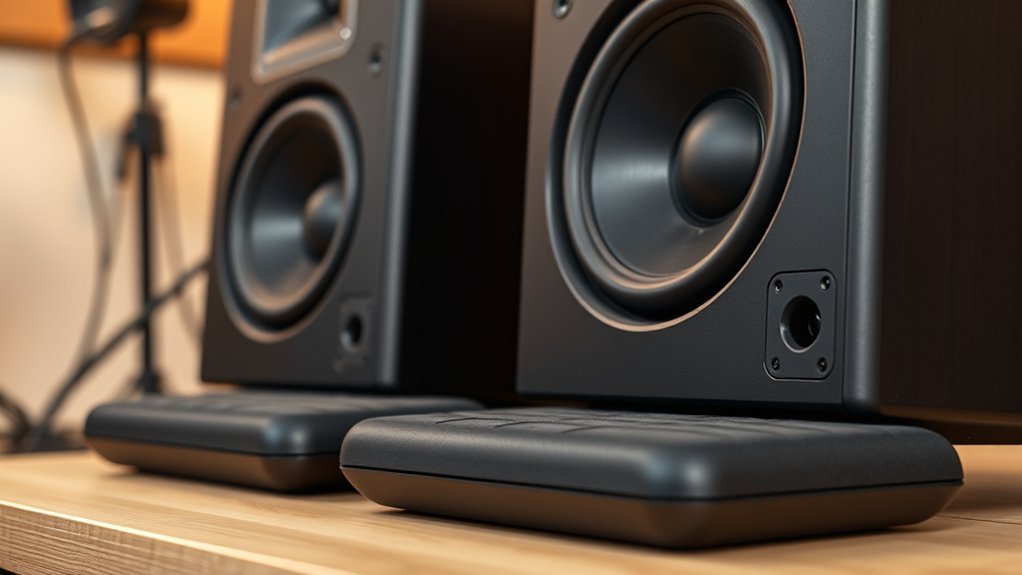
Isolation pads are engineered specifically to dampen vibrations and reduce resonance, but how effectively do they perform this function? Their success depends largely on material durability; high-quality materials like dense foam or rubber absorb vibrations more efficiently and withstand prolonged use without degradation. These materials help prevent transfer of vibrations from the speaker to the surface, minimizing resonance that can color sound output. From a cost-effectiveness perspective, investing in durable pads provides long-term benefits, as they maintain their vibration-dampening properties over time, reducing the need for frequent replacements. While some budget options may seem appealing initially, their lower material durability can compromise vibration reduction and resonance control, ultimately impacting sound clarity and overall performance.
How Much Can Isolation Pads Improve Your Sound Quality?
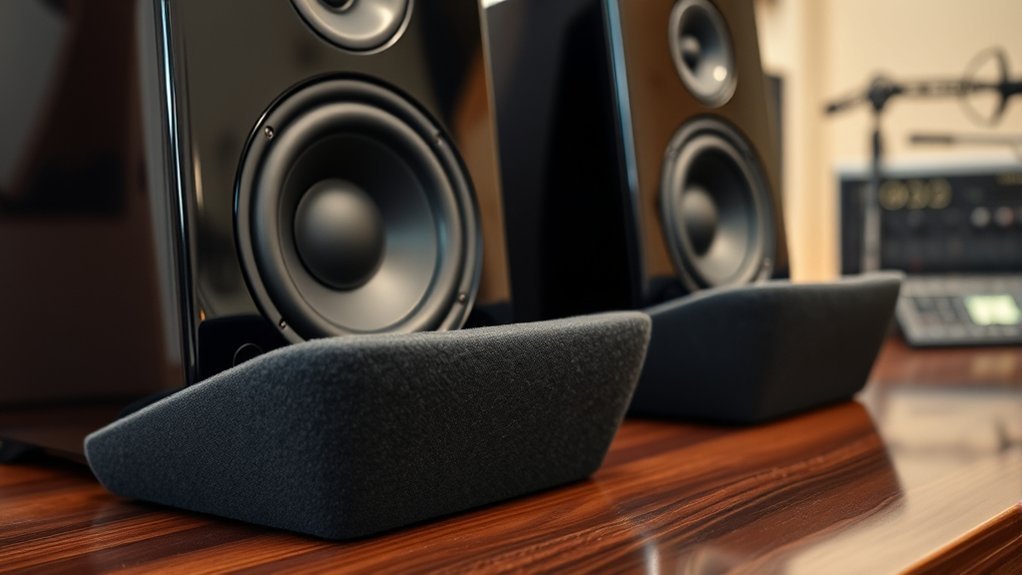
While the degree of improvement varies based on specific conditions, isolation pads can considerably enhance sound quality by minimizing unwanted vibrations and resonance. They influence room acoustics by reducing the transmission of vibrations to surfaces, which can cause acoustic muddiness or coloration. Proper speaker placement paired with isolation pads helps optimize the direct sound path, decreasing reflections and standing waves. This results in clearer highs, more defined mids, and tighter bass. In controlled environments, the benefits are more pronounced, with noticeable improvements in sound clarity and imaging. However, the actual impact depends on the room’s size, surface materials, and existing acoustic treatment. Overall, isolation pads modestly yet meaningfully enhance audio fidelity when thoughtfully combined with strategic speaker placement.
Are There Limitations or Downsides to Using Isolation Pads?
Despite the advantages that isolation pads can offer, they are not without limitations. One primary concern is cost effectiveness; while they can enhance sound quality, the expense may outweigh perceived benefits for some setups, especially if budget constraints are tight. Additionally, installation challenges can pose practical issues—correct positioning and stability are vital for maximum performance, yet some pads may be difficult to secure or align properly. In smaller or cluttered spaces, the added height or bulk can interfere with speaker placement or aesthetic considerations. Moreover, not all audio environments benefit equally—certain configurations might see minimal improvements, making the investment less justified. Overall, while isolation pads are useful tools, understanding these limitations helps in making more informed decisions about their suitability for specific audio setups.
Should You Invest in Speaker Isolation Pads for Your Setup?
Deciding whether to invest in speaker isolation pads depends on a careful assessment of your audio environment, budget, and performance goals. While they can reduce vibrations and improve sound clarity, the decision hinges on several factors.
Consider these points:
- Aesthetic enhancement: Isolation pads can subtly improve the visual appeal of your setup, aligning with a minimalist or professional look.
- Cost considerations: Prices vary, so evaluate whether the potential sound improvements justify the expense.
- Performance impact: For high-fidelity systems, pads can minimize resonance, but for casual listening, benefits may be marginal.
- Placement flexibility: Pads enable precise positioning, which can optimize acoustic performance in complex environments.
Ultimately, weigh these factors to determine if the investment aligns with your sound quality objectives and budget constraints.
Frequently Asked Questions
Can Isolation Pads Be Used With All Types of Speakers?
We find that isolation pads can generally be used with most speakers, but speaker compatibility and placement considerations are vital. Properly selecting pads guarantees peak vibration control and sound clarity, especially for delicate or sensitive speaker designs.
How Do Material Choices Affect the Effectiveness of Isolation Pads?
Material choices considerably impact isolation pad effectiveness; durable materials enhance longevity, while superior acoustic properties reduce vibrations and improve sound clarity. We analyze these factors to optimize sound isolation and achieve precise audio performance in various environments.
Are There Specific Brands or Models Recommended for Best Results?
We recommend brands like Auralex and IsoAcoustics for exceptional sound enhancement, leveraging premium speaker material and engineering precision that dramatically elevate audio clarity, making them the ultimate choice for professional and serious audiophiles seeking unmatched sound quality.
Do Isolation Pads Impact the Overall Aesthetic of a Speaker Setup?
Isolation pads can affect the visual appeal and design integration of your speaker setup, as they introduce visible elements that may contrast with or complement your aesthetic. We analyze their impact to guarantee both sound and style are maintained.
Can DIY Isolation Pads Provide Similar Benefits as Commercial Ones?
Research shows DIY isolation pads can match commercial ones in reducing vibrations, enhancing sound clarity. By applying soundproofing techniques and acoustic treatment principles, we find cost-effective, effective solutions for improving speaker performance without sacrificing aesthetics.
Conclusion
In sum, speaker isolation pads act like a dampening shield, absorbing vibrational energy that threatens to distort sound clarity. While they won’t transform an entry-level system into audiophile-grade, they fine-tune the environment, sharpening high frequencies and tightening bass. For those seeking incremental improvements, these pads serve as precise tools—like tuning forks for your audio setup—offering a measurable, if subtle, enhancement that makes your listening experience more faithful and nuanced.