Effective speaker performance depends heavily on room acoustics, which influence sound clarity, imaging, and overall fidelity. We recognize that proper placement and treatment can markedly reduce problematic reflections and standing waves. By analyzing your space and applying targeted adjustments, you can optimize your listening environment. The key lies in a systematic approach that combines strategic positioning with acoustic treatments—techniques that require careful consideration to achieve the best possible sound.
Key Takeaways
- Optimize speaker placement to minimize reflections and ensure direct sound reaches the listening position effectively.
- Use acoustic treatments like panels, bass traps, and diffusers to control reverberation and reduce echo.
- Evaluate room dimensions and surfaces to identify and address problematic reflections or standing waves.
- Position speakers at ear level and form an equilateral triangle with the listening area for accurate imaging.
- Regularly assess room acoustics with measurements and adjust treatments to maintain optimal sound quality.
How Room Acoustics Impact Speaker Performance
Room acoustics directly influence how sound waves interact with your speakers and listening environment, affecting clarity, imaging, and overall audio fidelity. Sound frequency plays a critical role, as different frequencies behave uniquely within a space. Proper speaker placement guarantees ideal interaction with room boundaries, minimizing destructive interference and resonances that distort sound. When speakers are correctly positioned, low, mid, and high frequencies are balanced, reducing comb filtering and standing waves. Precise placement also enhances imaging, allowing sound sources to be accurately localized. By understanding how room acoustics shape sound frequency response and adjusting speaker placement accordingly, we can considerably improve the clarity and detail of audio reproduction, creating a more precise and immersive listening experience.
Assessing Your Current Space for Sound Quality
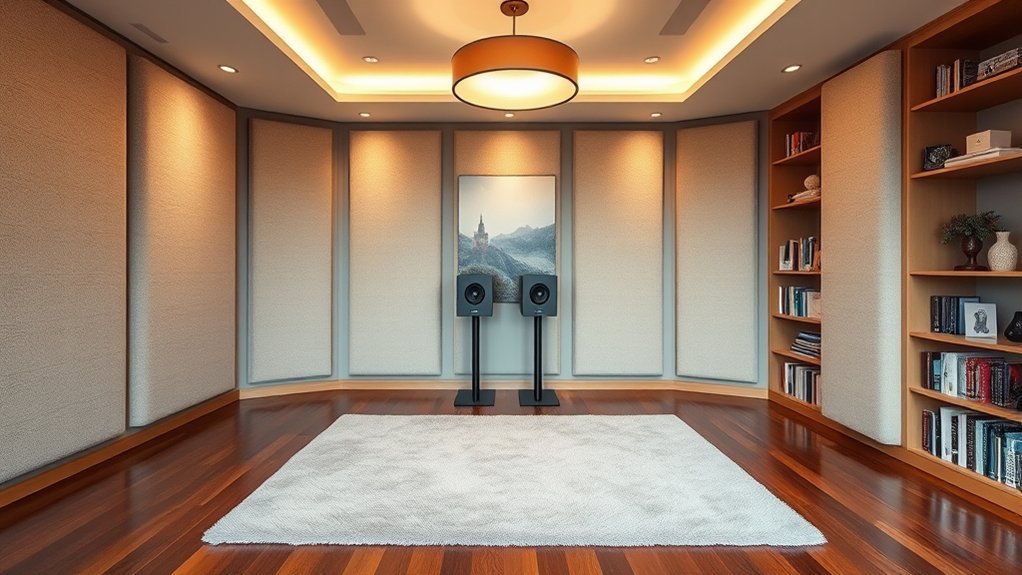
To optimize speaker performance, it’s essential to evaluate the acoustic characteristics of your current space thoroughly. Begin by analyzing how decorating styles influence sound absorption and reflection; soft fabrics and textured surfaces tend to dampen sound, while hard surfaces can cause unwanted reflections. Consider lighting effects as well, since fixtures and reflective surfaces may create visual distractions or affect perceived acoustics. Measure room dimensions and note the placement of furnishings, noting how these elements contribute to sound diffusion or absorption. Identifying areas of excessive echo or dead zones allows targeted adjustments. By systematically appraising these factors, you can determine how your space’s decorating style and lighting effects impact sound quality and plan effective acoustic treatments accordingly.
Key Room Features That Affect Acoustics
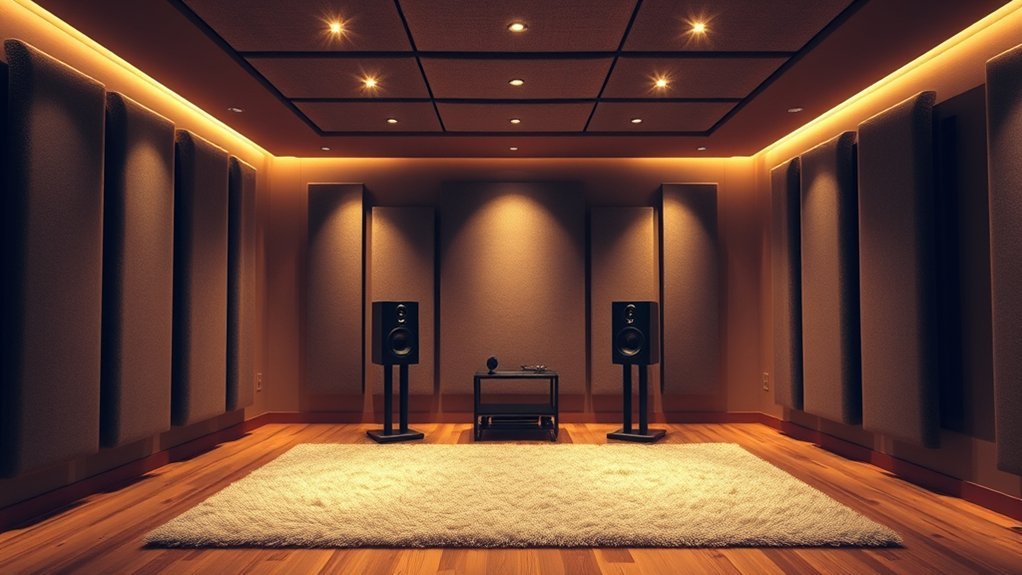
Understanding the key features of a space that influence acoustics enables us to maximize speaker performance effectively. Room dimensions, shape, and surface materials substantially impact sound behavior, affecting reflections and resonance. Decorative accents, lighting fixtures, and other architectural elements can either enhance or hinder sound clarity. For example, angular surfaces or ornate decor may cause unwanted diffraction or absorption, disrupting sound waves. Lighting fixtures mounted on ceilings or walls can introduce acoustic reflections, creating phase issues or echo. Additionally, room volume influences reverberation time, dictating how sound persists. Recognizing these features helps us strategically position speakers and select materials that minimize acoustic distortions, ensuring clearer, more accurate sound reproduction. Properly managing these room features is essential for ideal listening experiences.
Simple DIY Sound Treatments to Improve Clarity
Implementing simple DIY sound treatments can considerably enhance audio clarity without the need for expensive equipment. Effective DIY soundproofing techniques focus on reducing reflections and controlling reverberation, which improves sound fidelity. Installing acoustic panels made from dense materials like mineral wool or fiberglass can absorb mid and high frequencies, minimizing echo. Additionally, strategically placing bass traps in corners reduces low-frequency buildup, refining overall clarity. These treatments also support aesthetic acoustics by allowing customization with fabric coverings or decorative elements that blend with room decor. Properly executed, DIY soundproofing not only enhances acoustic performance but also creates a more visually appealing environment. These solutions are accessible, cost-effective, and essential for achieving ideal speaker performance through improved room acoustics.
Strategic Speaker Placement for Optimal Sound
Achieving ideal sound quality depends heavily on precise speaker placement within the room. Correct speaker orientation is vital; speakers should face the listening position directly to guarantee accurate sound imaging. Optimal placement involves equidistant positioning from walls to prevent reflections that distort audio clarity. The listening position should be centered between the speakers, forming an equilateral triangle with them to maximize stereo separation.
Consider these key points:
- Align speaker orientation directly toward the listening position for clarity.
- Position speakers at ear level, angled appropriately for balanced sound.
- Maintain equal distance from each speaker to the listener for phase coherence.
- Avoid placing speakers near reflective surfaces that can cause unwanted echoes.
Proper strategic placement enhances sound precision and creates an immersive listening environment.
Using Soft Materials to Reduce Echo and Reverberation
To effectively minimize echo and reverberation, incorporating soft materials into the room’s surfaces is essential. Soft furnishings, such as thick curtains, plush carpets, and upholstered furniture, absorb sound waves and reduce reflective surfaces. Acoustic panels, strategically placed on walls or ceilings, further dampen sound reflections by breaking up sound energy before it bounces back into the room. These materials are designed to target mid and high frequencies that contribute most to echo and reverberation, resulting in clearer sound clarity. Proper selection and placement of soft furnishings and acoustic panels optimize the room’s acoustic profile, ensuring that sound waves are absorbed rather than reflected. This creates a more accurate listening environment and improves overall speaker performance.
Balancing Sound With Room Size and Shape
The size and shape of a room directly influence how sound waves propagate and interact, making it essential to contemplate these factors when optimizing speaker performance. Larger spaces may require strategic furnishing arrangements to minimize sound diffusion issues, while smaller rooms benefit from acoustic focus. Consider adjusting lighting modifications to alter perceived space, which can subtly influence sound perception. Key approaches include:
- Arranging furnishings to prevent sound reflections and dead spots
- Utilizing lighting to visually alter room perception, aiding sound clarity
- Recognizing that irregular shapes can diffuse sound more evenly
- Ensuring proportions support balanced sound distribution and avoid standing waves
Investing in Acoustic Treatments: When and What to Consider
Determining when to invest in acoustic treatments depends on analyzing specific room deficiencies, such as excessive reflections or uneven frequency response. Selecting appropriate treatments requires understanding their acoustic functions, like absorption or diffusion, and matching them to identified needs. We recommend a systematic assessment to optimize treatment choices for precise sound control.
Identifying Acoustic Needs
How do we accurately assess the need for acoustic treatments in a space? We begin with objective analysis, measuring reverberation time and sound decay. Identifying excessive echo or muddiness indicates a need for targeted solutions like decorative wall panels or soundproof curtains. These treatments address specific issues:
- Reducing long reverberation to improve clarity
- Controlling flutter echoes in reflective environments
- Absorbing mid and high frequencies for balanced sound
- Preventing sound leakage for privacy and noise isolation
Choosing Appropriate Treatments
After identifying specific acoustic issues through measurement, selecting appropriate treatments becomes a targeted process. We focus on solutions that address problem areas without over-treating the space. Decorative panels serve dual purposes—absorbing mid to high frequencies while maintaining aesthetic appeal, making them ideal for wall surfaces. Acoustic diffusers, on the other hand, scatter sound waves evenly, reducing flutter echoes and standing waves, which enhances overall clarity. Proper placement is critical; placing diffusers on rear walls or ceiling regions where reflections occur maximizes their effectiveness. Combining these treatments ensures a balanced acoustic environment tailored to the room’s unique characteristics. Ultimately, choosing treatments involves evaluating the acoustic measurements and selecting solutions that optimize sound quality while preserving visual harmony.
Troubleshooting Common Room Acoustics Issues
Room acoustics issues can markedly impair speaker performance, causing problems such as uneven sound distribution, excessive reverberation, or dead spots. To troubleshoot effectively, focus on targeted solutions like echo reduction and sound absorption. First, identify reflective surfaces that generate flutter echoes and apply absorptive treatments to minimize them. Second, assess room geometry; irregular shapes can cause standing waves, requiring strategic placement of diffusers or bass traps. Third, verify that sound absorption materials are appropriately dense and positioned for ideal acoustic damping. Finally, eliminate sources of unwanted reflections, such as glass or hard surfaces, by adding soft furnishings.
- Pinpoint problematic areas with acoustic measurements
- Use bass traps to control low-frequency resonances
- Adjust speaker placement for even sound coverage
- Incorporate acoustic panels to fine-tune reverberation
Frequently Asked Questions
How Do Window Placements Affect Room Acoustics for Speakers?
Window placement affects room acoustics through glass transparency and reflection, which can cause sound waves to bounce unpredictably. We recommend minimizing reflective surfaces and strategically positioning windows to reduce reflections, ensuring clearer sound quality and accurate speaker performance.
Can Furniture Arrangement Improve Speaker Sound Quality?
We believe furniture arrangement can profoundly improve speaker sound quality through strategic decor placement and sound diffusion. Properly positioned furniture minimizes reflections, enhances clarity, and creates a balanced soundstage, making your listening experience more immersive and precise.
What Are Affordable Ways to Enhance Room Acoustics?
We suggest affordable echo reduction techniques, like adding soft furnishings and rugs, and installing bass trapping panels in corners. These improvements enhance room acoustics, providing clearer sound and better speaker performance without significant costs or complex modifications.
How Does Ceiling Height Influence Speaker Performance?
Higher ceilings reduce sound reflections and improve dispersion, but require proper ceiling insulation and strategic placement of acoustic panels to manage echo and reverberation effectively, optimizing speaker performance within the space.
Are There Specific Materials That Best Absorb Sound?
They say “you are what you absorb,” so we recommend using specialized acoustic panel options like mineral wool or foam for soundproofing techniques, as these materials best absorb sound, reducing reflections and improving speaker clarity.
Conclusion
Just as a finely tuned instrument harmonizes with its surroundings, optimizing our room acoustics aligns our audio environment with clarity and precision. By treating reflections, positioning speakers, and understanding room dynamics, we create a soundscape that resonates with accuracy. When we fine-tune these elements, we’re not just improving sound—we’re orchestrating an immersive experience where every note and nuance is heard with fidelity. Ultimately, a well-designed space becomes the canvas for sonic excellence.