Have we ever wished our compact speaker setup sounded as full and rich as a proper home studio, without turning our living room into a mess of cables and gear?

Overall Impression of the Edifier R1280DB
From the moment we set up the Edifier R1280DB Powered Bluetooth Bookshelf Speakers, we realized these are designed for people who care about sound quality but also want convenience and style. They sit comfortably between budget speakers and high-end studio monitors, offering a smart balance of clarity, power, and everyday usability.
We get wireless Bluetooth, multiple wired inputs (including optical and coaxial), and a classic wood grain finish that looks more like furniture than tech. As a complete package, they feel well-rounded, especially for smaller rooms, desks, and near-field listening.
Key Specifications at a Glance
Before we share how they feel and sound in real-world use, it helps to lay out the key specs. This way we can quickly see where these speakers stand compared to other options in this category.
| Feature | Specification / Description |
|---|---|
| Product Name | Edifier R1280DB Powered Bluetooth Bookshelf Speakers |
| Speaker Type | Powered (active) bookshelf speakers |
| Total Power Output | 42W RMS (21W x 2) |
| Driver Configuration | 4″ bass driver + 13mm silk dome tweeter |
| Wireless Connectivity | Bluetooth (for phones, tablets, laptops, etc.) |
| Wired Inputs | Optical, Coaxial, Dual RCA (line-in) |
| Control Options | Side panel knobs + wireless remote |
| EQ Controls | Bass and treble knobs on side of main speaker |
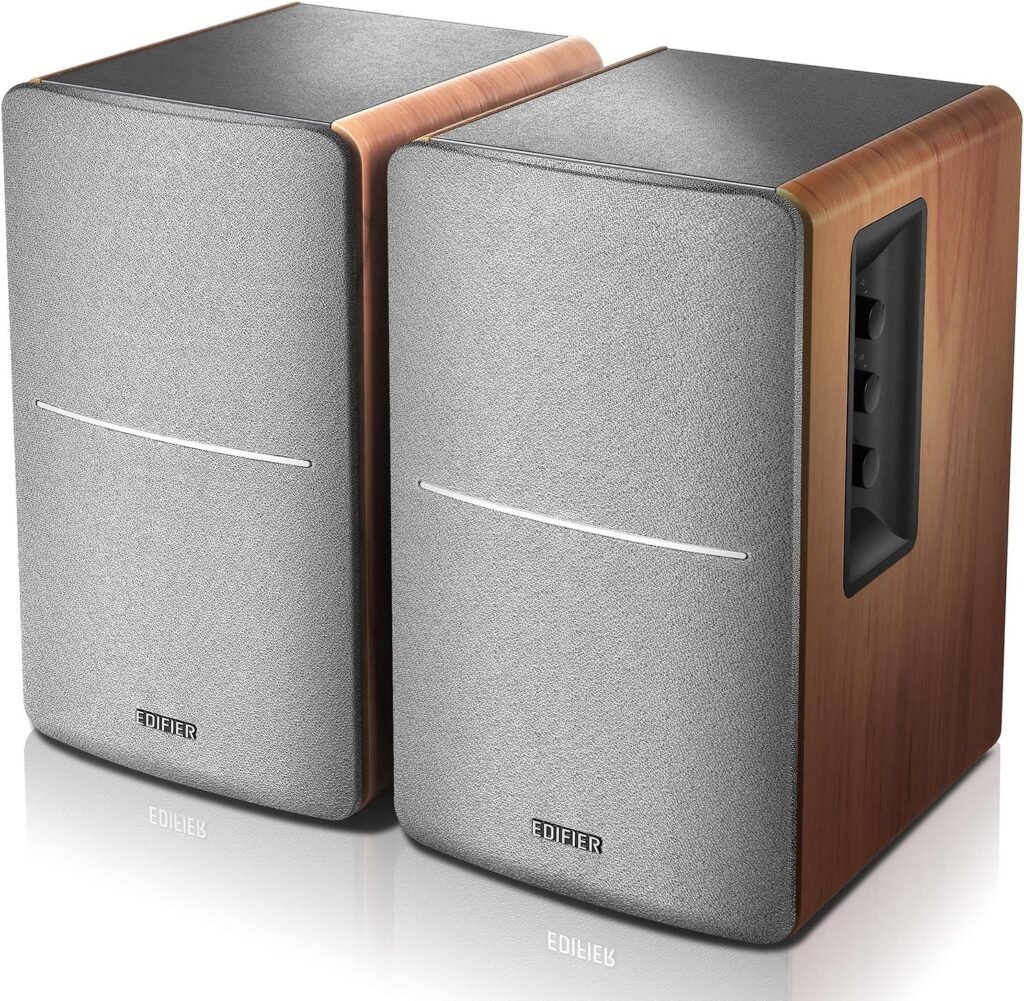
| Design Finish | Wood grain with gray front panel |
| Use Case | Near field listening, TV audio, desktop audio, casual studio use |
| Included Accessories | Remote control, input cables, speaker connecting cable, power cable |
We appreciate that these speakers give us serious flexibility: we get proper wired connections for TVs and computers plus Bluetooth for fast, casual listening from our phone or tablet.

Design and Build Quality
Classic Bookshelf Look with Wood Grain Finish
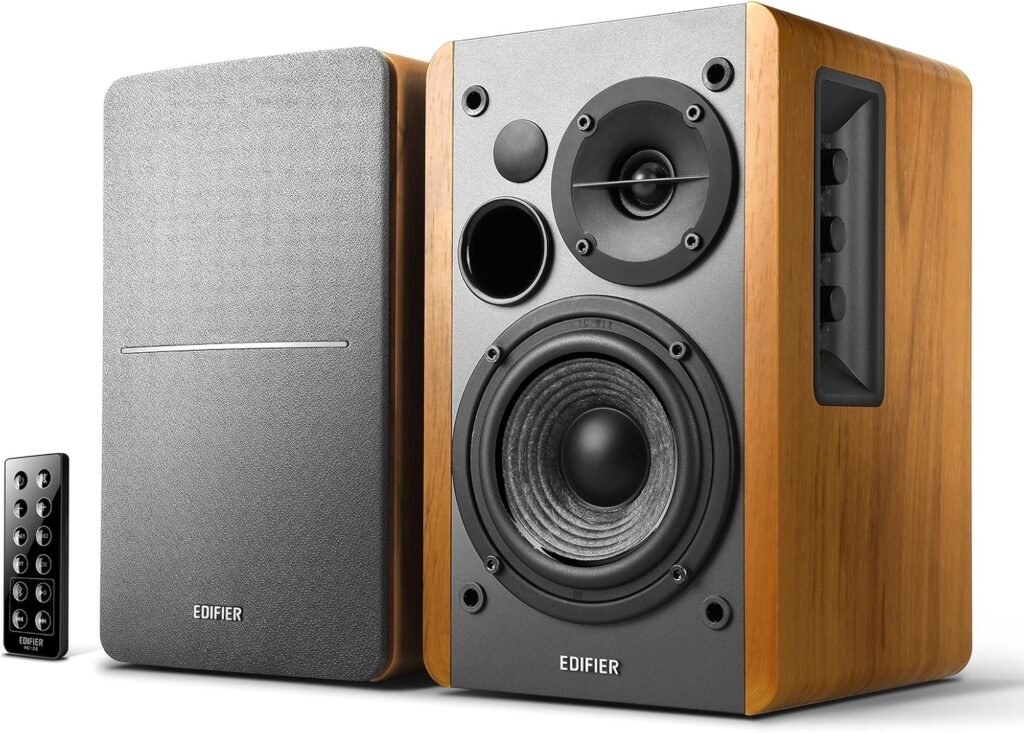
In terms of aesthetics, the R1280DB speakers lean into a timeless bookshelf style. The wood grain side panels give them a warm, home-friendly appearance that fits neatly in living rooms, home offices, and bedrooms.
We like that they do not scream “plastic gadget.” Their look pairs well with desks, bookshelves, or TV stands, and the neutral color scheme keeps them subtle rather than flashy.
Compact yet Solid Construction
Despite being relatively compact, they feel sturdy in the hand. The cabinets are well put together, with no obvious gaps or rattling parts. This kind of construction matters: a solid cabinet reduces unwanted resonance and helps produce clearer audio.
We also like their size. They are small enough for a desk setup next to a monitor but large enough to move a satisfying amount of air with that 4-inch woofer.
Connectivity and Inputs
Bluetooth Wireless Convenience
One of the main selling points is Bluetooth. Being able to send audio from our phone, tablet, or laptop without any cable is incredibly convenient, especially if we use streaming services or listen to podcasts around the home.
Bluetooth pairing is straightforward. We put the speakers in pairing mode (using the remote or button), then select them on our device. Once paired, reconnecting is quick and automatic. For everyday use—like playing music while working or relaxing—this wireless flexibility feels like a real quality-of-life upgrade.
Optical and Coaxial Digital Inputs
We appreciate that Edifier included both optical and coaxial digital inputs. This is especially useful when we want to connect:
- A TV for better home theater sound than the built-in speakers
- A desktop or media PC with digital audio output
- Certain consoles or streaming boxes that support optical out
Using digital connections helps preserve a cleaner signal and reduce interference compared to certain analog setups, which is particularly noticeable in quieter passages or more detailed music.
Dual RCA Line Inputs
In addition to digital inputs, we get traditional RCA line-in connections. These let us:
- Hook up a turntable (with a phono preamp)
- Connect a CD player or older music device
- Use a DAC or audio interface as a source
Multiple inputs mean we can keep several devices connected at the same time. With the remote, we simply switch between them rather than constantly plugging and unplugging cables.
Controls and Usability
Side Panel Knobs for On-the-Fly Adjustments
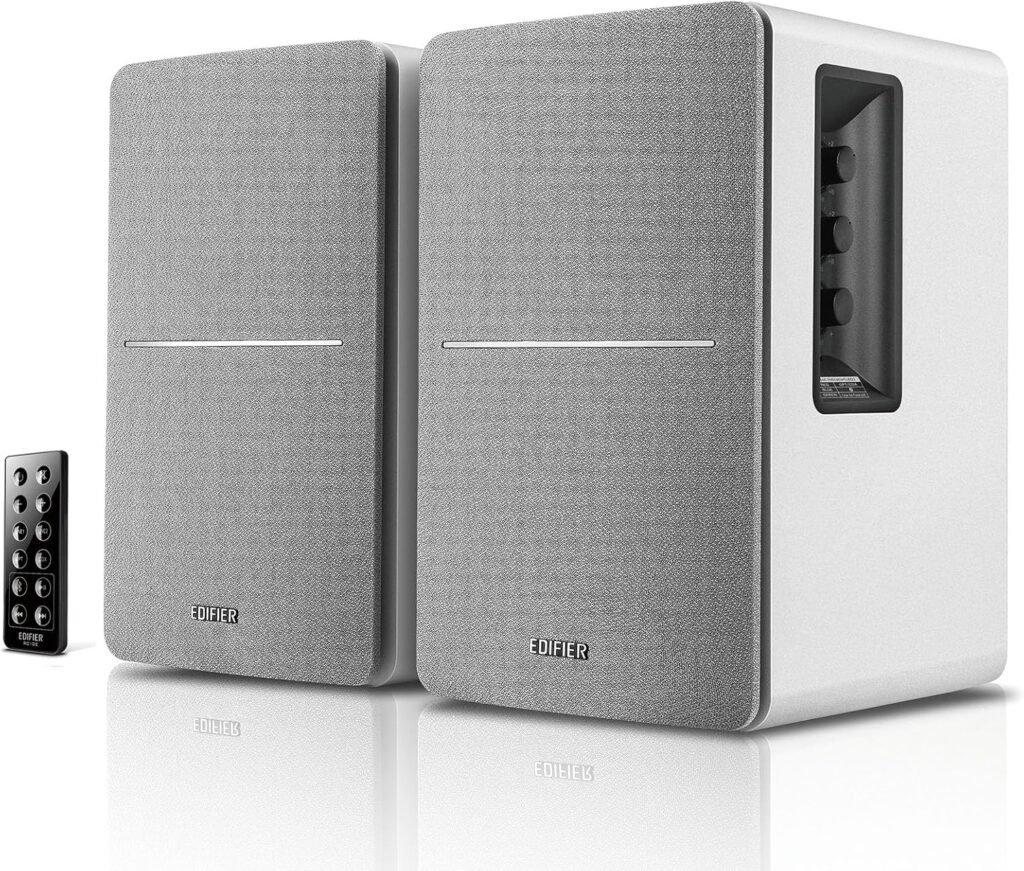
On the active (main) speaker, we have a small but functional side control panel. These knobs let us adjust:
- Volume
- Bass
- Treble
We like this physical control because not every situation is the same. Sometimes we want extra low-end warmth for a movie, other times we prefer a flatter response for casual monitoring or work. Being able to tweak EQ right on the speaker without fussing with software feels very practical.
Remote Control for Everyday Comfort
The included remote control is simple and functional, giving us:
- Volume up and down
- Mute
- Input selection (switch between Bluetooth, optical, coaxial, and RCA)
- Playback controls for Bluetooth (depending on the device)
We find it particularly handy when using the speakers as TV audio. Instead of standing up to change volume or inputs, we do it from the couch. The remote is not overloaded with buttons, which keeps it easy to use even in low light.
Sound Quality: Overall Character
Balanced and Pleasant Studio-Style Tuning
The R1280DB leans toward a balanced, slightly warm sound signature. Edifier advertises “studio sound quality,” and while we would not compare these directly to high-end studio monitors, they do share some traits:
- Clear mids
- Nicely present vocals
- Decent detail in the highs
- Controlled, musical bass
We find them very comfortable for long listening sessions. They do not sound harsh or fatiguing, which matters if we like to keep music playing while we work or relax.
Bass Performance and Low-End Presence
With a 4-inch bass driver and a 42W RMS total output, these are not subwoofers—and we should not expect window-rattling bass. That said, the low end is:
- Full enough for pop, rock, jazz, and most electronic music
- Tight and controlled rather than boomy
- Adjustable via the bass knob, which lets us tailor the tone
For near-field or small to medium-sized rooms, we get a satisfying low-end presence. For very bass-heavy genres or home theater explosions, some of us might prefer to add a dedicated subwoofer, but for general listening, these hold their own surprisingly well.
Highs and Mids: Clarity and Detail
The 13mm silk dome tweeter does a nice job reproducing treble frequencies:
- Cymbals sound crisp without being overly bright
- Vocals are articulate
- Acoustic instruments retain a natural character
We noticed that spoken word content (podcasts, YouTube videos, audiobooks) is easy to follow, with clear dialogue and minimal muddiness. This clarity in the midrange is also what makes them appealing as entry-level monitors for basic home recording or editing work.
Performance in Different Use Cases
As Desktop/Computer Speakers
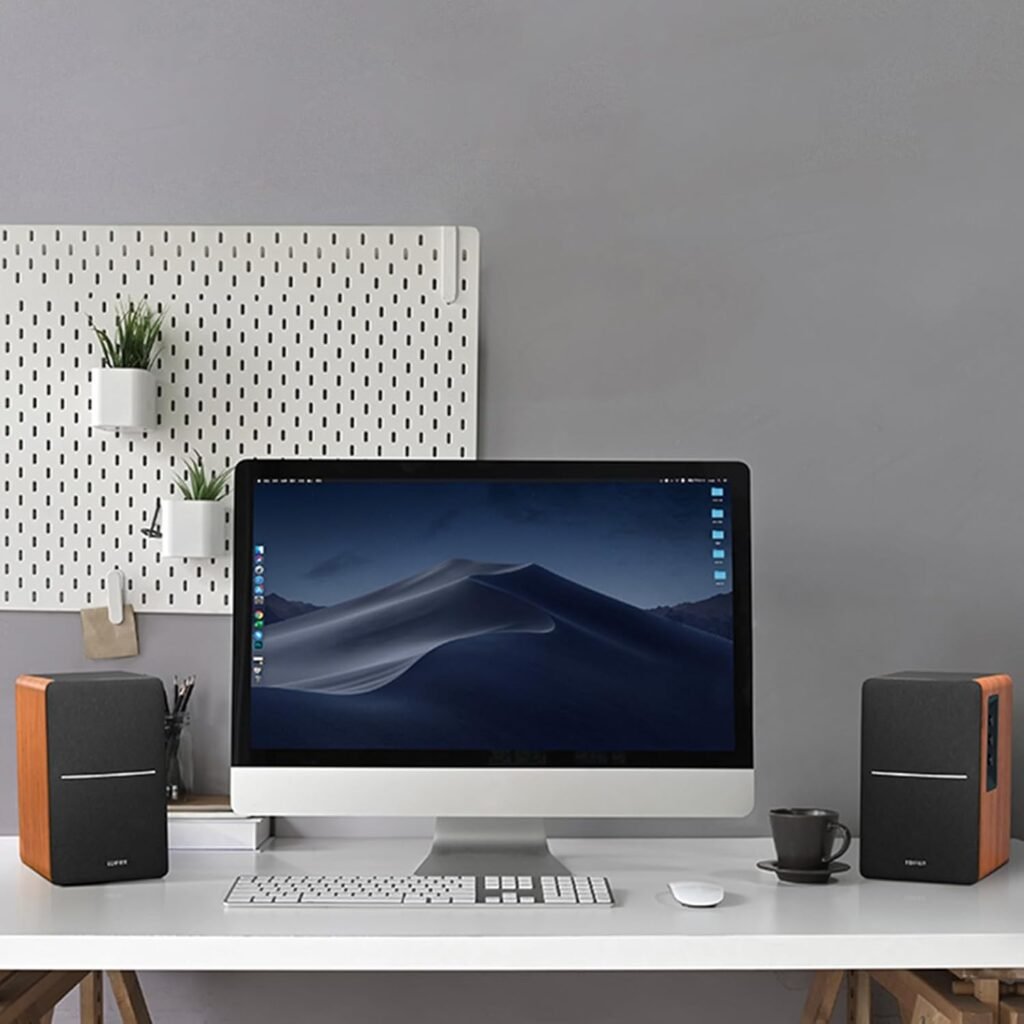
On a desk, positioned as near-field monitors, the R1280DB shine:
- The stereo image is wide and coherent at arm’s length
- Details in music and games come through clearly
- They get loud enough without distorting in a typical home office
We like pairing them with a laptop or desktop via optical or RCA, while also keeping Bluetooth available for quick pairing with a phone. For anyone upgrading from small plastic computer speakers, the difference feels dramatic—like going from a tinny radio to a real sound system.
As TV/Entertainment Speakers
Using the optical input, these speakers make a big difference compared to many built-in TV speakers:
- Dialogue becomes more intelligible
- Soundtracks and effects gain depth and presence
- We can position the speakers on each side of the TV for a more cinematic stereo field
They will not replace a full surround system, but for a simple, stylish, and compact TV audio upgrade, they work extremely well. The volume they produce is plenty for typical living rooms or bedrooms.
For Casual Studio and Creative Work
While they are not marketed as strict professional reference monitors, their relatively neutral tuning and clear mids make them useful for:
- Basic music production
- Podcast editing
- Video editing and sound design at the hobbyist level
We would not rely on them alone for critical, commercial-grade mixing, but as an affordable, accurate-ish listening option, they hold up respectably.
Setup and Placement Tips
Getting the Best Sound from the R1280DB
To make these speakers perform at their best, we should pay attention to placement:
- Ear level: Position the tweeters roughly at ear height when we are seated.
- Form a triangle: Place the left and right speakers so that our head and the two speakers form an equilateral triangle.
- Avoid corners: Try not to push them too deep into corners or against the wall, as that can exaggerate the bass.
With even a little attention to placement, we will notice improvements in imaging, clarity, and overall tonal balance.
Cable Management and Device Integration
We like that the speakers only need one power cable (to the main speaker) and a single speaker wire to connect the passive speaker. All sources plug into the main unit. For a clean setup:
- Route the optical cable neatly behind our TV or monitor
- Keep RCA inputs free for devices we switch out often
- Make use of cable clips or ties to reduce visual clutter
A tidy layout not only looks better but also makes it easier to troubleshoot or rearrange later.
Strengths and Advantages
Why These Speakers Stand Out
When we look at what the R1280DB offers as a complete package, several strengths stand out:
-
Versatile connectivity
- Bluetooth for wireless streaming
- Optical and coaxial for digital sources
- RCA for analog devices
-
User-friendly controls
- Physical EQ knobs for bass and treble
- Remote control for volume and input switching
-
Solid sound quality for the price
- Clear mids and crisp highs
- Satisfying bass for a 4-inch driver
- Suitable for music, movies, games, and spoken word
-
Attractive, compact design
- Wood grain finish
- Small footprint for bookshelves or desks
- Looks at home in both modern and classic interiors
These strengths make the R1280DB a strong candidate for anyone wanting to upgrade from cheap speakers or TV audio without going into complicated AV receiver setups.
Limitations and Things to Know
Where Expectations Should Be Realistic
No product is perfect, and it helps to understand the realistic limits of the R1280DB:
- Bass depth: They do not reach as deep as larger speakers or systems with a dedicated subwoofer. Bass is musical and punchy but not earth-shaking.
- Not full pro studio monitors: While they sound balanced, they are not intended as high-end reference monitors for critical studio work.
- No built-in sub-out: If we want to add a subwoofer, we may need a workaround or a separate solution, as there is no dedicated subwoofer output on the speakers.
These considerations are expected at this size and price category, and they do not take away from the speakers’ overall value, but we should keep them in mind when matching them to our needs.
Day-to-Day Experience
Living with the R1280DB
After spending time with these speakers day in and day out, a few qualities consistently stand out:
- Reliability: They power on, connect, and perform consistently without weird glitches or dropouts.
- Ease of use: Whether we are switching between TV and phone or adjusting EQ, the process feels straightforward.
- Pleasant sound signature: We find ourselves keeping them on longer because we simply enjoy how everything sounds—from background playlists to focused listening sessions.
We rarely feel the need to constantly tweak or correct them, which is a good sign in everyday use.
Mixing Work and Leisure
What we particularly enjoy is how smoothly they bridge the gap between work and relaxation:
- During work hours, they serve as clear, honest speakers for conference calls, tutorials, or editing.
- After hours, they become our music and movie companions with a quick switch of the input or Bluetooth.
This kind of versatility makes them an easy central piece in a small home setup where we do not want multiple separate sound systems for different tasks.
Comparison with Typical Alternatives
Against Basic Computer Speakers
Compared to cheap plastic computer speakers or compact soundbars, the R1280DB is in a different league:
- Fuller, more dynamic sound
- True stereo separation
- Better clarity in both highs and lows
The difference is big enough that music and movies feel noticeably more engaging and lifelike.
Against Entry-Level Soundbars
Many simple soundbars are designed primarily to make TV audio louder, not necessarily better or more accurate. The R1280DB often offers:
- A wider stereo image (especially in near-field setups)
- More precise imaging for left-right effects
- A more natural midrange, especially for voices and acoustic instruments
However, soundbars sometimes win if we need virtual surround processing or a super-slim form factor directly under a TV. If we can accommodate two bookshelf speakers on either side, we lean toward the R1280DB for a richer overall sound.
Ideal Buyers and Use Scenarios
Who Will Love These Speakers Most?
We think the Edifier R1280DB fits especially well for:
-
Home office and remote workers
Those who want clear audio for calls and media and a big improvement over laptop speakers. -
Students and small apartment dwellers
People who need compact, affordable, and stylish speakers that can handle both study and entertainment. -
Casual music producers and content creators
Creators who want better-than-average accuracy without jumping into high-priced studio gear. -
TV and movie enthusiasts on a budget
Viewers who want to seriously upgrade TV sound without installing a full surround system.
If any of these profiles sound familiar, then these speakers are likely to feel like a significant and satisfying upgrade.
Tips for Getting the Most Out of the R1280DB
Optimization Ideas for Better Performance
To really let these speakers shine, we can follow a few simple guidelines:
-
Fine-tune bass and treble
Use the side panel knobs rather than sticking with the defaults. Every room is different, and small tweaks make a noticeable difference. -
Mind the surface
Place them on sturdy stands or a stable desk. Soft pads or isolation stands can reduce vibrations and tighten the sound. -
Tweak device settings
On phones, computers, or TVs, check audio output settings and disable overly aggressive sound effects that might degrade clarity. -
Use digital connections when possible
For TVs and modern computers, optical or coaxial frequently yields a cleaner signal than some analog sources. -
Update habits
Keep Bluetooth primarily for convenience and digital or wired connections for more critical listening, like detailed music sessions or editing.
Small optimizations like these can push the overall listening experience to a higher level without spending more money.
Durability and Long-Term Value
How They Hold Up Over Time
Powered bookshelf speakers like these are generally simple and robust. With reasonable care:
- The wood grain finish resists small scratches and blends in even as we change furniture.
- The electronics are not overstressed if we avoid constantly maxing out the volume.
- The drivers themselves should remain consistent in performance for years.
We view them as a solid long-term investment for anyone entering the world of better home audio. The feature set—especially Bluetooth and digital inputs—also helps future-proof them to some degree.
Value for Money
Considering what we get:
- 42W RMS of power
- Multiple wired and wireless inputs
- Remote control and EQ adjustments
- Attractive wood grain design
- Clear, enjoyable sound
The price-to-performance ratio is strong. There are cheaper small speakers and more expensive studio monitors, but this set lands in a sweet spot where cost and capability feel well matched.
Pros and Cons Summary
To keep things clear, we can condense our experience into a quick overview.
Pros
- Balanced, enjoyable sound with clear mids and smooth highs
- Useful bass and treble controls directly on the side panel
- Bluetooth connectivity for easy streaming from phones and tablets
- Optical and coaxial inputs for clean TV and PC connections
- Included remote for volume and input control from a distance
- Stylish wood grain design that fits many decors
- Compact form factor suitable for desks and small rooms
Cons
- Low-end extension limited by 4-inch drivers (no substitute for a subwoofer)
- No dedicated sub-out for easy subwoofer integration
- Not intended as high-end professional reference monitors
These trade-offs are understandable for the category, and they do not overshadow the many strengths that make the R1280DB a compelling option.
Final Thoughts on the Edifier R1280DB
When we step back and look at everything the Edifier R1280DB Powered Bluetooth Bookshelf Speakers – Optical Input – Wireless Studio Monitors – 4 Inch Near Field Speaker – 42w RMS – Wood Grain bring to our setup, they check a lot of important boxes at once.
We get:
- A genuine audio upgrade from typical built-in or budget speakers
- The flexibility of Bluetooth, optical, coaxial, and RCA connections
- Practical controls, including EQ knobs and a remote
- A design that looks like it belongs in a real home, not just a tech showroom
For music, movies, games, and everyday listening, they deliver a rich, balanced sound that feels satisfying and engaging without demanding a large investment or complicated installation.
If we have been looking for a straightforward, versatile speaker pair that can handle both casual enjoyment and light creative work, the Edifier R1280DB offers an appealing mix of performance, features, and style that is hard to ignore.
Disclosure: As an Amazon Associate, I earn from qualifying purchases.