Have we ever wished our living room, office, or gaming setup sounded more like a mini studio and less like a tinny laptop?

What Is the Edifier R2000DB and Who Is It For?
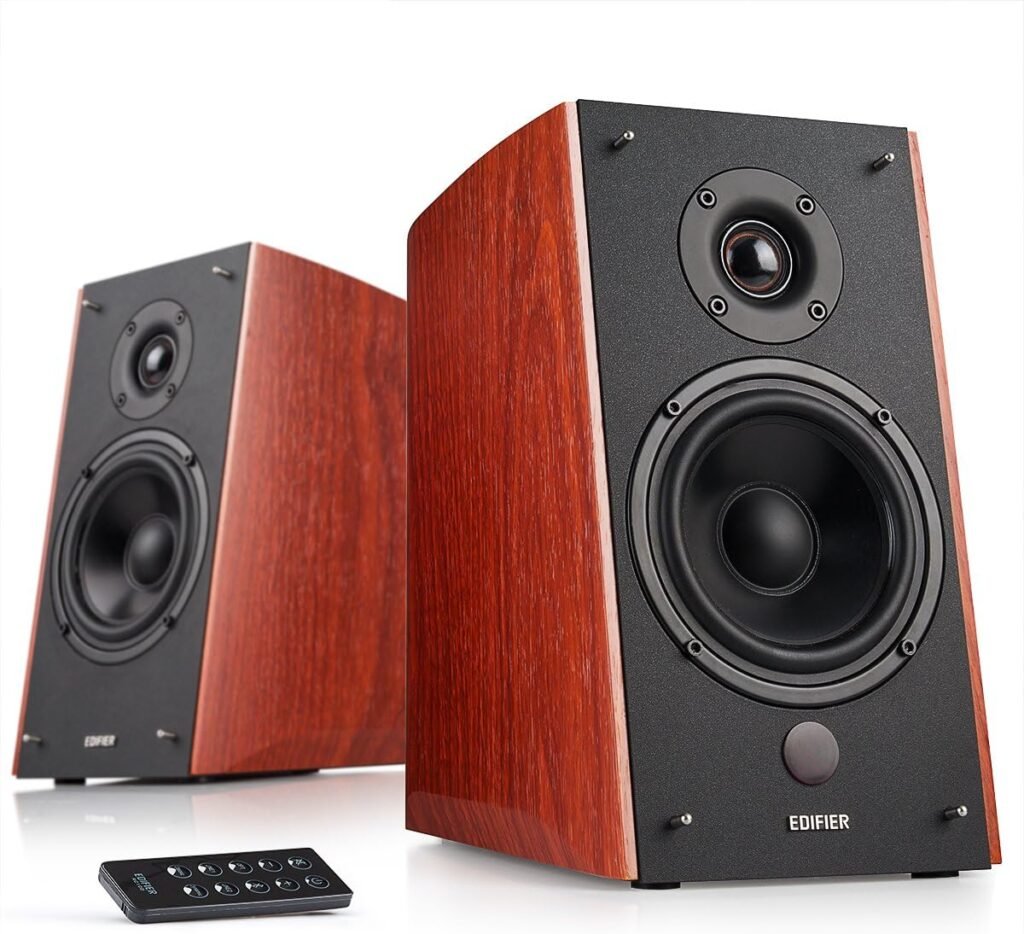
When we look at the Edifier R2000DB Powered Bluetooth Bookshelf Speakers, we are really looking at a compact near-field studio monitor setup that aims to bridge the gap between casual listening and more serious audio use. These speakers are designed to sit on our desk, TV stand, or shelf and provide a clean, powerful, and relatively accurate sound.
They are especially suited for those of us who want great sound without a complex receiver or separate amplifier. With Bluetooth, optical input, and dual Line-in, they slot nicely into a mixed environment of TVs, computers, consoles, and phones.
Key Features at a Glance
Before we talk about real-world performance, it helps to see the main strengths laid out clearly. We have tried to summarize the core aspects of the Edifier R2000DB in the table below so we can quickly compare what matters to us.
| Feature | Description | Why It Matters to Us |
|---|---|---|
| Power Output | 120W RMS | Enough volume and headroom for medium to large rooms |
| Form Factor | Powered Bluetooth bookshelf / near-field studio monitors | No external amp needed, compact for desks and shelves |
| Bluetooth Connectivity | Wireless pairing with phones, tablets, laptops | Hassle-free streaming from any modern device |
| Optical Input | Digital audio input for TV, media players, consoles | Clearer, less noisy signal than analog in many setups |
| 2× Line-in (RCA / 3.5mm) | Connect two wired devices at once | No constant cable swapping |
| Remote Control | Volume, input selection, DSP sound modes | Control from the couch or chair |
| 5″ Large Woofer | Larger than many compact speakers | Fuller bass and richer low-end response |
| DSP Sound Modes | Different presets for various listening scenarios | Quick tailoring of sound to music, movies, or games |
| Finish | Wood-style cabinets | Warmer, more premium aesthetic in most rooms |
By grouping the essentials, we get a clearer picture: this is a flexible, mid-sized powered speaker solution with multiple inputs, strong power, and an emphasis on both convenience and audio quality.

Design and Build Quality
The first thing many of us notice about the Edifier R2000DB is how grown-up it looks. The wood-style enclosure, combined with a modern, slightly angular design, gives it a look that fits equally well in a home office or living room.
The cabinets feel solid in the hands, with a weight that reassures us they are not hollow or flimsy. This rigidity improves sound by reducing unwanted resonance. We also appreciate that the branding is subtle, so the speakers do not shout for attention in a carefully styled room.
Size and Footprint on Our Desk or Shelf
In terms of size, these are not tiny desktop speakers, but they are not huge tower speakers either. They occupy a sweet spot: serious enough for real sound, but compact enough to live comfortably beside a monitor or on a TV stand.
We do need to plan a bit of space, especially for the rear ports and power cable. Leaving a little room behind them helps both cable management and bass performance, which can be affected if we shove them right up against a wall.
Wood Finish and Aesthetic Appeal
The wood finish is a key part of the R2000DB’s charm. It adds warmth and a touch of classic audio heritage, while the overall lines remain modern and clean. For many of us, this style blends well with wooden desks and shelves, and it looks more like furniture than a chunk of plastic.
We also like that the design is versatile: it works in a gaming setup with LED lighting, yet it also fits nicely in a more minimal, professional workspace or a cozy living room system centered around movies and music.
Connectivity and Versatility
One of the big strengths of the Edifier R2000DB is how many ways we can connect things. Having Bluetooth, optical, and dual Line-in inputs makes it a hub for all our audio sources, not just one.
We find this particularly useful when we want to integrate multiple devices, like a TV, PC, and smartphone, without constantly messing with cables.
Bluetooth Connection for Everyday Use
The built-in Bluetooth connection allows us to pair our phone, tablet, or computer for wireless audio streaming. This works with pretty much any modern iOS, Android, macOS, or Windows device that supports Bluetooth audio.
In day-to-day life, this is one of the features we reach for most. We can sit on the couch and stream playlists from our phone or quickly play a podcast while cooking or working, all without walking over to plug in cables.
Optical Input for TVs and Media Devices
The optical input is a standout inclusion, especially for home theater and TV setups. Many modern TVs and consoles provide digital audio outputs, and by using the optical input, we get a cleaner, more stable signal, less prone to interference and line noise compared to some analog connections.
If we watch movies or play games often, the optical input lets the R2000DB act as a compact yet powerful sound system that often outperforms built-in TV speakers by a huge margin. Dialog, effects, and soundtracks all benefit from this direct digital link.
Dual Line-in Inputs for PCs and Analog Sources
The two Line-in inputs mean we can connect two analog devices, such as a PC, laptop, record player (with a phono preamp), CD player, or even a DAC, at the same time. One might use dual RCA, while the other can be adapted from 3.5mm or similar outputs.
We appreciate that we do not need to constantly plug and unplug things. For example, we might have our desktop PC on one Line-in and a turntable or older console on the other, and then swap between them using the remote.

Remote Control Convenience
The included remote control is a relatively small component but makes a big difference in daily usability. It lets us choose input sources, adjust volume, and switch between digital sound processing (DSP) modes without touching the speaker itself.
When we are relaxing on the sofa in front of the TV or sitting at our desk, we can manage our sound system the same way we handle a TV remote, which feels natural and convenient.
Switching Inputs Effortlessly
The ability to switch between Bluetooth, optical, and Line-in at the touch of a button prevents that “which cable is this” frustration. We can be streaming music via Bluetooth one moment, then quickly shift to a TV show on the optical input without re-cabling.
For multi-purpose spaces where we use one set of speakers for everything, this kind of input flexibility is especially useful. It lets our speakers act as a central audio hub.
Adjusting DSP Modes on the Fly
The DSP modes give us different sound signatures, and the remote lets us jump between them. Maybe we want a more neutral, balanced mode for working or editing audio, but something a bit more fun and impactful for movie night.
This is a quick way to tailor the sound to the content we are enjoying, without digging into hidden menus or complex equalizer settings that can slow us down.
Sound Quality Overview
At the heart of any speaker review is one big question: how do they sound? The Edifier R2000DB aims to meet the expectations of both more casual listeners and those who care about detail and clarity.
Overall, the sound signature is rich and immersive, with enough power to fill medium-sized rooms. We get a confident bass response from the 5″ woofer, crisp highs, and a generally well-defined midrange that keeps voices front and center.
Power and Headroom with 120W RMS
The 120W RMS rating tells us these speakers are not shy. They can play loud enough for parties or energetic movie sessions, and they maintain clarity and control even at higher volumes, assuming we do not push them quite to the extreme.
We also notice that at normal and moderate levels, having such ample power gives a sense of ease and composure. The speakers feel like they are coasting rather than straining, which often translates into cleaner, less distorted sound.
Immersive Near-Field Experience
As near-field studio monitors, the R2000DBs are comfortable sitting relatively close to us, such as on a desk flanking a computer monitor. In this setup, we get a very intimate, detailed soundstage where small details in recordings become more apparent.
We appreciate this when we are doing focused listening, gaming, or even light content creation work where we want to hear exactly what is going on with our audio tracks.
Bass Performance: The Role of the 5″ Woofer
The 5″ large woofer is one of the standout hardware features of the R2000DB. Many compact speakers make do with smaller drivers, which can sound thin or strained in the low end.
Here, we get a more confident bass that does not feel like it is pretending. It will not match a dedicated subwoofer in sheer low-end extension, but for most music genres and typical TV or gaming content, it delivers satisfying warmth and punch.
Music Listening and Low-End Control
When we play bass-heavy tracks, we feel the impact without losing control. The bass is not just a vague thump; it carries definition and timing, which helps rhythm-focused music stay engaging and tight.
At reasonable volumes, the woofer maintains its composure well. If we push the volume very hard and play very bass-heavy content, we may eventually hear some strain, but that is normal for speakers in this class and size.
Movies, Games, and Cinematic Impact
For movies and games, the bass performance contributes to a more cinematic experience. Explosions, engine roars, musical swells, and ambient rumbles feel more lifelike compared to typical TV speakers.
We do not necessarily need to add a separate subwoofer to enjoy immersive audio, especially in small to medium rooms. For many of us, the R2000DB’s low-end will be more than enough to make action scenes and intense game moments feel exciting.
Midrange and Vocal Clarity
The midrange is where most of the content we care about resides: dialog in movies, vocals in music, and a lot of instrument fundamentals. A good midrange is crucial to make our speakers sound natural and engaging.
With the R2000DB, voices sound clear and present, and we can follow conversations in films and shows without constantly reaching for the volume control. Acoustic music, podcasts, and streaming content all benefit from this clarity.
Spoken Word and Streaming
When we listen to podcasts, talk shows, or audiobooks, the midrange performance becomes very obvious. Words are clean and easy to follow, even at lower volumes, which matters if we are using these speakers while working or relaxing in the evening.
We also notice that streaming content from phones or laptops via Bluetooth still retains good intelligibility, which is important in our increasingly streaming-heavy world.
Music Across Genres
Whether we are into rock, jazz, classical, electronic, or pop, the midrange determines how natural instruments and voices feel. On the R2000DB, guitars have body, pianos sound full rather than thin, and lead vocals do not get buried by the rest of the mix unless the track itself is mixed that way.
We get the sense that these speakers were tuned to keep the midrange relatively balanced so that they remain versatile across different musical styles.
High Frequencies and Detail
Treble performance can make or break longer listening sessions. If it is too sharp, we get ear fatigue, but if it is too dull, we lose sparkle and detail.
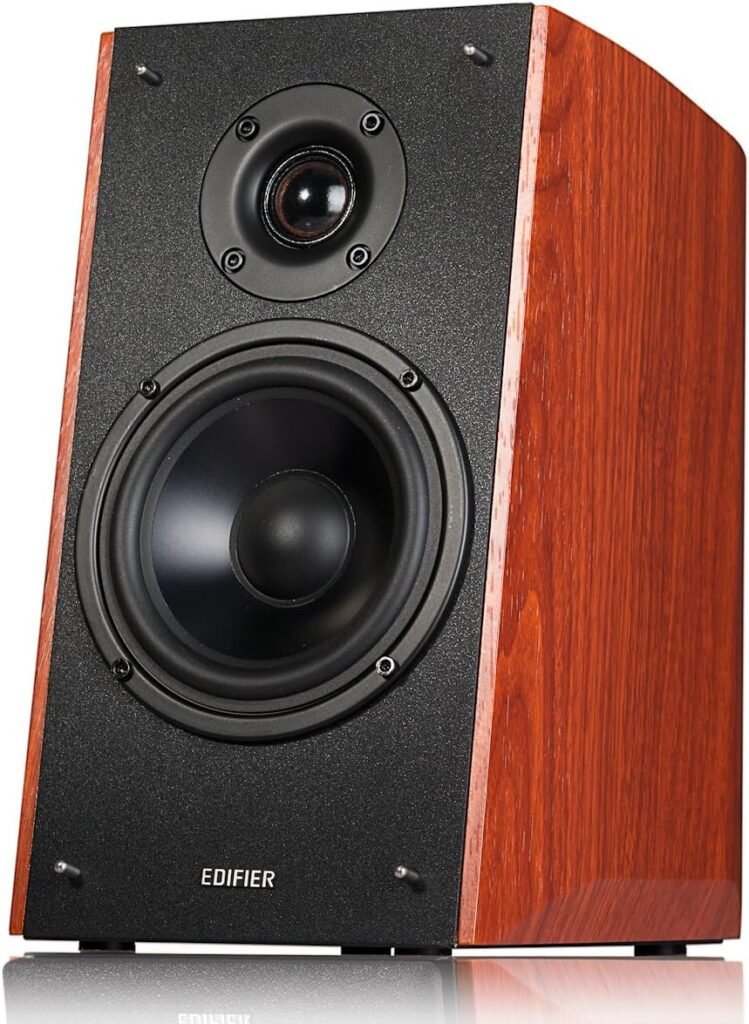
On the R2000DB, the highs provide enough detail to reveal cymbals, string overtones, and atmospheric effects without coming across as piercing or overly aggressive. This balance makes them suitable for extended listening, whether we are working, gaming, or binge-watching.
Detail Retrieval and Imaging
We can pick out small elements in mixes: subtle hi-hats, reverb tails, or background effects that might disappear on cheaper speakers. While these are not ultra-high-end studio monitors, they certainly offer more than enough detail for everyday and semi-critical listening.
Stereo imaging, where sounds appear between and around the speakers, is also convincing. Instruments and effects often appear in defined positions, especially if we sit in a near-field triangle position with the speakers angled correctly.
Fatigue-Free Listening
We find we can use the R2000DBs for hours without feeling like we need to give our ears a break, assuming we keep volumes at reasonable levels. This is partly thanks to the reasonable treble tuning and partly to the general smoothness across the frequency range.
If we are especially treble-sensitive, we may want to experiment with different DSP modes or perhaps some equalization from our source, but in stock form they already lean towards a pleasant, non-harsh presentation.
DSP Sound Modes: Tailoring the Signature
Digital sound processing (DSP) modes let us shift the balance of bass, mids, and highs to suit different content and preferences. While the exact names and curves may vary, the general idea is that we have at least one more neutral mode and one more lively or dynamic mode.
This makes it easy to shift gears: we might prefer a flatter sound when listening to well-recorded albums, but want extra punch for casual playlists or movie nights with friends.
When to Use Which Mode
We might lean towards a more neutral setting when:
- Editing audio or creating content
- Listening carefully to high-quality music recordings
- Working at the computer where consistent, accurate sound is helpful
We might choose a more dynamic or bass-enhanced mode when:
- Watching movies with big soundtracks and effects
- Gaming, where impact and excitement are priorities
- Hosting gatherings with background music
Switching modes with the remote takes only a moment, so we can treat them almost like presets for different times of the day.
Everyday Use Cases
One of the strengths of the Edifier R2000DB is its ability to work well in a wide range of scenarios. We might start off buying them for our computer desk and then realize they can also double as our main living room audio solution.
Below are some common ways we might integrate them into daily life.
Desktop PC or Mac Setup
On a desk, the R2000DB acts as a powerful upgrade from small plastic speakers or headphones. Connecting one Line-in to our PC and using Bluetooth for quick streams from our phone gives us flexibility.
We can use them for:
- Video calls and online meetings with clear voice reproduction
- Gaming sessions with immersive soundscapes and punchy effects
- Music while working or studying, with enough quality to appreciate our favorite tracks
Because they are near-field monitors, they work particularly well when we sit relatively close in a typical desk arrangement.
TV and Home Theater Use
By connecting our TV’s optical output to the R2000DB, we effectively turn these speakers into a compact home theater solution. The improvement over built-in TV speakers is often striking: more body, better dialog clarity, and much richer soundtracks.
We can:
- Enjoy streaming platforms with sound that matches the high definition video
- Watch sports where crowd noise and commentary feel more realistic
- Use gaming consoles, Blu-ray players, or media boxes through optical or Line-in
For apartments, dorms, or smaller living rooms, this kind of 2.0 setup can sometimes be more practical than a full surround system.
Gaming Consoles and HTPC
For gaming, whether on a console or a home theater PC, the R2000DB gives a good combination of positional audio clarity and satisfying impact. We often find ourselves noticing background sounds, environmental cues, and soundtrack elements that were barely audible before.
With the optical input in particular, we often get the cleanest possible audio feed from our consoles or HTPC, which helps maintain quality and reduce hiss or hum.
Mobile Devices and Casual Listening
Bluetooth connectivity shines when we just want to play something without thinking too hard. Maybe we are cooking, cleaning, or just relaxing with friends, and we want some background music or a playlist from a streaming platform.
We grab our phone, pair once, and then the speakers are available from our Bluetooth list from that point on. It is the kind of convenience we quickly take for granted after a few days of use.
Setup and Installation
Setting up the Edifier R2000DB is generally straightforward, but a few tips help us get the most out of them. Since these are powered speakers, one unit houses the amplifier and power connection, and the other connects via a speaker cable.
We want to think about placement, connections, and basic tuning as we first bring them into our space.
Unboxing and Initial Placement
When we unbox them, we find the two speakers, necessary cables, remote, and documentation. We first place the speakers roughly where we think they will live: typically at ear height, and ideally forming an equilateral triangle with our listening position.
Leaving some space behind the speakers is important for both cable routing and bass behavior. If our room tends to exaggerate bass, we might move them a bit away from the wall or away from room corners to reduce boominess.
Connecting Sources
Next, we connect our chosen inputs:
- Optical from our TV or console
- RCA or 3.5mm Line-in from our PC, laptop, or DAC
- Bluetooth pairing from our phone or tablet
We can run two wired inputs at once and then rely on the remote to switch between them, which simplifies daily use and ensures we are not constantly moving cables around behind our desk or TV stand.
Basic Sound Tuning
Once connected, we set the volume to a moderate level and try different DSP modes while playing familiar content. We listen for any balance issues and adjust positioning slightly if necessary.
If the bass feels too heavy, we might move the speakers a little further from walls or corners. If the stereo imaging feels off, we adjust the toe-in (the angle at which the speakers point towards us) until the center image feels solid and voices anchor clearly in the middle.
Strengths and Advantages
Summarizing the strong points of the Edifier R2000DB helps us decide whether it matches our needs. This model is designed as a versatile, good-sounding, and convenient solution, and it largely achieves that goal.
We can think of the strengths in terms of sound, flexibility, and everyday practicality.
Audio Performance for the Price
For the price bracket these speakers usually occupy, the sound quality stands out. We get:
- Solid, controlled bass from the 5″ woofer
- Clear, intelligible mids for voices and instruments
- Detailed but not harsh highs for long listening sessions
- Enough power (120W RMS) to comfortably fill medium rooms
We may not achieve true mastering-grade studio monitor performance, but we get something that feels very competent for both casual and semi-critical listening.
Connectivity and Input Options
Having Bluetooth, optical, and dual Line-in inputs means:
- We can connect basically any device we own with minimal friction
- We do not need separate speakers for our TV, PC, and phone
- Switching sources is as simple as pointing the remote and tapping a button
We are not locked into a single ecosystem or a single type of source, which helps future-proof our setup as our devices change.
Ease of Use and Minimal Clutter
Because these are powered speakers, we do not need a separate amplifier or receiver. That cuts down on cables, boxes, and complexity. For many of us, especially in smaller spaces or minimalist setups, that is a big plus.
The remote control, DSP modes, and multiple inputs also contribute to a streamlined experience where we feel we control our audio, rather than the other way around.
Potential Limitations and Considerations
No product is perfect, and it is fair to talk about where the Edifier R2000DB might not be ideal. Knowing these points helps us decide if the trade-offs are acceptable for our particular situation.
We find that most limitations are related to expectations and specialized use cases rather than obvious flaws.
Not a Replacement for High-End Studio Monitors
While these are described as near-field studio monitors, truly professional studio work often relies on speakers that have flatter, more revealing responses and deeper integration with dedicated room treatment.
For everyday content creation, gaming, and music listening, the R2000DB is more than capable. But if we are doing top-tier mixing and mastering work, we might eventually want to pair them with room treatment and potentially more specialized monitors.
Bass Limits Without a Subwoofer
The 5″ woofer performs very well for its size, but physics still applies. Ultra-low frequencies found in some electronic music or big-budget movie soundtracks may not be reproduced with the same authority as larger systems with dedicated subwoofers.
If we are absolute bass enthusiasts or we want the full earthquake effect in our home theater, we might eventually consider adding a sub or using a different system that supports one explicitly.
Room and Placement Sensitivity
Because these speakers are fairly capable in the low end and designed for near-field listening, their placement can have a noticeable effect on sound. In cramped or highly reflective rooms, we might need to experiment with positioning more than we would with tiny, bass-light speakers.
This is not a flaw of the R2000DB specifically; it is more a reality of decent speakers placed into imperfect rooms. We should just be ready to move them around a little and listen for improvements.
Comparing to Other Options
When considering the R2000DB, we probably also glance at other powered bookshelf speakers and soundbars in the same general price range. It is helpful to think of how this model sits in that landscape.
Generally, soundbars offer convenience and sometimes virtual surround features, but often sacrifice stereo imaging and near-field clarity. Smaller desktop speakers are compact but can struggle with bass and power.
The R2000DB tries to balance:
- Better bass and fullness than very small speakers
- Better stereo imaging and musicality than many budget soundbars
- More inputs and flexibility than minimalist Bluetooth-only systems
We might choose a soundbar if space is extremely tight or we value simulated surround, but if we care about music quality, detail, and a real stereo image, these powered bookshelf speakers often make more sense.
Who Will Appreciate the Edifier R2000DB Most?
If we describe who gains the most from these speakers, several clear profiles emerge. Thinking in terms of who we are and how we use audio gear helps us see whether they align with our daily habits.
We likely appreciate the R2000DB if we:
- Want a step up from TV speakers or cheap PC speakers, without going into full AV receiver territory
- Value solid music performance as much as movie and game sound
- Use multiple devices (PC, TV, phone, console) and want one speaker system to handle them
- Prefer a neat, powered solution that does not require extra racks, amps, or complicated wiring
They may be less ideal if we:
- Need ultra-compact speakers that fit into very tight spaces
- Are building a very large home theater with multiple channels and subwoofers
- Require extremely flat, clinical response for advanced professional studio work
In most typical homes, apartments, and dorms, they strike a very good balance between simplicity, power, and quality.
Tips for Getting the Best Performance
To maximize what we get from the Edifier R2000DB, a few simple habits and adjustments can go a long way. These are small actions, but they often produce noticeable improvements in clarity, imaging, and overall enjoyment.
We might try:
- Positioning the speakers at ear height and at equal distances from our listening position
- Angling them slightly inwards so the tweeters face our ears directly
- Leaving some space behind them and avoiding placing them directly in room corners
- Experimenting with DSP modes depending on the content and volume
- Using the optical input whenever available for TV and console audio for the cleanest signal
These steps help the speakers do their job properly, and we get closer to the sound quality they are capable of delivering.
Long-Term Ownership and Reliability
Powered speakers are an investment we hope to enjoy for many years, so it is reasonable to think about durability and ongoing satisfaction. The R2000DB’s solid build, dense cabinets, and well-thought-out connectivity suggest a design intended to last.
We also appreciate that the variety of inputs means they should remain compatible as our devices evolve. Even as HDMI standards change or new streaming boxes arrive, most gear will continue to offer either optical, analog, or Bluetooth output in some form.
If we take basic care—dusting them occasionally, avoiding extreme volume misuse, and making sure they are placed securely—they should serve as a reliable centerpiece of our audio setup for a long time.
Final Thoughts
The Edifier R2000DB Powered Bluetooth Bookshelf Speakers present a compelling package for those of us seeking a balance of power, versatility, and sound quality without jumping into complex separate-component systems. With 120W RMS power, a 5″ woofer, multiple wired inputs, optical digital connectivity, and convenient Bluetooth, they adapt easily to most modern living spaces and device ecosystems.
We get rich, immersive sound that can handle music, movies, games, and everyday streaming with confidence. The wood-finished cabinets and near-field design give them both visual and sonic presence, and the remote and DSP modes make daily use friendly and flexible.
If our goal is to upgrade from underwhelming TV or PC audio to something that feels more like a real, engaging sound system—without the clutter of a traditional hi-fi stack—the Edifier R2000DB deserves serious consideration as a capable, friendly, and long-lasting companion for our listening life.
Disclosure: As an Amazon Associate, I earn from qualifying purchases.