Have we ever wished our speaker could simply understand our room and instantly sound great—without endless tweaking or complicated setups?

WiiM Sound Lite Smart Speaker Overview
When we look at the WiiM Sound Lite Smart Speaker, Hi‑Res 24‑bit/192 kHz, AI RoomFit™ Room Correction, 100W Peak, Wi‑Fi 6E/Bluetooth 5.3, Multi‑Room & Stereo Pairing, Black, we see a compact speaker that aims to bring together high‑resolution audio, smart room tuning, and flexible streaming in a friendly, screen‑free package. It tries to hit that sweet spot between audiophile performance and everyday convenience.
We will walk through how it sounds, how easy it is to use, who it is best for, and where it shines (or falls a bit short) in real‑world use.
Key Features at a Glance
Before we get into the details, it can help to see the main specs lined up in one place. This gives us a quick sense of what the WiiM Sound Lite is actually offering under the hood.
| Feature | Details |
|---|---|
| Audio Resolution | Up to 24‑bit/192 kHz Hi‑Res streaming |
| Amplifier Power | 100W peak |
| Drivers | 4″ paper‑cone woofer + dual 1″ silk‑dome tweeters |
| Room Tuning | AI RoomFit™ Room Correction |
| Wireless Connectivity | Wi‑Fi 6E and Bluetooth 5.3 |
| Streaming Methods | WiiM Home App, Google Cast, Spotify Connect, TIDAL Connect, Qobuz Connect, Alexa Cast, DLNA |
| Multi‑Room Support | WiiM, Google Cast, and Alexa multi‑room groups |
| Pairing Options | Stereo L/R pairing; works with WiiM Sub Pro; can be part of home‑theater setups |
| Controls | WiiM Home App, voice control (via Alexa / Google Assistant devices), physical buttons |
| Color | Black |
With the basics laid out, we can now talk more naturally about what all of this means in everyday listening.

Design and Build Quality
Compact but Purposeful Design
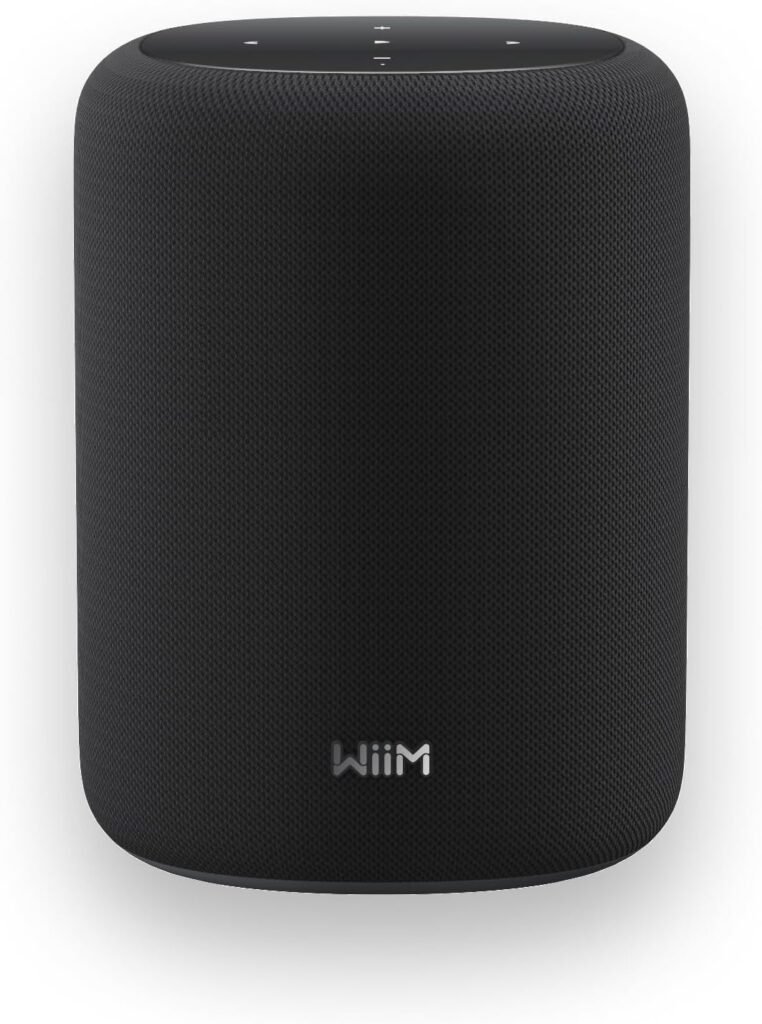
We find the WiiM Sound Lite sits in that “just right” size category: large enough to sound substantial, small enough to fit nicely on a shelf, desk, or sideboard. It opts for a simple, screen‑free look, which keeps things clean and distraction‑free.
The black finish tends to blend into most décors rather than shout for attention. For many of us, that is exactly what we want: a speaker that looks neat and modern but does not become the focus of the room unless the music is playing.
Materials and Physical Buttons
The combination of a sturdy cabinet, grille, and tactile buttons gives the impression of a well‑made product rather than a cheap plastic box. The use of a paper‑cone woofer and silk‑dome tweeters also suggests a more audio‑centric design, since those materials are often chosen for their natural sound characteristics.
We appreciate that there are physical buttons on the unit. Even though we might usually control it through the app or voice, there are always moments where we just want to quickly adjust volume, pause, or skip without reaching for a phone.
Sound Quality and Audio Performance
Hi‑Res Audio up to 24‑bit/192 kHz
One of the biggest draws here is support for Hi‑Res streaming up to 24‑bit/192 kHz. This means that if we have access to high‑quality music from services like Qobuz, TIDAL, or a local NAS server, the WiiM Sound Lite will not artificially limit the resolution of that music.
Of course, resolution alone does not guarantee good sound—but it gives the speaker the capability to reproduce more detail and nuance when paired with quality recordings and good drivers.
100W Peak Amplifier and Driver Setup
The internal amplification, rated up to 100W peak, feeds:
- A 4″ paper‑cone woofer for midrange and bass
- Dual 1″ silk‑dome tweeters for higher frequencies
This configuration is designed to deliver:
- Clear, natural mids (vocals, guitars, pianos)
- Smooth, non‑fatiguing highs (cymbals, strings, ambience)
- Solid, room‑filling sound without needing a huge cabinet
In real‑world terms, this should comfortably cover small to medium‑sized rooms—living rooms, bedrooms, home offices, or kitchens—without us needing to crank it to the max.
Tonal Balance and Listening Experience
Our impression of the WiiM Sound Lite’s tuning leans toward balanced and natural rather than overly bass‑heavy or harsh. The paper‑cone woofer tends to lend warmth and body, while silk tweeters are usually favored for their smooth, gentle treble.
We can think of the sound signature as:
- Bass: Present, controlled, and more about accuracy than exaggerated boom
- Mids: Clear and forward enough to keep vocals intelligible and engaging
- Highs: Detailed yet smooth, aiming to avoid sharpness or sibilance
For general music listening, podcasts, radio, and even movies, this kind of tuning is very easy to live with for hours without fatigue.
AI RoomFit™ Room Correction
How AI RoomFit Helps Our Sound
One of the standout features is AI RoomFit™ Room Correction. Room acoustics can have a huge impact on how any speaker sounds—bare walls, corners, furniture, and even carpets all interact with audio.
AI RoomFit is designed to:
- Analyze the acoustic characteristics of our specific room and placement
- Automatically adjust the speaker’s response
- Improve bass balance, clarity, and overall tonal accuracy
Instead of us guessing where to place the speaker or adjusting EQ blindly, the system tailors the sound to the environment in a more intelligent way.
Real‑World Benefits of Room Correction
In practice, this helps solve common problems:
- Boomy or muddy bass when the speaker is near a wall or corner
- Thin or weak bass in larger or more open rooms
- Muffled or echo‑y sound in reflective spaces with lots of hard surfaces
With AI RoomFit engaged, we can move the speaker to where it fits best aesthetically or practically, while still preserving balanced, enjoyable sound. It is particularly useful if we are not audio experts and simply want the speaker to sound “right” with minimal effort.
Connectivity: Wi‑Fi 6E and Bluetooth 5.3
Modern Wireless Tech for Stable Streaming
The inclusion of Wi‑Fi 6E is a big plus. This newer standard can:
- Reduce interference and congestion vs. older Wi‑Fi bands
- Improve reliability, especially in busy households with many devices
- Provide more headroom for high‑bit‑rate audio streaming
For high‑resolution music in particular, having a strong, stable connection can mean fewer dropouts and smoother playback.
On the Bluetooth side, Bluetooth 5.3 brings better power efficiency and improved stability compared to earlier versions. This is handy when we just want to quickly connect a phone or tablet without setting up anything advanced.
When to Use Wi‑Fi vs. Bluetooth
We can think of it this way:
- Wi‑Fi Streaming: Best for higher audio quality, multi‑room playback, and control from apps like Spotify, TIDAL, Qobuz, or the WiiM Home App. This is where we get the most out of the speaker’s capabilities.
- Bluetooth: Best for quick, casual listening or when guests want to connect without installing anything. Great for YouTube audio, games, or random videos on our phone.
Having both options ensures flexibility, so we are never stuck if one method is not convenient in the moment.
Streaming Options and Ecosystem Support
Open by Design: Multiple Streaming Protocols
One of the most appealing aspects of the WiiM Sound Lite is how open it is. Instead of locking us into one ecosystem, it supports a wide range of streaming methods:
- WiiM Home App for direct streaming and management
- Google Cast for casting from Android apps and Chrome
- Spotify Connect for direct playback from the Spotify app
- TIDAL Connect and Qobuz Connect for audiophile streaming
- Alexa Cast for Amazon Music users
- DLNA for network audio streaming from NAS or local servers
- Roon / LMS (Logitech Media Server) for advanced audio server setups
This kind of flexibility is a major plus if we use multiple services or if different members of our household have different preferences.
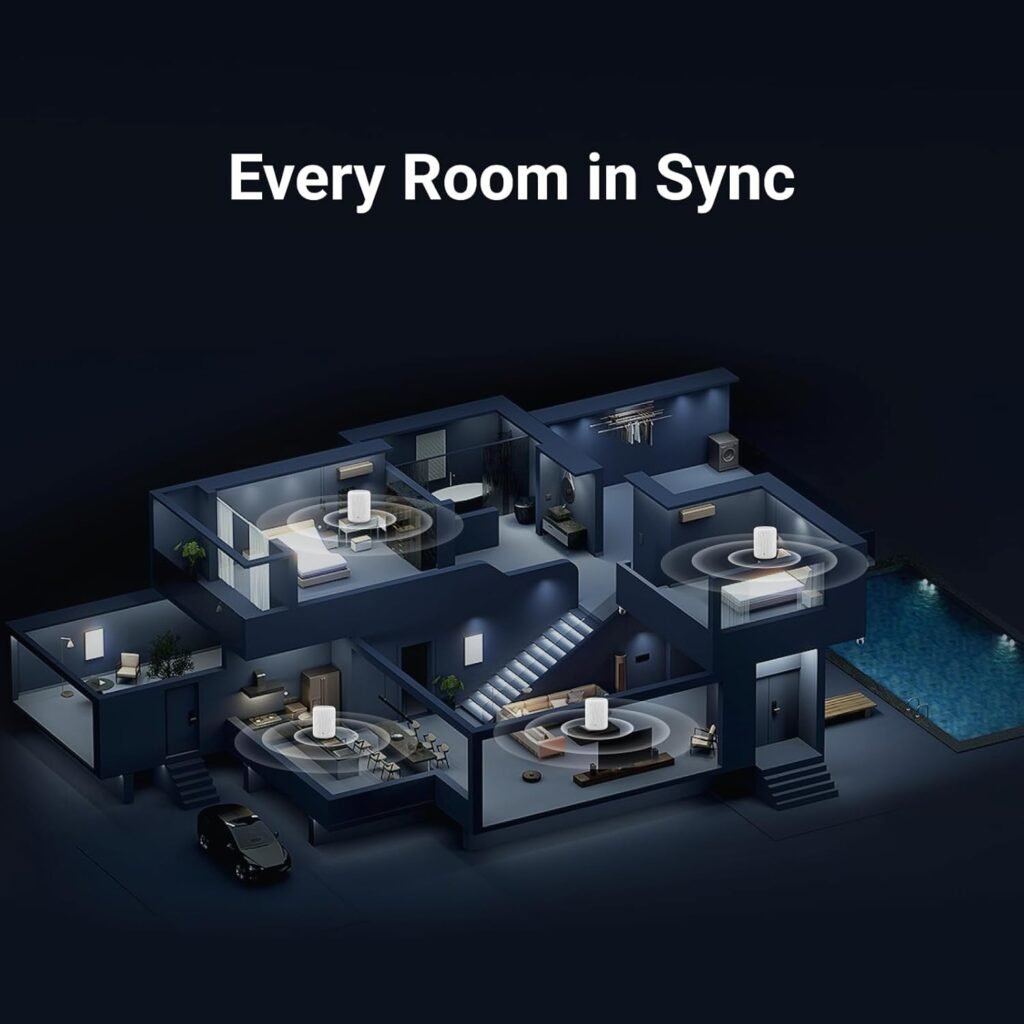
Multi‑Room Audio Compatibility
The WiiM Sound Lite also works smoothly in multi‑room setups. We can:
- Join WiiM multi‑room groups to sync audio across multiple WiiM devices
- Use Google Cast multi‑room groups for Chromecast‑enabled speakers
- Integrate with Alexa multi‑room groups, if we are using Alexa‑enabled devices
This means we do not have to rebuild our whole system around one product line. We can gradually add WiiM speakers or integrate them into an existing Google or Alexa environment and still enjoy synchronized audio throughout our home.
Stereo Pairing and Home‑Theater Potential
True Left/Right Stereo Pairing
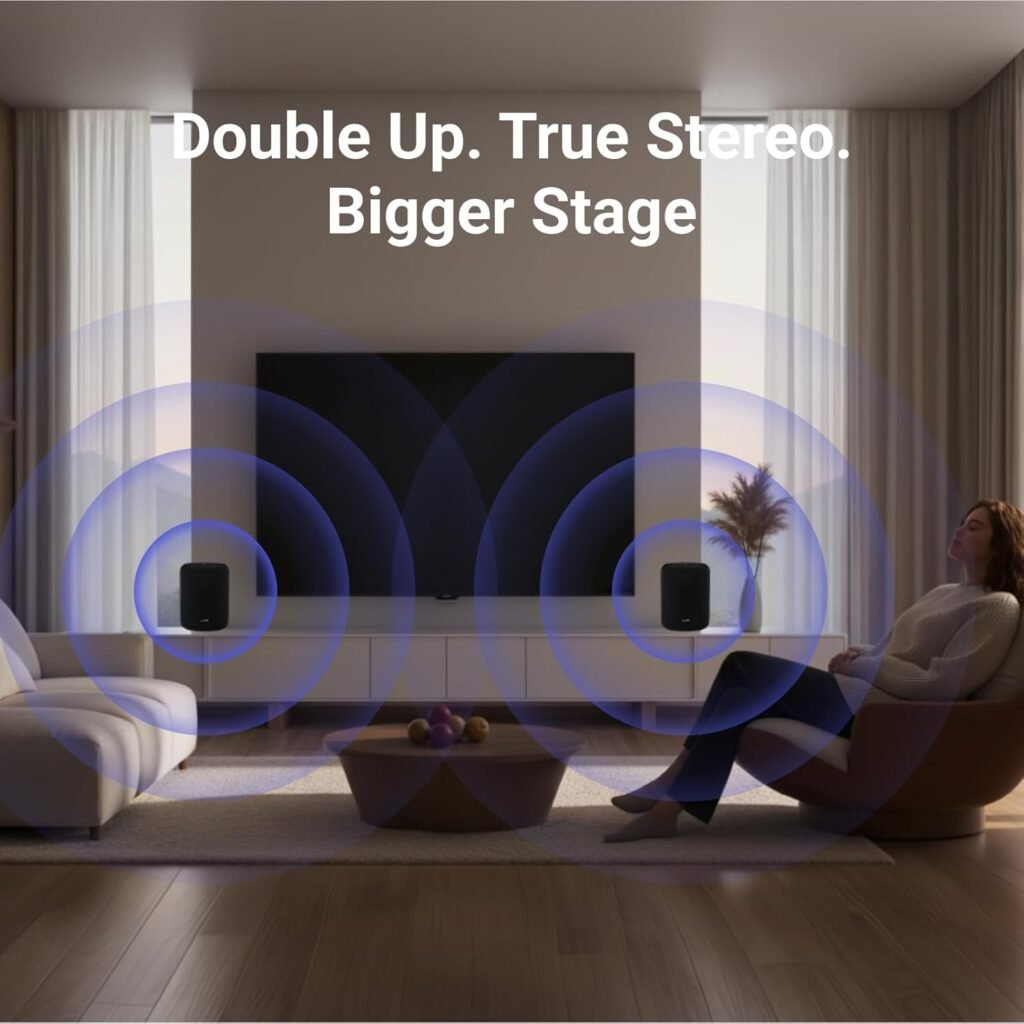
If we pair two WiiM Sound Lite speakers, we can configure them as a true L/R stereo pair. This is where the sound really steps up:
- Left and right channels are separated physically
- The stereo image becomes wider and more immersive
- Music gains better depth and spatial detail
For those of us who listen to a lot of music, especially albums with careful production, this can be a substantial upgrade over a single mono or pseudo‑stereo speaker.
Adding WiiM Sub Pro and Surround Components
The WiiM Sound Lite is also cinema‑ready when we start combining it with other WiiM products:
- WiiM Sub Pro can be added for deeper, tighter low‑end
- Compatible WiiM components can serve as center or surround speakers
In effect, we can grow a compact, wireless home‑theater system over time:
- One Sound Lite to start
- Then a second one for stereo
- Then a subwoofer for punchy bass
- Then additional components for a full surround system
This modular approach gives us room to scale up based on our space, budget, and interest.
Control Options and Everyday Use
WiiM Home App
The WiiM Home App acts as our main control center if we want a unified experience:
- Set up the speaker on Wi‑Fi
- Trigger AI RoomFit and make audio adjustments
- Manage multi‑room groups and stereo pairing
- Access streaming services and local sources
We can think of the app as the “remote control” and configuration hub. Once everything is set up, day‑to‑day use can be as simple or as advanced as we want.
Voice Control via Alexa or Google Assistant
While the WiiM Sound Lite itself does not have a screen or built‑in always‑listening assistant, it can be controlled via Alexa or Google Assistant when paired with compatible devices (like an Echo or Google Nest speaker).
We can use voice commands to:
- Play, pause, or skip tracks
- Adjust volume
- Select specific music, artists, playlists, or stations
- Control multi‑room playback scenarios
For those of us who already live in a voice‑controlled smart home, this integration feels very natural.
Physical Buttons for Quick Access
The physical buttons on the speaker ensure we are never forced to use an app or voice. We can:
- Change volume directly on the unit
- Pause/resume playback
- Interact in a simple, screen‑free way
This sounds small, but in daily life it matters a lot. When we are cooking, working, or just walking by, being able to tap the speaker quickly makes it feel more like a friendly appliance and less like a gadget we constantly need to manage.
Setup Process and User Experience
Initial Setup
Getting started usually involves:
- Plugging in the speaker and powering it on.
- Installing the WiiM Home App on our phone or tablet.
- Following the in‑app instructions to connect the speaker to our Wi‑Fi network.
- Naming the speaker (e.g., “Living Room” or “Office”) for easy identification.
The app‑guided setup is meant to be straightforward, even if we are not very technical. As long as our Wi‑Fi network is stable and we have our password ready, the process should not take long.
Running AI RoomFit
Once the speaker is online, we can initiate AI RoomFit Room Correction in the app:
- The speaker will play test signals or tones.
- The system analyzes how sound reflects in our room.
- It adjusts its internal settings accordingly.
We usually only need to do this when we first set up the speaker or if we move it to a very different location. It is a one‑time process that can significantly improve the sound.
Daily Use and Reliability
After setup, using the WiiM Sound Lite becomes a matter of:
- Casting or connecting from our favorite music apps
- Managing multi‑room groups if we have multiple speakers
- Occasionally checking for firmware updates in the app
With Wi‑Fi 6E and modern streaming protocols, we can expect reliable performance as long as our network is in good shape. The speaker does not require constant tinkering, which is something we value in daily life.
Use Cases: Who Is This Speaker For?
Music Lovers in Small to Medium Rooms
If we mainly listen to music at home and want something that sounds noticeably better than a typical Bluetooth speaker, the WiiM Sound Lite is a strong candidate. Its Hi‑Res capability, natural tuning, and room correction make it ideal for:
- Living rooms
- Bedrooms
- Home offices
- Small studios or creative spaces
For casual listeners, it offers a big step up from laptop or phone speakers. For more serious listeners, it provides a clean, detailed, and balanced presentation that does justice to high‑quality recordings.
Smart Home Enthusiasts
If our home already has:
- Google Cast speakers or TVs
- Alexa Echo devices
- A mixed ecosystem of smart gear
The WiiM Sound Lite fits right in. It does not lock us into one service or platform. We can stream from Spotify, TIDAL, Qobuz, and cast from Android devices or Chrome, while also participating in multi‑room groups with Google Cast or Alexa setups.
Growing a System Over Time
Because it supports:
- Stereo pairing
- Multi‑room audio
- Subwoofer integration
- Home‑theater configurations with other WiiM components
It is very well suited for those of us who like to build systems gradually. We can start with one speaker, then add more WiiM devices later without having to replace what we already own.
Pros and Cons
Sometimes it helps to see the trade‑offs more clearly. Here is how we might summarize the strengths and potential drawbacks of the WiiM Sound Lite.
What We Like
- Hi‑Res audio support (24‑bit/192 kHz) for detail and future‑proofing
- AI RoomFit Room Correction that adapts to our actual room
- Balanced, natural sound with quality drivers (paper‑cone woofer, silk‑dome tweeters)
- Wi‑Fi 6E and Bluetooth 5.3 for modern, stable connectivity
- Open streaming support (WiiM, Google Cast, Spotify/TIDAL/Qobuz Connect, Alexa Cast, DLNA, Roon/LMS)
- Multi‑room capabilities across multiple ecosystems
- Stereo pairing and home‑theater support with other WiiM products
- Physical buttons for easy direct control
- Screen‑free design that looks neat and is simple to live with
What Might Be Limiting for Some
- No built‑in voice assistant microphone, so we need a separate Alexa/Google device for voice control
- Single‑speaker soundstage is limited; we really need a second unit for full stereo imaging
- Bass is solid but not subwoofer‑level, so big‑room or bass‑heads may want a WiiM Sub Pro
- Those who want touchscreens or flashy visual interfaces may find the minimalist design too simple
For most users, these limitations are relatively minor compared to the flexibility, sound quality, and ecosystem friendliness we are getting.
Comparison to Typical Smart Speakers
Versus Basic Bluetooth Speakers
Compared to common portable Bluetooth speakers, the WiiM Sound Lite offers:
- Far better audio quality, especially in detail and clarity
- Hi‑Res support that cheap Bluetooth units cannot match
- Wide streaming support without relying solely on Bluetooth
- Room correction, which basic portable systems generally lack
The trade‑off is that this is a mains‑powered, indoor‑oriented speaker rather than a toss‑in‑a‑bag portable unit. If we want a serious home listening experience, though, it is a clear step up.
Versus Ecosystem‑Locked Smart Speakers
Many popular smart speakers (from big tech brands) are highly integrated with their own voice assistants and services, but they may:
- Support fewer streaming protocols
- Offer more limited Hi‑Res capabilities
- Lock us more tightly into one ecosystem
The WiiM Sound Lite stands out by being “open by design”. We can use it with Google, Alexa, Roon, DLNA, and numerous streaming platforms without feeling trapped. For buyers who value flexibility and long‑term compatibility, that is a major benefit.
Ideal Room Placement and Setup Tips
Getting the Best Sound
To get the most from the WiiM Sound Lite, we can keep a few simple guidelines in mind:
- Give it some breathing room: Avoid shoving it directly against a wall or completely enclosed in a shelf cubby. A bit of space helps bass and stereo dispersion.
- Ear‑height placement: If possible, place it roughly at ear height when we are seated, or slightly above if it is more of a background speaker.
- Avoid extreme corners: Corners can exaggerate bass in a boomy way, though AI RoomFit can help mitigate this if placement options are limited.
Even with AI RoomFit, starting from a reasonable placement gives the correction system more to work with.
Using Stereo Pairs and Subs
If we decide to go beyond a single speaker:
- Put the two Sound Lite units symmetrically around our listening position for the best stereo image.
- Make sure they are both at similar heights and distances from us.
- Place the sub (if we add a WiiM Sub Pro) where bass sounds even and not too boomy—often somewhere between the speakers or along the front wall.
Then we can run room correction again to adjust for the updated setup.
Longevity and Software Support
Firmware Updates and App Improvements
Because this is a network‑connected smart speaker, a lot of its intelligence lives in software. WiiM has an incentive to:
- Release firmware updates to improve stability, add features, or refine sound
- Update the WiiM Home App with interface enhancements and broader service support
This gives the product a longer potential lifespan than purely analog or “dumb” speakers, since improvements can arrive via updates rather than hardware changes.
Future‑Proofing Through Openness
The support for:
- High‑resolution audio
- Multiple streaming services
- Standard protocols like DLNA and Roon
makes the WiiM Sound Lite feel more future‑ready. If we change music services or smart‑home ecosystems in a few years, we are less likely to find the speaker obsolete or locked out.
Practical Scenarios and Everyday Life
Daily Music, Podcasts, and Background Listening
For many of us, most listening is about:
- Morning playlists while we get ready
- Podcasts during work or chores
- Background music during cooking or dinner
The WiiM Sound Lite works well for this kind of lifestyle. We can quickly cast from our favorite apps, group multiple rooms together, or control playback from the WiiM app, without fiddling with cables or complex setups.
Focused Listening Sessions
When we want to actually sit down and enjoy an album:
- Hi‑Res support plus balanced tuning reward careful listening
- Stereo pairing gives proper imaging and separation
- Room correction helps ensure we are hearing the music, not the room’s flaws
We can treat it as a serious listening system, not just background audio, especially if we invest in a second unit and possibly a sub later on.
Movie Nights and TV Audio
By combining the WiiM Sound Lite with other compatible WiiM components, we can build a compact home‑theater system. Even using a single Sound Lite as a TV companion can already be a significant upgrade over standard TV speakers.
For casual movie nights, sports, or streaming shows, having fuller sound, clearer dialogue, and more impactful effects makes a noticeable difference.
Final Thoughts: Is the WiiM Sound Lite Right for Us?
The WiiM Sound Lite Smart Speaker, Hi‑Res 24‑bit/192 kHz, AI RoomFit™ Room Correction, 100W Peak, Wi‑Fi 6E/Bluetooth 5.3, Multi‑Room & Stereo Pairing, Black brings together a thoughtful mix of:
- Serious audio performance with Hi‑Res support and quality drivers
- Smart adaptation to our room via AI RoomFit
- Modern connectivity through Wi‑Fi 6E and Bluetooth 5.3
- Wide streaming compatibility across many services and ecosystems
- Scalability, from single speaker to stereo to home‑theater setups
We see it as an excellent fit if we want a flexible, future‑friendly smart speaker that respects audio quality and does not lock us into a single ecosystem. It is especially appealing for those of us who value both convenience and sound, and who might want to gradually build a multi‑room or multi‑speaker system over time.
If our priorities include open streaming support, room‑aware sound, and the option to grow into stereo or home‑theater configurations, the WiiM Sound Lite stands out as a compelling, friendly solution for everyday listening and beyond.
Disclosure: As an Amazon Associate, I earn from qualifying purchases.