Have we ever wished our TV, PC, or turntable sounded as good as the content we love?

What We Get with the Saiyin Bluetooth Bookshelf Speakers
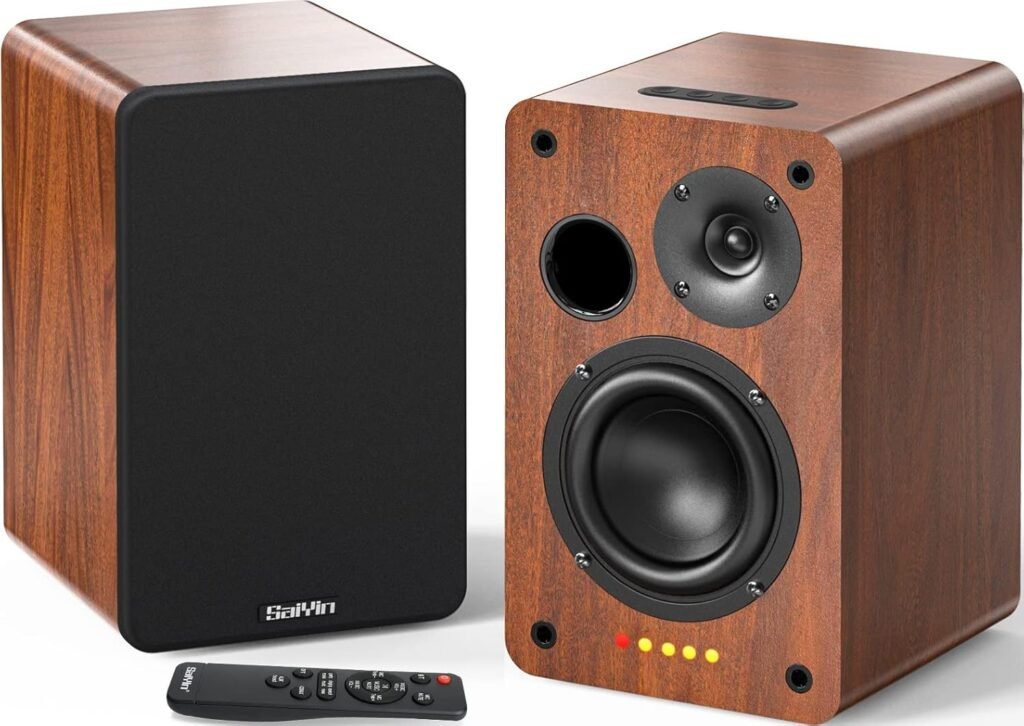
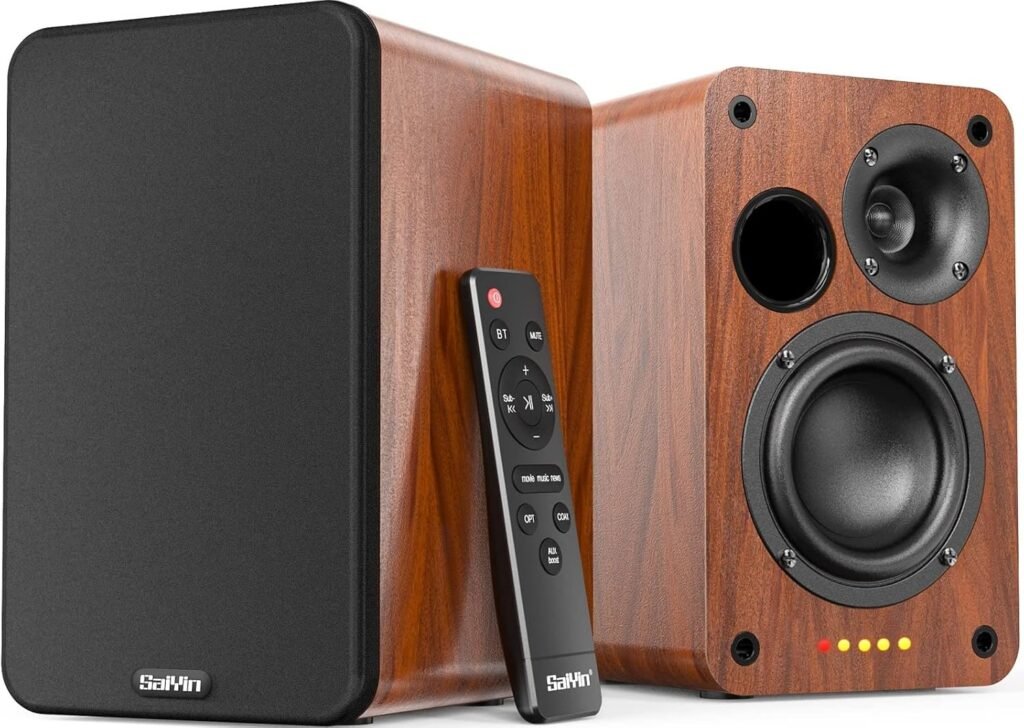
When we first look at the Saiyin Bluetooth Bookshelf Speakers, 40W x 2, it’s clear they’re built to be the central hub of our everyday listening. They’re compact enough for a shelf or desk, yet powerful enough to fill a room with rich, clear sound.
These aren’t just “PC speakers” or “TV speakers.” They’re a flexible, powered audio system that handles Bluetooth, TV audio, turntables, and even subwoofers without making us wrestle with a receiver or amplifier.
Key Features at a Glance
Sometimes it helps to see everything laid out simply. Below is a quick reference so we can check if these speakers fit our setup and expectations.
| Feature | Details |
|---|---|
| Power Output | 40W x 2 (80W total) powered speakers |
| Wireless | Bluetooth 5.3 (fast pairing, stable connection) |
| Drivers | 4-inch woofer, 0.5-inch silk dome tweeter |
| Wired Inputs | Optical, coaxial, RCA line-in |
| Turntable Compatibility | Works via RCA (LINE OUT) or Bluetooth transmitter turntables |
| Subwoofer Support | Subwoofer line out (SUB OUT) for powered subwoofers |
| Controls | Remote control + on-speaker buttons |
| Dimensions | 150 x 170 x 240 mm per speaker |
| Extra Equipment Needed | No amp/receiver required; optional if we want to use them via Line Out |
| Remote | Replaceable for life, compatible with Fire TV Stick |
This table gives us a good foundation. From here, we can walk through how each part actually feels in daily use and what stands out once we set them up.

Design, Build, and Size
Compact Footprint for Shelves and Desks
The Saiyin speakers measure 150 x 170 x 240 mm, which makes them genuinely bookshelf-friendly. We can slide them beside a monitor, on a media console, or on a dedicated shelf without them dominating the space.
The size matters because it hits a sweet spot: big enough for a 4-inch woofer and decent bass, small enough to fit in tight living rooms or home offices. We don’t need a large studio to get full sound.
Aesthetic That Blends with Most Setups
Visually, these speakers have a clean, simple look that works well with modern TVs, minimalist desks, and turntables alike. There’s no flashy “gamer” styling or distracting LEDs. That’s a plus for those of us who value a calm, consistent look in our living space.
They feel solid for their class, with a build that suggests careful attention to resonance and stability. We can place them on foam pads or small stands if we want to reduce vibration and refine the sound even more.
Wireless Performance with Bluetooth 5.3
Everyday Use Over Bluetooth
Bluetooth 5.3 is one of the key reasons these speakers feel current and convenient. We can wirelessly connect our smartphone, tablet, laptop, or PC in a few seconds and start listening right away.
In practice, the Bluetooth connection feels stable, with fewer dropouts and faster pairing than older standards. This matters when we’re switching between devices or moving around the room with our phone in hand.
What Bluetooth Can and Cannot Do with Turntables
Saiyin is very clear about a crucial detail we often miss: not all Bluetooth turntables will work with these speakers over Bluetooth.
- If our turntable has Bluetooth transmitter/output (designed to send audio out to speakers or headphones), we’re good. We can pair the turntable directly with the Saiyin speakers.
- If our turntable has Bluetooth receiver/input only (designed to receive audio from a phone, like many “all-in-one” models with built-in speakers), it will not work with these speakers over Bluetooth.
This is an important point. We should check our turntable’s specs: look for “Bluetooth transmitter” or an indication that it can send audio out to external devices. If it only talks about receiving audio from phones, we’ll need to use a wired connection instead.
Sound Quality: How These Speakers Actually Perform
General Sound Character
Once we start listening, the 40W x 2 power and the 4-inch woofers become immediately noticeable. The sound signature is balanced and friendly: strong enough bass for TV and music, clear mids for vocals, and crisp highs from the 0.5-inch silk dome tweeter.
They are not the kind of speakers that exaggerate any one part of the spectrum too aggressively. This is what we want for home use: clarity for voices, detail for instruments, and enough low-end to enjoy movies and games without feeling thin.
Voices, Movies, and TV Dialog
One of the strongest points here is voice clarity. For those of us who are tired of straining to hear what people say on TV, these speakers give dialog better presence and intelligibility than many built-in TV speakers.
The midrange is where human voices live, and these speakers give that range the right amount of body and warmth. When we’re watching streaming shows, sports commentators, or news, everything sounds much more “in the room” compared to the flat sound of a TV alone.
Music Listening: Genres and Detail
For music, the Saiyin speakers do a solid job across different genres:
- Pop, rock, and electronic benefit from the punchy bass and clear vocals.
- Jazz and acoustic recordings sound clean, with instruments occupying their own space in the soundstage.
- Classical and orchestral come through with enough detail, though we might want a subwoofer if we care deeply about the lowest frequencies.
We’re not talking about high-end audiophile monitors, but in their price and category, these powered speakers offer a pleasant, well-balanced sound that feels like a very noticeable upgrade over most soundbars and TV speakers.
Bass, Treble, and the Silk Dome Tweeter
Low-End Performance
The bass from the 4-inch woofers is better than we’d typically expect from compact speakers. For normal living rooms or bedrooms, the low-end is satisfying for most content—especially if we position the speakers near a wall, which can naturally reinforce bass.
We shouldn’t expect subwoofer-level rumble from the speakers alone; physics sets limits. Still, for day-to-day streaming, casual music sessions, and games, they deliver a respectable punch that keeps things lively.
Highs with the 0.5-Inch Silk Dome Tweeter
The silk dome tweeter helps keep the treble smooth rather than harsh. We get enough detail for cymbals, strings, and ambient effects without that sharp, fatiguing edge that some low-quality tweeters produce.
Over longer listening sessions—like a whole season of a show in one weekend or hours of background music while we work—this smoother treble becomes especially important. It helps prevent ear fatigue and makes the speakers more enjoyable over time.
Adding a Subwoofer with the Subwoofer Line Out
Why the SUB OUT Matters
One of the standout features of the Saiyin speakers is the dedicated SUB OUT jack. This allows us to connect any powered subwoofer we already have (or plan to buy) and turn our speakers into the core of a 2.1 system.
We’re not forced into a proprietary subwoofer or ecosystem. As long as the sub has its own amplifier (most home subs do), we simply hook it up with a standard cable and let it handle the deep bass.
How the System Feels with a Subwoofer
With a subwoofer:
- Movie soundtracks gain serious impact in explosions, footsteps, and musical scores.
- Game soundscapes become more immersive, with powerful low-end effects.
- Music that relies on bass—hip-hop, EDM, modern pop—becomes fuller and more satisfying.
The speakers themselves can then focus more on midrange and treble detail, while the sub handles the heavy lifting at the bottom. It’s a simple way to grow our system without replacing the core speakers.
Connection Options: How These Fit into Our Setup
Optical and Coaxial for TVs
The Saiyin speakers include optical and coaxial digital inputs that support 24-bit / 192 kHz audio. This gives us a clean, direct connection from most modern TVs, streaming boxes, and some consoles.
Connecting via optical from our TV means:
- We bypass the TV’s weak speakers altogether.
- We get a stable digital signal with minimal noise or interference.
- We can use our TV as the main switching hub (streaming apps, game consoles, cable box, etc.).
We simply plug the optical cable from TV to speakers, switch the speakers to optical mode, and set the TV’s audio output to use external/optical audio.
RCA Inputs for Turntables, PCs, and More
The RCA inputs are where things get really flexible:
- Turntables with LINE OUT: plug straight in with an RCA cable.
- Turntables with only PHONO output: we’ll need a phono preamplifier between the turntable and speakers. Many modern turntables already have this built in—if we see a “LINE/PHONO” switch, that means it likely includes a preamp.
- PC or laptop: we can use a 3.5mm-to-RCA cable from the headphone output.
- Older CD players, DVD players, or media boxes: straight into the RCA inputs.
A helpful benefit is that we can leave multiple devices connected at once—TV via optical and turntable via RCA, for example—and switch inputs using the remote.
Using These Speakers with a Turntable
Direct RCA Connection for LINE OUT Turntables
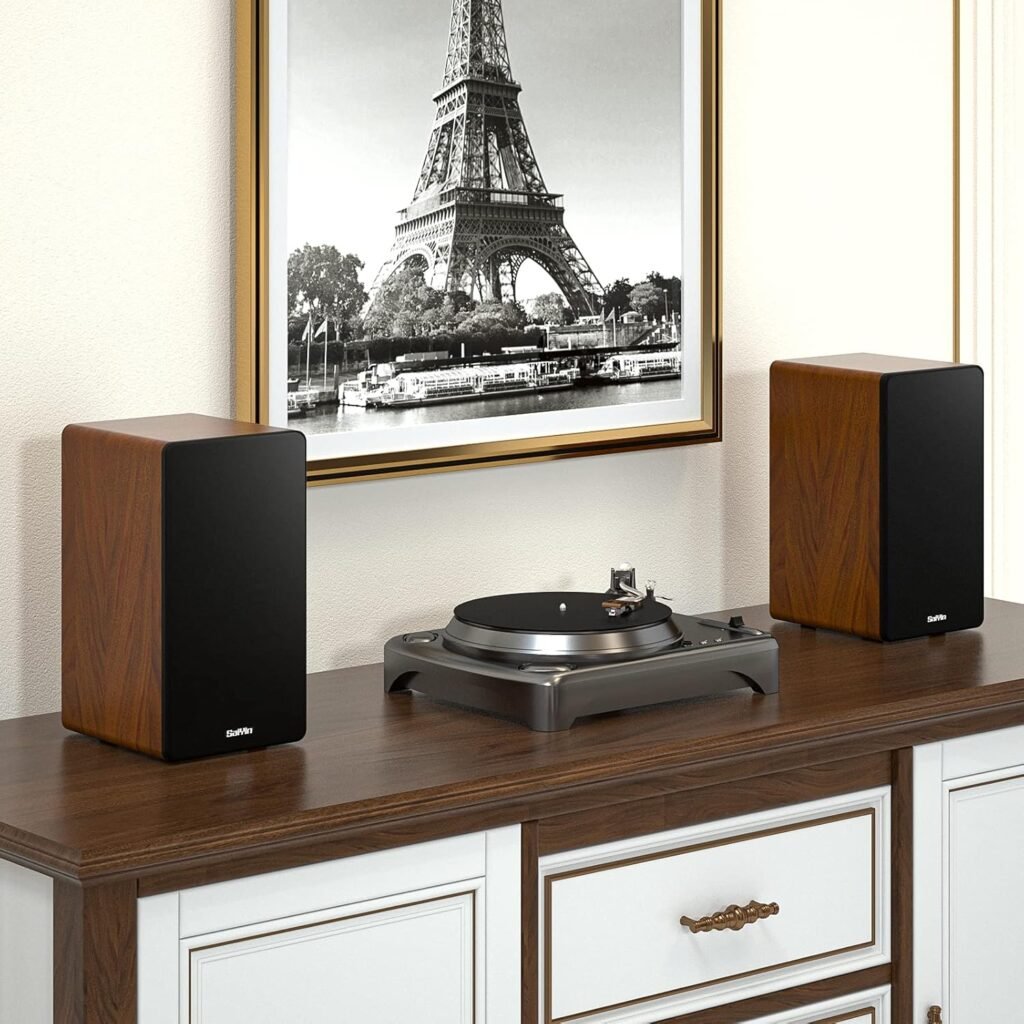
For vinyl lovers, these speakers are a natural step up from built-in turntable speakers and low-power all-in-one units. If our turntable has a LINE OUT, we can connect it directly to the RCA input of the Saiyin speakers.
This signal path keeps things simple and lets the speakers’ internal amplifier handle the rest. The result is a cleaner, fuller vinyl soundstage with proper stereo separation.
When We Need a Phono Preamplifier
If our record player only has a PHONO output (often the case with older or more traditional decks), the signal is too weak and equalized specifically for phono. In that case, we must add a phono preamp between the turntable and the Saiyin speakers.
The chain would look like this:
Turntable (PHONO out) → Phono Preamp → Saiyin Speakers (RCA in)
Some turntables hide the preamp behind a rear switch labeled “PHONO/LINE.” If we have that switch, we can:
- Set it to LINE and plug directly into the speakers, no extra box needed.
- Or set it to PHONO and use an external preamp if we want to upgrade that part of the chain later.
Remote and Manual Controls
Remote Control Functions
The included remote is central to the user experience. We can adjust volume, mute/unmute, and switch between:
- Bluetooth mode
- Optical/Coax (digital) mode
- Line-in (RCA) mode
This saves us from having to get up and push buttons on the speakers every time we change input sources. For living room usage, that’s a major quality-of-life improvement.
Saiyin also notes that the remote is replaceable for life, which is reassuring. Remotes have a way of disappearing between couch cushions or simply wearing out, so knowing we can get a replacement is practical peace of mind.
Fire TV Stick Compatibility
The remote being compatible with Fire TV Stick is a nice bonus for streaming setups. It makes it easier to treat the Saiyin speakers as the main sound system for our streaming stack, rather than dealing with multiple remotes that don’t play well together.
On-Speaker Buttons for Backup
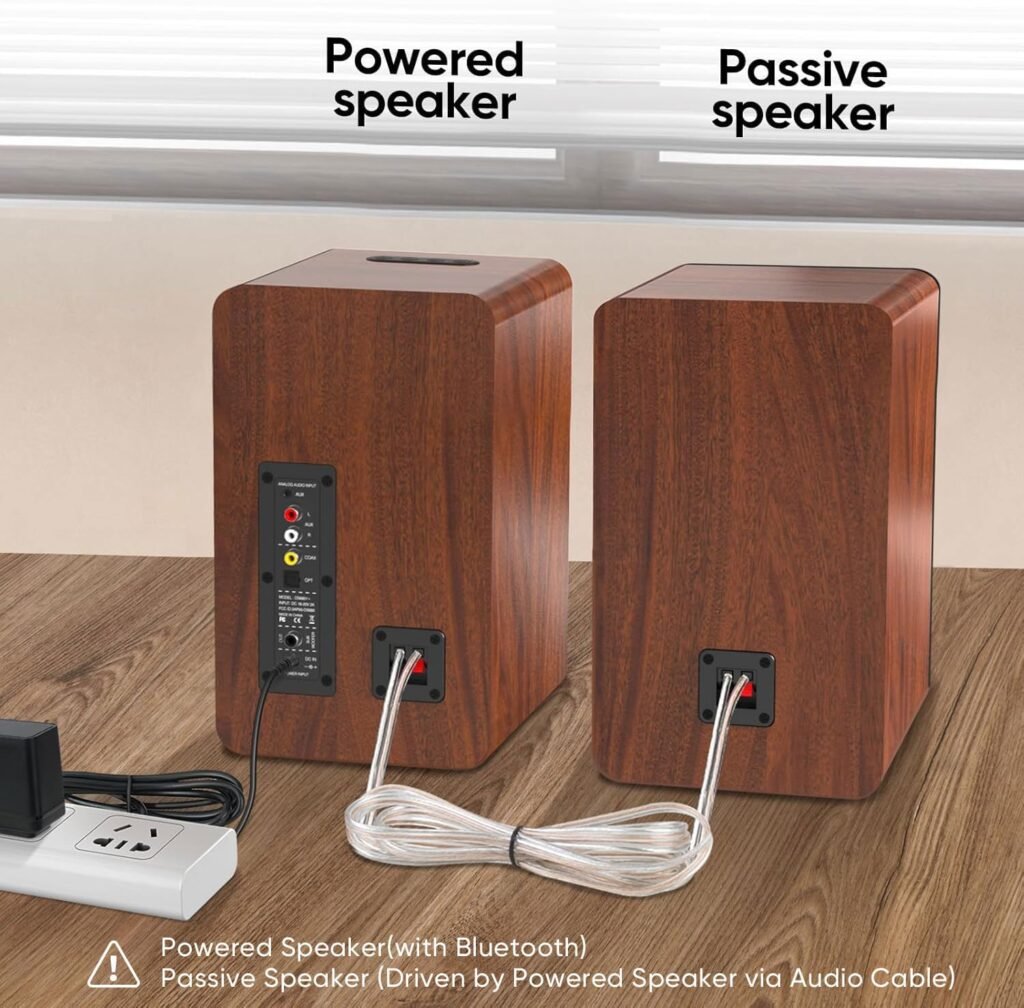
On top of the active speaker, there are also manual buttons. These allow us to change inputs and control volume directly on the unit. This is handy if the remote is across the room, the battery runs out, or we’re working at a desk with the speakers within reach.
No Amplifier or Receiver Required (But Still Optional)
Powered Speakers: All-in-One Simplicity
Because these are powered bookshelf speakers, we don’t need an external amplifier or AV receiver. The amplification is built in, which:
- Reduces the cost of entry for better sound.
- Simplifies cabling and device count.
- Frees up space on shelves or TV stands.
For many of us, that’s the main attraction: high-quality sound without assembling a full hi-fi rack.
Using an Amplifier or Receiver Anyway
If we already have an amplifier or AV receiver and want to integrate the Saiyin speakers, the manufacturer suggests connecting via the amplifier’s or receiver’s Line Out. That means we’re essentially using the external device as a source selector or preamp, while the Saiyin speakers still handle the actual power amplification.
This flexibility is useful if we:
- Already have a receiver with multiple legacy devices attached.
- Want to keep using some of our older gear while upgrading the speakers.
- Prefer the sound shaping options of our amp’s tone controls or EQ.
Setting Up: From Box to Sound
Basic Connection Steps
Here’s a straightforward sequence for getting started:
-
Position the Speakers
Place them on a stable surface, at roughly ear level when seated. Leave a bit of space behind them if possible. -
Connect the Speaker Cable
Link the powered (active) speaker to the passive one with the included cable. -
Choose Our Main Input
- TV users: run an optical cable from TV to speakers.
- PC users: use Bluetooth or 3.5mm-to-RCA.
- Turntable users: connect via RCA (LINE OUT) or via a phono preamp if needed.
-
Power Up and Select Input
Plug the speakers into power, turn them on, and select the appropriate input with the remote or buttons. -
Adjust TV or Device Settings
Set our TV to output sound via optical (or digital audio out), and, if needed, turn off internal speakers. On PCs, choose the Saiyin speakers as the default audio output when connected via Bluetooth.
Bluetooth Pairing Steps
To pair a Bluetooth device:
- Switch the speakers to Bluetooth mode using the remote or buttons.
- On our phone, tablet, or PC, turn on Bluetooth and look for the speakers in the device list.
- Tap to pair. We should hear a confirmation or see an indicator light once connected.
From that point, the speakers should auto-reconnect to that device when they’re powered on and in Bluetooth mode, as long as the device is nearby with Bluetooth enabled.
Everyday Use Scenarios
As TV Speakers in a Living Room
Connecting with optical and subwoofer line out, these easily become a primary TV sound solution. We can:
- Improve clarity over the stock TV speakers.
- Add a subwoofer for richer movie sound.
- Stream music from our phone when the TV is off.
The remote control and Fire TV Stick compatibility make them feel like part of a seamless living room setup rather than an extra gadget we have to fuss with.
As PC or Desk Speakers
On a desk, their size and frontal sound projection make them excellent for nearfield listening. We get stereo imaging that’s way beyond any typical soundbar or cheap computer speakers.
We can:
- Use Bluetooth for quick connections with laptops and tablets.
- Use wired connections if we want lower latency for gaming and editing.
- Keep a turntable or secondary device on RCA while PC audio comes over Bluetooth or optical (depending on our hardware).
As Turntable Speakers in a Vinyl Corner
For vinyl setups, placing these on stands or a sturdy credenza near our turntable gives us a clean, modern system:
- Turntable (with LINE OUT or via preamp) → Saiyin speakers → optional subwoofer.
- No receiver needed, which reduces cost and space.
- Easy switching to Bluetooth when we want to stream instead of spin records.
Strengths and Limitations
What These Speakers Do Really Well
-
Versatile Connectivity
Optical, coaxial, RCA, and Bluetooth 5.3 cover most of the devices we’re likely to own. -
Subwoofer Support
The SUB OUT jack lets us grow the system easily into a full 2.1 setup. -
Powered Design
No extra amp or receiver required, making this a neat solution for people who want serious sound without a full hi-fi stack. -
Clarity and Balance
Dialog, podcasts, and vocals come through clearly, while music retains warmth and energy. -
User-Friendly Control
The remote plus on-speaker controls make everyday operation simple, and lifetime replaceable remote support is reassuring.
Where Expectations Should Be Realistic
-
Bass Without Subwoofer
While solid for their size, we shouldn’t expect chest-thumping bass from 4-inch woofers alone. For deep low-end lovers, pairing with a subwoofer is the way to go. -
Not a Studio Reference Monitor
These are tuned for home entertainment rather than ultra-flat, analytical studio monitoring. That’s a plus for many listeners, but audio professionals may still prefer dedicated studio monitors. -
Turntable Bluetooth Requirements
The Bluetooth transmitter requirement for direct turntable pairing may surprise some. We just need to double-check our turntable’s specs before assuming wireless vinyl will work out of the box.
Comparing to Other Common Options
Versus a Soundbar
Compared to many soundbars in the same price range, the Saiyin Bluetooth Bookshelf Speakers usually offer:
- Better stereo separation (true left/right speakers rather than a single bar).
- More flexible connectivity, especially with RCA inputs and subwoofer out.
- Potentially richer midrange and more open soundstage.
Soundbars can be slimmer and easier to mount under a TV, but these bookshelf speakers often win on sound and upgrade potential.
Versus Passive Bookshelf Speakers + Amp
A traditional hi-fi route with passive speakers and a separate amplifier can provide more upgrade paths and sometimes higher peak power. But it also means:
- More boxes and cables.
- More cost, especially once we add a decent amp.
- More complexity in setup.
For many of us, the Saiyin powered speakers strike a more convenient balance: better than basic speakers or cheap soundbars, but not as complex as a full component-based system.
Who These Speakers Are Best For
Ideal Users
We’d recommend the Saiyin Bluetooth Bookshelf Speakers, 40W x 2, especially if we:
- Want a major sound upgrade for a TV without buying a receiver.
- Prefer a compact, tidy setup on a desk or console.
- Own a turntable and want a simple, modern speaker partner.
- Plan to add a subwoofer at some point for bigger bass.
- Like switching between Bluetooth, TV audio, and wired sources with minimal hassle.
Less Ideal Users
These might be less perfect if we:
- Need ultra-deep bass without adding a subwoofer.
- Want reference-level flat response for professional studio work.
- Expect wireless turntable playback but our turntable only has a Bluetooth receiver, not a transmitter.
Being aware of these boundaries helps ensure we’re happy with what we’re getting, instead of expecting them to replace a full home theater receiver with large floor-standing speakers.
Tips for Getting the Best Sound
Positioning and Placement
A few small tweaks can noticeably improve the experience:
-
Ear-Level Tweeters
Try to position the speakers so that the tweeters are roughly at our ear height when we’re seated. -
Equal Distance
Keep both speakers roughly the same distance from our main listening spot to maintain a stable stereo image. -
Avoid Tight Corners
If possible, avoid shoving them too tightly into corners, as this can lead to boomy bass and muddy mids.
Integrating a Subwoofer Smoothly
When adding a subwoofer:
- Start with the sub’s volume around 30–40% and adjust from there.
- Set the crossover frequency so that the handoff between speakers and sub feels smooth (often in the 70–100 Hz range, depending on the sub and room).
- Give the sub some breathing room away from walls and especially room corners to avoid overly boomy bass.
Final Thoughts on the Saiyin Bluetooth Bookshelf Speakers
If we’re looking for a speaker system that can handle TV audio, music, turntables, and streaming from our phone in one neat package, the Saiyin Bluetooth Bookshelf Speakers, 40W x 2 Powered TV Speakers with 4 Inch Woofer, Turntable Speakers with Optical/AUX Input/Subwoofer Line Out for PC and TVs stand out as a very practical, well-rounded choice.
We get:
- Solid, room-filling sound for their size.
- True stereo imaging that beats most built-in TV speakers and many soundbars.
- Easy wired and wireless connectivity, including optical, coaxial, RCA, and Bluetooth 5.3.
- A clear upgrade path with the SUB OUT jack for a powered subwoofer.
- A user-friendly experience with a remote, simple controls, and no need for a separate amplifier.
For those of us who want better sound without the complexity and cost of a traditional multi-component system, these speakers offer a thoughtful balance between performance, convenience, and versatility. They fit naturally into our everyday life—whether we’re streaming, gaming, watching movies, or spinning records—and turn our existing gear into a more enjoyable listening setup.
Disclosure: As an Amazon Associate, I earn from qualifying purchases.