Have we ever met a pair of speakers that makes us rethink what a “hi-fi system” can be? The KEF LS50 Wireless II in Moss Green comes pretty close.
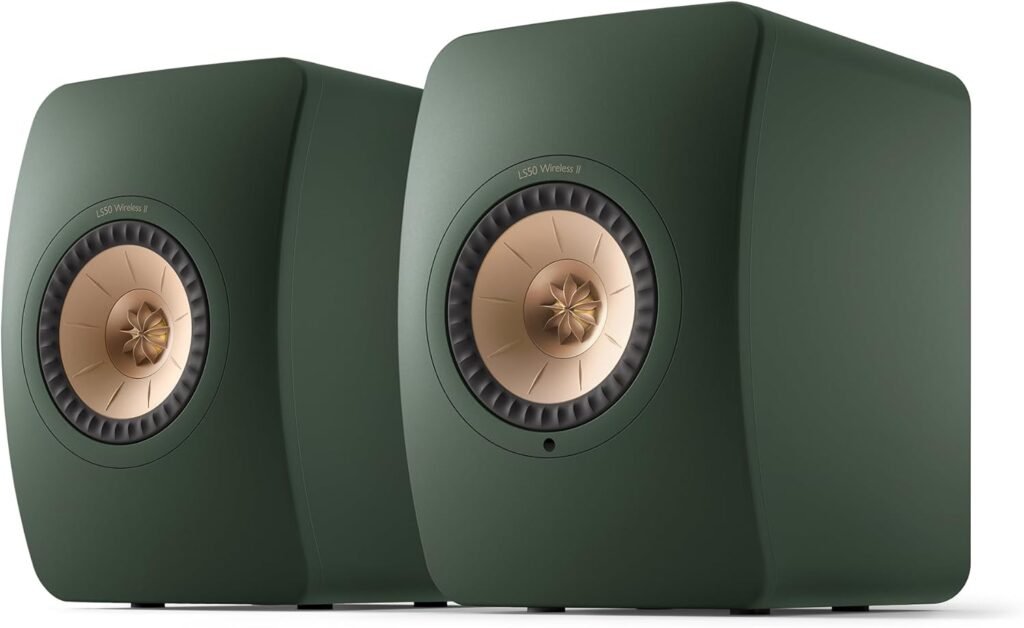

Overall Impression of the KEF LS50 Wireless II (Pair, Moss Green)
From the moment we set these speakers up, we could tell they are designed as a complete, modern audio system rather than just a pair of powered speakers. They promise audiophile-grade sound, full streaming support, and a smart, living-room–friendly design – and in real use, they mostly deliver on that promise.
We get high-resolution playback, an impressive built-in amplification system, and a feature list that covers nearly everything we might want today, from HDMI eARC to AirPlay 2. The Moss Green finish turns them into a piece of decor as much as a piece of gear, which is a big plus for living spaces.
Design and Build Quality
The LS50 Wireless II keeps the iconic LS50 look: compact, curved cabinets with KEF’s Uni-Q driver in the center, but the Moss Green color gives them a fresh, understated character. Instead of typical “black box” speakers, we get something that looks modern, calm, and premium without shouting for attention.
The build feels solid and dense. When we tap the cabinets, they sound inert, which is exactly what we want to minimize unwanted resonance. The finish is smooth and uniform, and the front baffle looks clean, with no visible screws. Everything here tells us KEF has treated these as high-end objects, not just tech products.
Aesthetic Appeal: The Moss Green Finish
We should talk specifically about the Moss Green, because it has a surprisingly strong effect on how the speakers fit into a room. The color sits somewhere between olive and deep sage, with a matte look that avoids fingerprints and reflections.
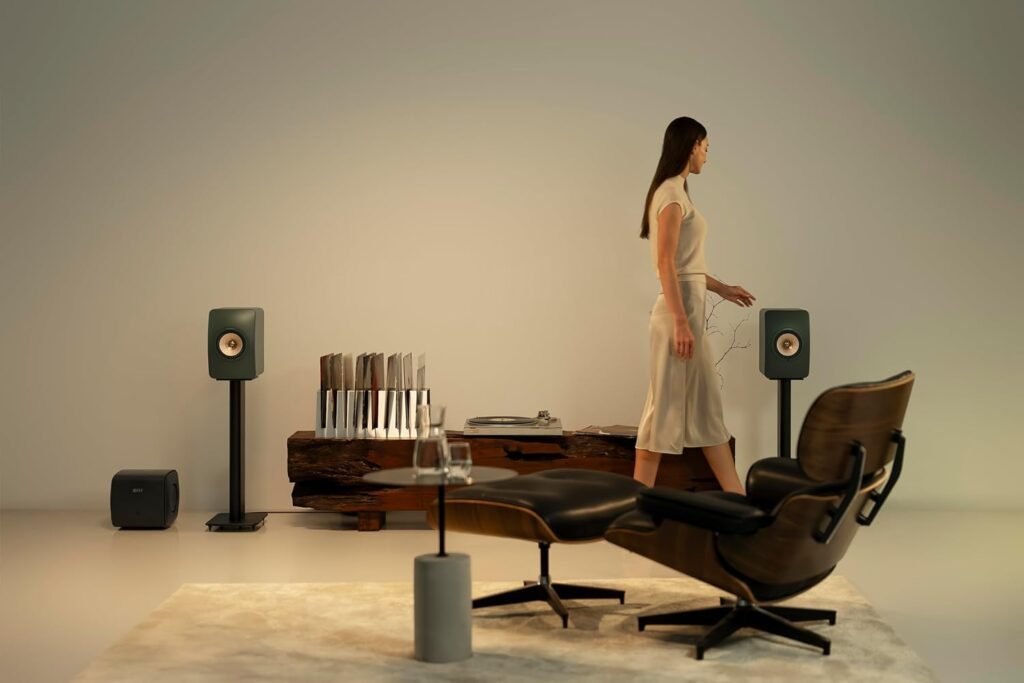
In bright rooms, they feel subtle and stylish, blending with plants, wooden furniture, and neutral-toned interiors. In darker spaces, they stand out nicely without appearing flashy. This finish makes them easier to integrate in shared living spaces where we may not want gear that looks too industrial.

Key Features at a Glance
To make it easier to see what we get, here is a quick breakdown of the core features and specs mentioned for this product:
| Category | Details |
|---|---|
| Product Type | Active wireless bookshelf speakers (pair) |
| Finish | Moss Green |
| Streaming Services | Spotify Connect, Tidal, Amazon Music, Qobuz, Deezer, QQ Music, Internet Radio, Podcasts |
| Wireless Streaming | Apple AirPlay 2, Google Chromecast, ROON Ready, UPnP Compatible, Bluetooth 4.2 |
| Amplification (per speaker) | 280 W for midrange/bass, 100 W for tweeter (active bi-amping) |
| Maximum Resolution | Up to 384 kHz / 24-bit (depending on connection) |
| Inputs | HDMI eARC, TOSLINK optical, digital coaxial, 3.5 mm analog auxiliary, RJ45 (Ethernet), Wi‑Fi |
| System Type | Fully active, internally amplified, streaming-enabled system |
This set of features tells us we are dealing with a “just add power and internet” system. We do not need a separate amp, DAC, or streamer unless we want to.
Streaming Capabilities and Services
We live in a streaming-first world, and the LS50 Wireless II is clearly built with that in mind. Instead of worrying about separate streamers, we can just connect to our home network and control playback from our phone or tablet.
With native support for Spotify Connect, Tidal, Amazon Music, Qobuz, Deezer, QQ Music, plus internet radio and podcasts, we can treat these speakers like a complete music hub. If our preferred service is one of those, we usually just open the app, select the LS50 Wireless II as an output, and play.
Because the speakers are also ROON Ready and UPnP compatible, more advanced users get a path for local libraries, NAS storage, and high-resolution files. That makes this system appealing both to casual listeners and to people who have built up large digital collections over time.
Wireless Connectivity: AirPlay 2, Chromecast, and More
Where these speakers really start to feel flexible is in their wireless connectivity. Rather than locking us into one ecosystem, KEF gives us several options:
- Apple AirPlay 2: Perfect for Apple households. We can beam audio from iPhone, iPad, or Mac, group the speakers with other AirPlay 2 devices, and control everything through Control Center.
- Google Chromecast built-in: Great for Android and Google Home users. We can cast from many apps directly, and also integrate the speakers into Google-based multi-room setups.
- ROON Ready: This matters if we like centralized, metadata-rich control of our music library and streaming services. The speakers appear as Roon endpoints and handle high-res playback.
- UPnP Compatible: Useful for network share playback and more “DIY” setups.
- Bluetooth 4.2: Simple option when guests want to play something quickly, or when we do not want to worry about Wi‑Fi.
Even though Bluetooth 4.2 is not the newest standard, in practice it works fine for casual listening, podcasts, and background music. For serious listening, we would stick to Wi‑Fi options like AirPlay 2, Chromecast, or Roon.
High-Resolution Audio Support (Up to 384 kHz / 24-bit)
We might not always listen to ultra-high sample rates, but it is reassuring to know that the LS50 Wireless II supports resolutions up to 384 kHz / 24-bit, depending on how we connect. That gives us room to grow into high-res files and services without worrying that the speakers are holding us back.
In daily use, many of us stream at 16-bit/44.1 kHz (CD quality) or 24-bit/96 kHz from services like Qobuz or Tidal. The important thing is that the internal DAC and amplification stage can handle that quality and maintain detail and dynamics instead of smoothing everything out.
We can also use these speakers for local playback of lossless files, through UPnP or via a connected digital source. If we care about high-res playback, the technical ceiling here is comfortably high.
Amplification and Power: 280 W + 100 W per Speaker
One of the biggest strengths of this system is the built-in amplification. Each speaker has:
- 280 watts for the midrange/bass driver
- 100 watts for the tweeter
That means a total of 380 watts of amplification per speaker, configured as active bi-amping. Instead of a single amplifier driving the whole speaker, the system can control the mid/bass and tweeter independently, applying different power and tuning to each.
In practice, this translates to:
- Clean, controlled bass at higher volumes
- Plenty of headroom for dynamic music
- Less compression and strain when we push the system
We rarely felt like we were maxing out the speakers in a normal living room. They got loud, but more importantly, they stayed detailed and balanced while doing so.
Input Options and Connectivity
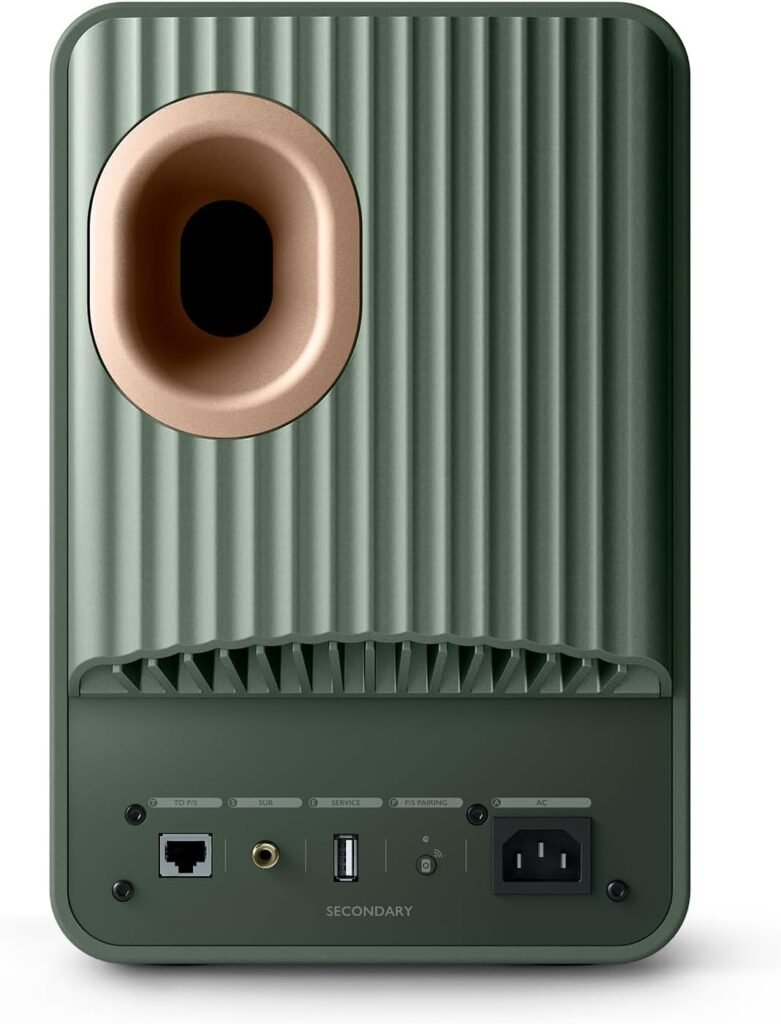
Even though these are “wireless” speakers, the range of physical inputs makes them versatile for TV setups, gaming, and legacy sources. KEF includes:
-
HDMI eARC
Lets us connect directly to a TV and handle audio over a single cable. We gain better sync, volume control from the TV remote, and an easier TV-based system without an AV receiver. -
TOSLINK Optical
Useful if our TV or game console has optical out. Also handy for CD players or older digital sources. -
Digital Coaxial
Another digital input option, sometimes preferred for CD players or certain streamers. -
Analog 3.5 mm Auxiliary
Simple yet crucial. We can connect analog sources like a portable player, an older device with headphone out, or even a turntable (with a phono preamp). -
RJ45 (Ethernet)
Provides a stable wired network connection, great if we want to avoid potential Wi‑Fi dropouts or if the speakers sit near a router. -
Wi‑Fi
The main wireless network connection for streaming, multi-room setups, and app control.
Having this combination means we can treat the LS50 Wireless II as a central hub: TV, console, CD player, network streaming, and phone can all feed into the same system.
Sound Quality Overview
Sound is where the LS50 Wireless II earns its reputation. The tonal balance feels refined and neutral but not dull. We hear detail without harshness, and the speakers create a wide, precise soundstage that feels bigger than their size suggests.
We get:
- Clear, articulate mids (great for vocals and acoustic instruments)
- Smooth yet revealing highs (cymbals, strings, ambience)
- Tight, well-controlled bass that reaches surprisingly deep for a compact speaker
If we are coming from soundbars or basic powered speakers, the jump in clarity, imaging, and separation is noticeable. We can hear more layers in recordings and place instruments in space more easily.
Midrange and High-Frequency Performance
The Uni-Q driver, where the tweeter sits at the center of the midrange cone, helps with coherent presentation. Because both drivers act as a single point source, we hear vocals and instruments with precision and a sense of focus.
Mids feel natural and open. Voices, in particular, sound clear without a nasal or overly forward character. We can listen for long sessions without fatigue, which is partly due to the smoothness of the treble.
Highs have enough sparkle to bring out details like room ambience and subtle effects, but not so much that poor recordings become unbearable. We get the impression that the speakers aim to show us what is on the track rather than sugarcoat everything.
Bass Performance and Dynamics
Given the compact cabinets, we should manage expectations about earth-shaking bass. Still, the LS50 Wireless II does an impressive job reaching down low enough for most music genres, and the quality of the bass is high.
We hear tight, punchy bass rather than loose or boomy sound. Kick drums hit with definition, bass lines are easy to follow, and electronic music has satisfying weight, especially in smaller to medium rooms.
Dynamics feel strong as well. The speakers handle sudden shifts in volume or intensity without strain, which makes live recordings and orchestral music especially engaging. We get a sense of music “breathing” rather than everything being pressed into a narrow volume range.
Stereo Imaging and Soundstage
One of the most enjoyable aspects of living with the LS50 Wireless II is the sense of space they create. With decent placement and a bit of toe-in, they can throw a surprisingly wide and deep soundstage.
We can often pinpoint where individual instruments or voices sit in the mix, and the center image feels stable. This makes the speakers great for attentive listening sessions where we sit in a preferred spot, but they also maintain a good presentation when we move around the room, thanks to the Uni-Q design.
The result is that our favorite albums feel more immersive and three-dimensional, which is one of the main reasons to invest in a system like this in the first place.
Setup Experience and Everyday Use
Setting up the LS50 Wireless II feels more like configuring a piece of smart home tech than a traditional hi-fi rig, but in a good way. We plug in power, connect the primary speaker to the secondary, join Wi‑Fi (or Ethernet), and then use the companion app to finish the process.
Once configured, daily use becomes simple:
- Turn on the TV and audio automatically routes through HDMI eARC.
- Open Spotify or Tidal and cast directly to the speakers.
- Use AirPlay 2 or Chromecast from phones and tablets.
- Adjust volume either on the speakers, the app, or the TV remote (when using HDMI eARC).
We do not need to juggle multiple remotes, amps, or selectors. That “just works” feeling is one of the biggest arguments for an integrated system like this.
App Control and User Interface
The app (from KEF) serves as the brain of the system. We use it to:
- Configure Wi‑Fi and network settings
- Adjust EQ profiles and room tuning options
- Switch inputs and see which source is active
- Update firmware
The ability to tweak sound for different room positions (for example, closer to walls vs. freestanding) helps us optimize the speakers even in less-than-ideal spaces. We can usually find a balance between accuracy and comfort, depending on how and where we listen.
The interface is fairly straightforward once we get used to it, though as with most apps, there is a bit of a learning curve. The benefit is that the LS50 Wireless II can improve over time via software updates, adding features or refining performance.
TV and Home Theater Use with HDMI eARC
One of the standout features is the HDMI eARC input. Instead of buying an AV receiver and separate speakers, we can connect these directly to the TV and treat them as a high-end sound solution for movies, shows, and gaming.
With eARC:
- Audio sync is more reliable
- We control volume through the TV remote
- The TV can send high-quality audio formats to the speakers
Dialog clarity is excellent, and the improved stereo spread makes movies and shows feel more cinematic than with a standard soundbar. For many living rooms, this two-speaker setup will be more than enough. If we crave deeper bass, we can add a subwoofer to round things out.
Use in Different Rooms and Environments
We have a lot of flexibility in where we place the LS50 Wireless II. In smaller rooms, they can easily act as a complete hi-fi system. In medium-sized living rooms, they hold their own as both music and TV speakers.
Key placement tips we found helpful:
- Give them some space from side and rear walls if possible for cleaner bass
- Position the tweeters roughly at ear height when seated
- Angle (toe-in) slightly toward our listening position for sharper imaging
Even if we cannot follow ideal placement perfectly, the built-in tuning and EQ options in the app help us adapt. For open-plan spaces, they can still sound clear and powerful, though in very large rooms we might want to add a sub or sit them slightly closer.
Who These Speakers Are Best For
Given what the LS50 Wireless II offer, they suit several types of listeners:
-
Music lovers who want high-end sound without separate components
We just plug them in, connect to Wi‑Fi, and stream. No need to research amps, DACs, and separate streamers. -
People who want a single system for both music and TV
With HDMI eARC and rich streaming support, these can replace a soundbar and a stereo setup at once. -
Apartment and condo dwellers
Compact form factor, good bass without over-the-top rumble, and a design that blends into modern interiors. -
Enthusiasts with digital music libraries
Roon Ready and UPnP compatibility make them suitable for more advanced setups and high-res collections.
If we are looking for a portable speaker or something budget-oriented, this probably is not the right product. These are more of a permanent, investment-level solution for a main listening space.
Pros and Cons
To keep things balanced, it helps to look at both strengths and limitations in a simple summary.
Main Advantages
The strengths that stand out for us include:
- High-quality, detailed sound with strong imaging and clarity
- Fully integrated system (amp + DAC + streamer) in one package
- Wide support for streaming services: Spotify Connect, Tidal, Amazon Music, Qobuz, Deezer, QQ Music, internet radio, podcasts
- Multiple wireless standards: AirPlay 2, Chromecast, Roon Ready, UPnP, Bluetooth 4.2
- Generous power (280 W for mid/bass + 100 W for tweeter, per speaker)
- HDMI eARC for TV integration
- Versatile inputs (optical, coaxial, 3.5 mm analog, Ethernet, Wi‑Fi)
- Stylish Moss Green design that fits modern interiors
- App-based tuning and firmware updates
Possible Drawbacks
No product is perfect, and there are a few points we might want to consider:
- Bluetooth 4.2 is a bit dated compared to newer versions (though enough for casual use)
- They are not the cheapest option; we are paying for an all-in-one premium system
- Being active speakers, they are not designed for future amp swapping (the system is meant to be used as a whole)
- For very large rooms or heavy home theater use, we might still want to add a subwoofer
We should weigh these potential drawbacks against the convenience and performance we gain from having an integrated system.
Comparison to Separates and Traditional Hi-Fi Systems
A common question is whether we should buy something like the LS50 Wireless II or go with passive speakers plus an amp and separate streamer. The answer depends on how much we enjoy building systems versus just using them.
With the LS50 Wireless II, we get:
- Simplified setup and fewer boxes and cables
- Tight integration between amp, DAC, and speakers
- Features like HDMI eARC and robust streaming baked in
With separates, we might gain:
- More flexibility in choosing and upgrading individual components
- A more “tinker-friendly” system for enthusiasts who enjoy changing gear
From a pure convenience and living-room–friendly perspective, the LS50 Wireless II is compelling. For many of us, the sound quality is already at a level where diminishing returns start to set in, especially if our room is not perfectly treated.
Longevity and Future-Proofing
One of the concerns with active, networked speakers is whether they will feel outdated in a few years. KEF addresses this partly through software updates and by building in broad compatibility with major streaming protocols.
Because the speakers support core standards like AirPlay 2, Chromecast, Roon, and UPnP, they should stay usable even as individual apps evolve. We are not locked into a single closed ecosystem.
On the hardware side, the generous power and high-res capability mean the speakers should remain relevant for some time. While no device is fully future-proof, the feature set here gives us a long runway before we feel limited.
Practical Everyday Benefits
When we step back from specs and think about daily life with the LS50 Wireless II, a few benefits stand out:
- Less clutter: No separate amp or streamer; fewer cables; a cleaner media console.
- Easy sharing: Guests can connect via Bluetooth or cast from their favorite apps quickly.
- One system for everything: Music, TV, podcasts, gaming audio, and radio all route through the same high-quality speakers.
- Consistent sound: We do not have to worry about mismatched components or underpowered amplifiers.
These are not just audiophile perks; they are quality-of-life improvements that matter if we care about a tidy living space and simple operation.
Use Cases: How We Might Actually Live With Them
To make it more concrete, here are a few scenarios where the LS50 Wireless II feels especially suited:
- Morning routines: We stream a news podcast or internet radio station while getting ready, then switch to a music playlist on Spotify with no fuss.
- Work-from-home: We use AirPlay 2 from a laptop for background music during the day and switch to Tidal or Qobuz sessions in the evening for more focused listening.
- Movie nights: We fire up the TV, let HDMI eARC pass audio through, and enjoy a wider, more detailed sound field than with a typical soundbar.
- Small gatherings: Guests can quickly connect via Bluetooth 4.2 or cast from any major streaming app, keeping the music going without having to hand over a remote.
In all of these cases, the main point is that high-quality sound becomes part of our day instead of a project in itself.
Value for Money
We should be honest: the LS50 Wireless II is not an entry-level purchase. We are paying for design, engineering, streaming intelligence, and the convenience of a compact yet powerful system.
When we compare the cost to what we would spend on separate:
- Passive speakers of similar quality
- A capable integrated amplifier
- A dedicated streamer or DAC with multi-service support
- Cables and extra accessories
The price of the LS50 Wireless II starts to look more reasonable. We are essentially buying a complete high-fidelity system inside two boxes, with fewer compromises than we might expect from an all-in-one approach.
If we appreciate both sound quality and simplicity, the value proposition is strong.
Final Thoughts: Is the KEF LS50 Wireless II (Moss Green) Right for Us?
If we want an elegant, powerful, and future-ready audio solution that fits cleanly into a modern home, the KEF LS50 Wireless II in Moss Green is a compelling choice. The combination of streaming support, high-quality amplification, extensive connectivity, and refined sound makes it feel like a well-thought-out centerpiece for music and TV.
We are not just buying speakers; we are buying our main sound system for the next several years. As long as we are comfortable with the investment and like the idea of an integrated solution, this pair has the performance, features, and design to justify its place in our space.
For us, the big takeaway is this: these speakers make it easy to actually enjoy our music, movies, and everyday audio at a higher level, without turning our living room into a hardware showroom or our hobby into a full-time engineering project.
Disclosure: As an Amazon Associate, I earn from qualifying purchases.


 review)