?Want a compact speaker pair that gives you studio-style clarity, Bluetooth convenience, and straightforward setup for your PC, turntable, or small studio?

First impressions and overview
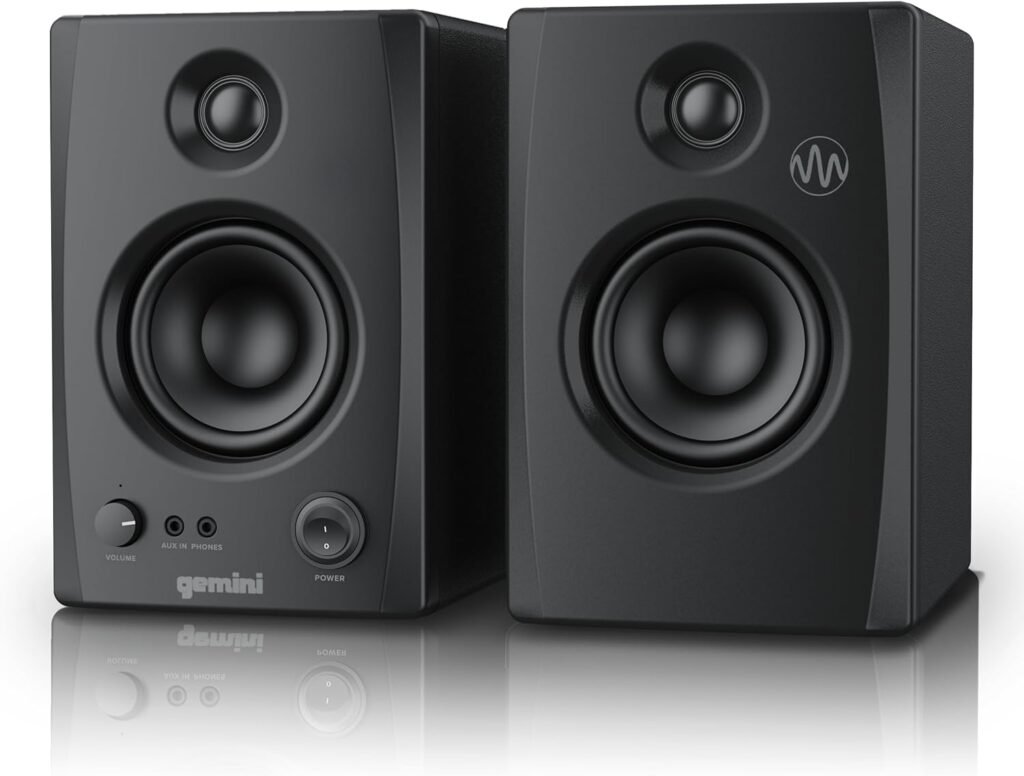
When you pull the Gemini Sound SMX-3BT 100W Bluetooth Bookshelf Studio Monitor Speakers out of the box, you notice a compact, wood-cabinet aesthetic that feels more refined than typical plastic desktop speakers. You get an active/passive pair that promises studio monitor performance with the convenience of Bluetooth streaming and multiple wired inputs. These speakers are pitched at home studios, DJs, and desktop audio users who want a small footprint without compromising on punch or clarity.
What’s in the box
You’ll get the two speakers (one active, one passive), a power cable for the active speaker, a short speaker-to-speaker connection wire, and a basic user manual. You might need to provide the audio cables (TRS, RCA, or 3.5mm) depending on your source. The packaging is simple and avoids unnecessary extras, which keeps the cost reasonable.
Key specifications at a glance
Below is a clear breakdown of the essential specs so you can quickly compare features and decide if these speakers fit your needs.
| Feature | Detail |
|---|---|
| Product name | Gemini Sound SMX-3BT 100W Bluetooth Bookshelf Studio Monitor Speakers (Active/Passive Pair) |
| Power | 100W peak (combined) |
| Speaker configuration | Active/passive pair (single power source, active drives passive) |
| Inputs | Bluetooth, TRS, RCA, 3.5mm aux |
| EQ controls | Built-in acoustic tuning knobs (treble, bass, volume/mix) |
| Cabinet | Wood construction |
| Use cases | PC, turntables, desktop, small home studio, DJs, bookshelf/stereo |
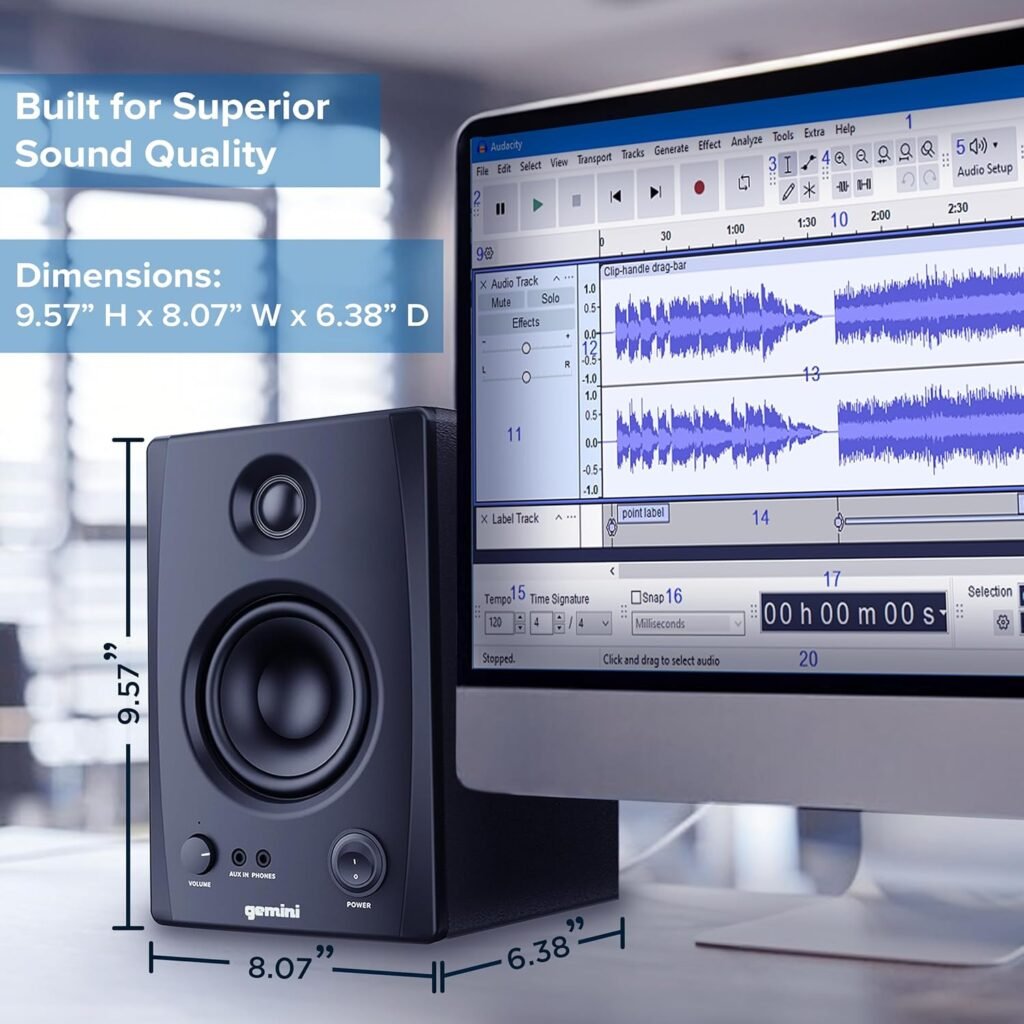
| Size | Compact bookshelf form factor (fits desktop or shelves) |
| Typical ideal users | Home studio owners, DJs in small venues, desktop audiophiles, vinyl listeners |

Design and build quality
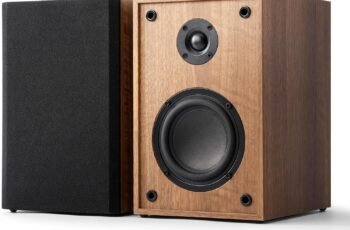
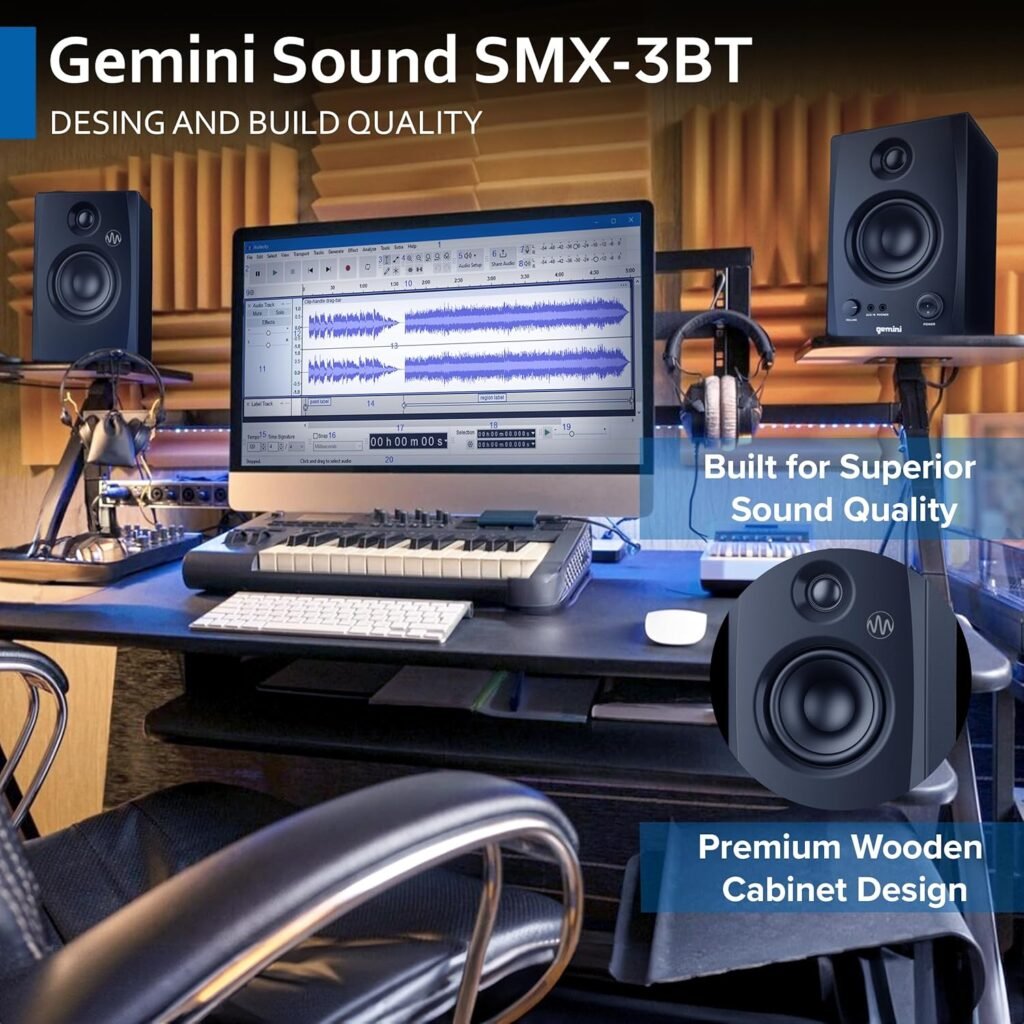
You’ll appreciate the wood cabinet because it not only looks good on a shelf but also helps reduce unwanted resonances compared to cheap plastic enclosures. The finish is unobtrusive and works with most home or studio setups. The drivers are positioned for desktop listening and the active speaker houses the controls and connection panel.
The overall build feels solid for the price point. You won’t get heavy-duty, pro-level build materials, but the cabinets are well-assembled, and the control knobs feel tactile. If you plan to use them in a high-traffic DJ rig or rough environment, consider protective measures, but for home and studio use they’re durable.
Controls and layout
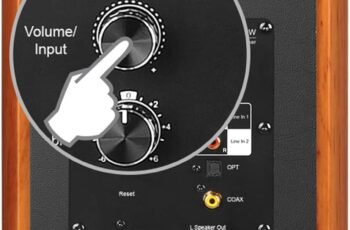
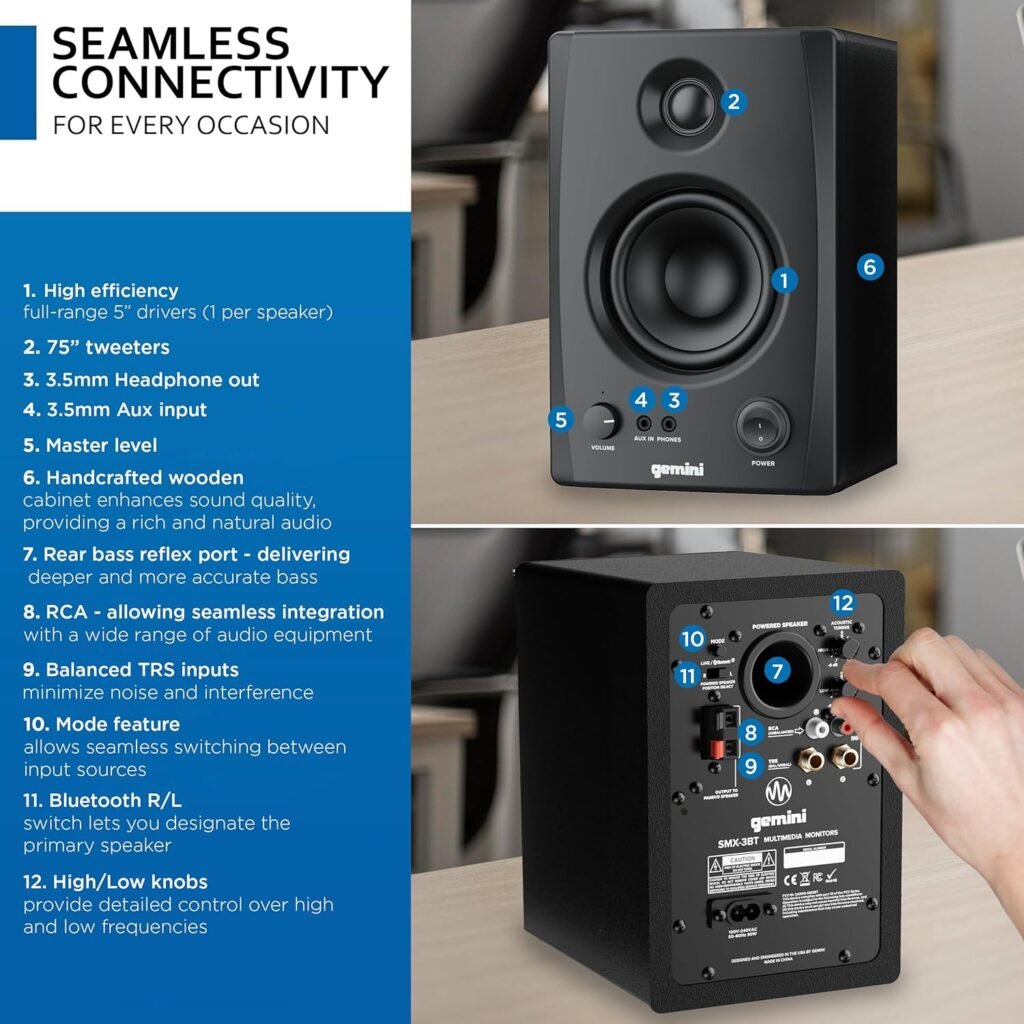
The active speaker includes volume, treble, and bass knobs that let you tailor the presentation to your room and source material. The inputs are clearly labeled, so you won’t be guessing which cable goes where. The Bluetooth pairing button is accessible and pairing is straightforward.
The layout keeps the back panel uncluttered; you’ll find the TRS, RCA, and 3.5mm jacks grouped together and the speaker link terminal for the passive unit clearly labeled. This makes setup fast and intuitive.
Sound performance — what you’ll hear
In practical listening, the SMX-3BT delivers clear mids and crisp highs, which help vocals and lead instruments sit forward in the mix. The supplied 100W peak rating translates to enough headroom for desktop listening and small room playback, though peak wattage isn’t the same as continuous RMS power. You’ll still enjoy impactful bass for small to medium rooms, especially with the wooden cabinet helping to round out low frequencies.
These speakers present a lively, slightly punchy sound that’s musical rather than clinical. If you want a perfectly flat monitoring response for critical mixing, you should treat them as nearfield monitors for reference rather than primary mastering tools. For everyday mixing, DJ practice, gaming, and music enjoyment they’re impressive for the price.
Bass and low-end control
Bass response is surprisingly solid for the cabinet size. You’ll notice authoritative low-end on electronic music and dance tracks, as well as enough warmth for acoustic bass and kick drums. If you push them too close to walls or corners without adjusting EQ, bass may become boomy. The built-in bass knob helps you tame or boost the low end quickly to match your room.
Midrange clarity
The midrange is the speaker’s strength. Vocals, guitars, and synth leads come through with clarity and presence, which makes them useful for vocal editing and mix decisions on desktop projects. You’ll get a forward midrange that helps you pick out detail without needing to crank the volume.
Highs and detail
Treble extends cleanly and adds sparkle without sounding harsh at typical listening levels. The treble control lets you dial back sibilance or add air for clarity. The overall high-frequency performance contributes to a clear, open soundstage that’s enjoyable for long listening sessions.
Bluetooth performance and convenience
Pairing is quick, and Bluetooth lets you stream from your phone, tablet, or laptop without cables. The connection is stable for casual listening and background playback, giving you more flexibility when you don’t need a wired feed.
For critical listening or low-latency needs—such as DJing with precise cueing or studio recording—you’ll want to use a wired connection (TRS or RCA) because Bluetooth introduces latency and potential compression. However, when you’re streaming reference tracks or watching videos, Bluetooth is a highly convenient option.
Connectivity options and practical uses
You can connect your computer, audio interface, turntable (via a phono preamp if needed), game console, or phone with the variety of inputs provided.
- TRS: Great for balanced connections from audio interfaces or mixers.
- RCA: Good for consumer gear like turntables (through a preamp) and stereo outputs.
- 3.5mm: Useful for phones, laptops, and portable devices.
- Bluetooth: Wireless streaming for casual listening.
With this mix of inputs, you can switch between sources easily. The passive/active design keeps cable clutter down because you only plug power into one box.
Using with turntables
If you use a turntable, check whether it has a built-in phono preamp. If not, you’ll need an external phono preamp before plugging into RCA. Once you’ve added a preamp, the SMX-3BT gives vinyl playback a warm, detailed presentation that’s enjoyable for casual listening and DJs alike.
Using with computers and interfaces
For desktop producers, connect your audio interface to the TRS or RCA inputs. If you want to minimize latency when tracking or editing, stay wired. The speakers’ clear midrange makes them useful for rough mixing and editing tasks.
Setup guide and placement tips
Setting up correctly helps you get the best from these speakers. Place the speakers at ear height when seated, forming an equilateral triangle between you and each speaker. Keep them a few feet from the wall to reduce bass buildup, and use isolation pads or dedicated stands if you’re putting them on a desk to minimize vibration transfer.
- Position the speakers so the tweeters are roughly at your ear level.
- Angle them slightly inward toward your listening position for the best stereo image.
- Leave space behind the speakers—at least a few inches—to prevent excessive bass boom.
- Tighten the EQ settings only after listening at realistic volumes; small adjustments go a long way.
If your desk reflects a lot of sound, consider using an acoustic treatment or foam panels behind the speakers to tame early reflections.
EQ tips and tuning for your room
The front-panel EQ controls are intuitive: bass, treble, and main volume. Use the bass knob to reduce boom if the speakers are near a wall or corner. Raise the treble slightly if your room absorbs high frequencies (carpeted rooms, curtains). Start with flat (neutral) settings and make small adjustments while listening to reference tracks you know well.
- If vocals sound hollow, slightly increase midrange or treble.
- If bass lacks impact, raise the bass carefully, but watch for muddiness.
- If the sound feels harsh, lower the treble and re-evaluate at a lower volume.
These adjustments are quick and effective for tailoring sound without needing external EQ software.
Who should buy the Gemini Sound SMX-3BT?
You should consider these speakers if you want a compact, attractive pair of monitors with Bluetooth flexibility. They’re well-suited for:
- Home studio owners who need nearfield monitors on a desk.
- DJs practicing at home or using a small setup where Bluetooth streaming is helpful.
- Desktop users who want better sound than standard computer speakers.
- Vinyl listeners who want a warm, punchy presentation (with a phono preamp if necessary).
- Casual listeners who want both wired and wireless options without a complex setup.
If you need precision mastering monitors with perfectly flat response, or heavy-duty speakers for large venues, you’ll want to look at higher-end studio monitors or powered PA speakers instead.
Pros and cons
Here’s an honest breakdown of strengths and trade-offs so you can weigh them quickly.
| Pros | Cons |
|---|---|
| Compact size fits desktops and shelves | Not a replacement for high-end flat-response studio monitors |
| Bluetooth streaming for convenience | Bluetooth latency unsuitable for live DJ cueing or tracking |
| Active/passive design reduces power cords | Peak wattage can be misleading—continuous RMS lower |
| Multiple inputs (TRS, RCA, 3.5mm) for flexibility | No built-in subwoofer output if you want extended LF below cabinet capability |
| Wood cabinet improves acoustic tone | Might need acoustic treatment for critical mixing |
| Front-panel EQ knobs for quick adjustments | Passive speaker requires the correct link setup |
Real-world performance scenarios
You’ll find the SMX-3BT handles a variety of real-world tasks well. Here are a few scenarios and what to expect.
- Desktop music production: You’ll hear clear mids and highs for editing and arrangement. Use an audio interface with TRS for lower noise and latency.
- Casual DJing/Practice: They’re great for practicing routines and cueing at home. For club gigs, pair them with a subwoofer or use different PA monitors.
- Vinyl playback: With a phono preamp, vinyl sounds warm and engaging. The wooden cabinets add sonic character that complements analog sources.
- Gaming and media: Dialog and effects are clear and immersive. Bluetooth is handy for wireless streaming from your phone or tablet.
Comparisons with similar speakers
Comparing the SMX-3BT to other budget studio monitors helps you choose based on priorities.
- vs. Basic PC speakers: The SMX-3BT offers far superior clarity, build, and EQ control.
- vs. Entry-level studio monitors (same price range): You gain Bluetooth convenience and multiple consumer inputs, whereas some dedicated monitors focus on balanced TRS/XLR inputs and flatter response. If you want wireless streaming, SMX-3BT wins. For strict flatness, some studio brands might be better.
- vs. Powered bookshelf speakers with built-in sub output: Those may offer better integration with low-frequency expansion. SMX-3BT’s advantage is simplicity and compact footprint.
If you often switch between consumer devices and professional gear, the SMX-3BT provides a versatile middle ground.
Maintenance and longevity
You don’t need much maintenance—just keep them dust-free and avoid exposing them to extreme humidity. Periodically check cable connections and speaker link terminals. The wooden cabinets can be gently cleaned with a soft cloth. If you plan to move them regularly, consider protective covers to keep knobs and connectors safe.
Troubleshooting common issues
If you encounter problems, here are simple fixes you can try.
- No sound from passive speaker: Ensure the speaker link cable is properly connected from active to passive speaker. Check volume and mute settings on the source.
- Bluetooth won’t pair: Power-cycle speakers, clear previous pairings on your phone, and try again. Keep the distance close during initial pairing.
- Muffled sound or boomy bass: Move speakers further from walls, reduce bass via knob, or add isolation pads. Small placement changes can have a big impact.
- Hum or ground loop noise: Use balanced TRS if possible, or a ground loop isolator if using RCA connections from multiple powered sources.
- Distortion at high volumes: The 100W peak rating does not imply unlimited clean headroom—reduce volume or use a subwoofer for bass-heavy material at loud levels.
Accessories and upgrades to consider
To make the most of the SMX-3BT, you might add a few accessories:
- Isolation pads or stands to reduce desk coupling.
- Balanced TRS cables for cleaner signal from audio interfaces.
- A dedicated subwoofer if you need deeper low-end for electronic music or large-room playback.
- A small phono preamp for turntable use without a built-in preamp.
- Acoustic treatment panels for a neutral listening environment.
These additions will improve sound quality and versatility according to your needs.
Price-to-value assessment
You’ll get strong value if you prioritize compact size, Bluetooth, and a musical sound signature. The SMX-3BT stands out in its class for offering a combination of active/passive convenience and multiple inputs. For home studio and DJ hobbyist buyers, the cost-to-feature ratio is attractive. If ultimate studio accuracy or club-level SPL is your goal, be prepared to invest in higher-tier monitors and amplification.
Practical buying tips
When buying, confirm the return policy and check user reviews for any recurring issues. If possible, audition them with your preferred music and at your typical listening distance. Consider whether you’ll need a phono preamp or subwoofer and factor that into cost. Also check for deals that may bundle cables or stands to save money.
FAQs
Here are answers to common questions you might have.
Q: Do these speakers need a separate power amp for the passive unit?
A: No. The active speaker contains the amplifier and powers the passive unit through the included link cable, so you only need one power outlet.
Q: Can I use them for DJing in a small venue?
A: Yes for small rooms and practice sets. For larger venues or club gigs, you’ll likely need more powerful PA speakers and a subwoofer.
Q: Is Bluetooth audio quality good enough for mixing?
A: Bluetooth is convenient for reference listening and casual use, but it’s not ideal for mixing because of latency and compression. Use wired inputs for critical work.
Q: Do these speakers include a subwoofer output?
A: Typically no. If you need deeper bass extension, connect a separate subwoofer to your source or use a dedicated subwoofer system.
Q: Will the wood cabinet affect sound compared to plastic?
A: Yes. Wood generally provides a warmer, more natural resonance and reduces ringing compared to plastic, which can improve perceived sound quality.
Final verdict
You’ll find the Gemini Sound SMX-3BT 100W Bluetooth Bookshelf Studio Monitor Speakers a compelling option if you want compact monitors that fit a variety of roles. They combine a pleasing sonic signature, practical EQ controls, and versatile connectivity that works well for home studios, DJs practicing at home, and desktop audio upgrades. They’re not aimed at high-end mastering engineers or large live stages, but for your everyday creative work and media enjoyment they deliver excellent value and an enjoyable listening experience.
If you want a user-friendly, attractive speaker pair with Bluetooth and enough power for domestic use, the Gemini Sound SMX-3BT should be on your shortlist.
Disclosure: As an Amazon Associate, I earn from qualifying purchases.