Are we ready to turn our desk or living room into a serious listening space?
If we have been searching for speakers that sit between casual desktop audio and full-blown audiophile floorstanders, the Edifier S1000MKII Audiophile Active Bookshelf 2.0 Speakers might already be on our radar. These powered bookshelf speakers promise powerful sound, true hi‑fi features, and modern connectivity without forcing us to buy an external amplifier or receiver.
In this review, we walk through what these speakers actually offer in real-world use—including sound quality, connectivity, design, and value—so we can decide if they fit our setup and our listening habits.
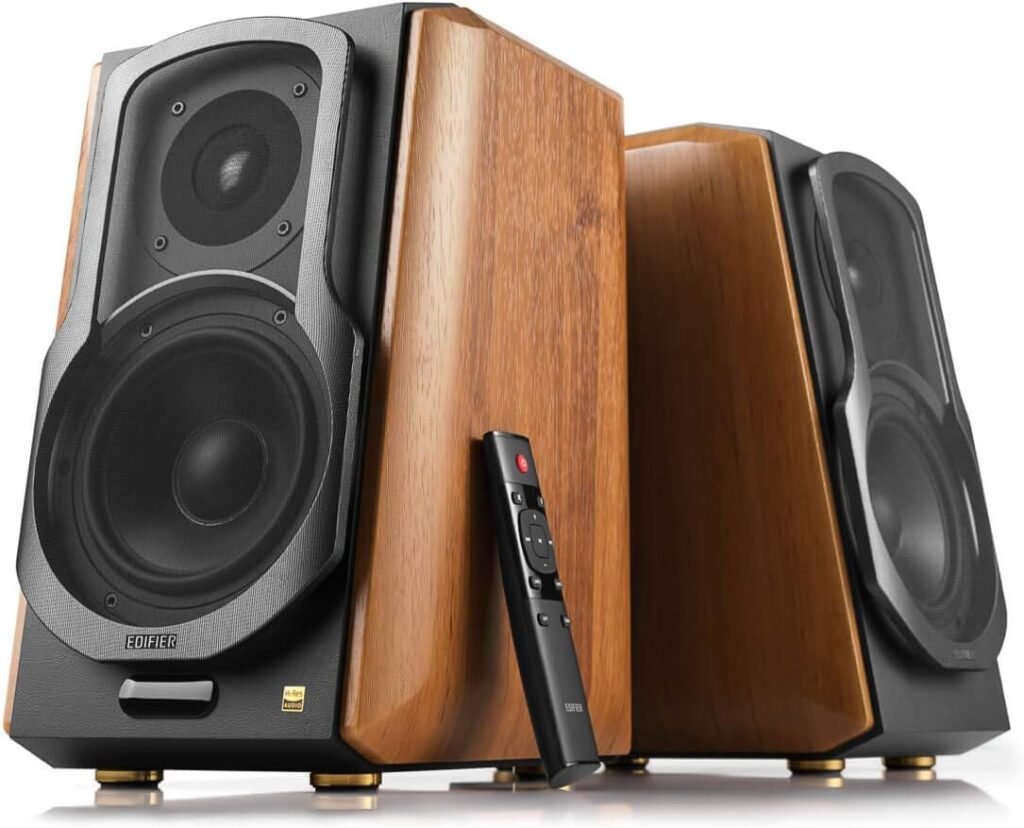

Understanding What the Edifier S1000MKII Actually Is
Before we talk about performance or features, we should get clear on what kind of product we are dealing with. The S1000MKII is a powered 2.0 bookshelf speaker system, not a separate amp-plus-passive-speaker combo.
These are designed to sit on a desk, TV stand, or bookshelf and connect directly to our audio source. That means fewer boxes, fewer cables, and a straightforward setup that still targets audiophile-level sound quality.
A Quick Overview of the Core Specs
The best way to understand these speakers is to look at the essentials: amplification, drivers, power, and connectivity. These specs help us know if the S1000MKII will handle our room size, our content, and our devices.
We have put the core information into a simple table for easier comparison and reference.
| Feature | Specification |
|---|---|
| Product Type | Active (powered) 2.0 bookshelf speakers |
| Total Power Output | 120W RMS (60W x 2, built-in Class D amps) |
| Frequency Response | 45 Hz – 40 kHz |
| Driver Configuration | 5.5-inch aluminum alloy midrange/bass + 1-inch titanium dome tweeter (each) |
| Amplifier Type | High-efficiency Class D |
| Wireless Connectivity | Bluetooth 5.0 with Qualcomm aptX HD |
| Wired Inputs | Optical, plus other typical line-level inputs (e.g., RCA) |
| Use Cases | Near-field monitoring, desktop audio, TV, media players, and general hi-fi |
| Compatible Devices | Phones, tablets, laptops, TVs, Blu-ray, CD, DVD players, and more |
We can already see that Edifier is pushing these beyond simple “PC speakers.” The combination of aptX HD, titanium tweeters, and a broad frequency response points squarely at listeners who care about sound quality, not just convenience.
Design and Build Quality: How Do These Speakers Feel in Our Space?
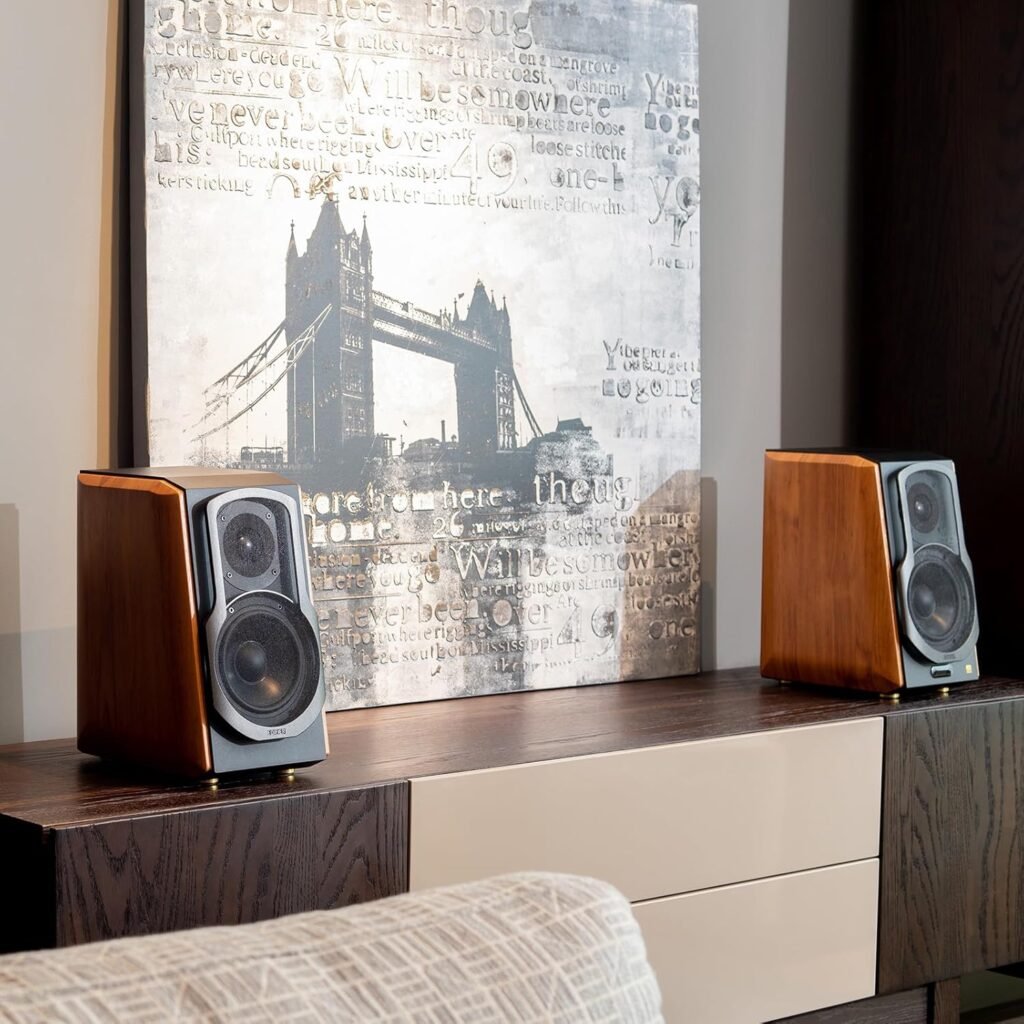
Design matters, especially when we plan to keep something on our desk or shelf for years. The S1000MKII has clearly been built to look and feel like serious hi‑fi gear rather than generic plastic computer speakers.
Overall Aesthetic and Size
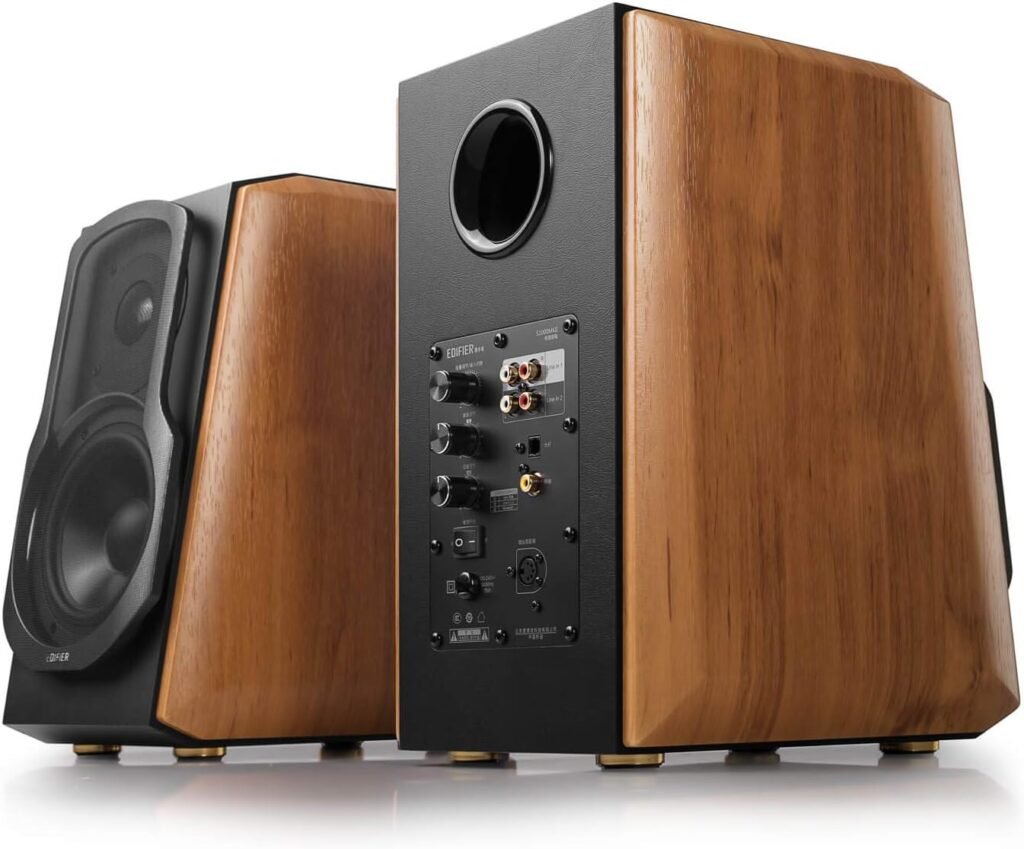
The S1000MKII speakers are larger than average desktop speakers, closer to compact studio monitors. Their cabinet size gives them room for the 5.5‑inch driver and enough internal volume to support stronger, deeper bass.
We should expect a more substantial presence on our desk or media stand. They are not tiny, minimalist boxes, but they also do not overwhelm a small room visually. The finish and shape lean toward a premium, hi‑fi look.
Build Materials and Construction
We can feel their quality as soon as we pick them up. The cabinets are solid and weighty, which helps minimize unwanted resonance and vibration during playback. The aluminum alloy woofer cones and titanium tweeters further elevate the sense that these are built for performance, not just show.
The overall impression is that these speakers are made to last. They do not feel or look like budget products, and that counts for a lot if we care about both aesthetics and durability.

Amplification and Power: What Does 120 Watts Really Mean for Us?
The S1000MKII includes a built-in Class D amplifier, rated at 60 watts per channel, for a total of 120 watts RMS. That means no external amp or receiver is needed—just plug into a source and play.
Why a Built-In Class D Amplifier Matters
Class D amplification is known for being efficient, compact, and cool-running. We get more output power without creating a lot of heat, which is great for speakers that might sit in tighter spaces or under a monitor.
Because Edifier designed the amplifier and drivers together, we also benefit from internal tuning and matching we do not get when piecing together separate components ourselves. The amp is optimized for these drivers, which should lead to better overall performance and stability.
Real-World Loudness and Headroom
Specs can be abstract, so let us speak plainly: 60W per channel in a bookshelf speaker of this size is plenty for small to medium rooms, and more than enough for near-field listening at a desk.
We can:
- Fill a home office or bedroom with music.
- Use them as TV speakers in a living room without struggling for volume.
- Enjoy dynamic playback with headroom for louder peaks without distortion, assuming we keep things within reasonable levels.
We are not looking at nightclub sound pressure levels, but for home listening—even serious listening sessions—the power output is more than adequate.
Sound Quality: How Do the S1000MKII Actually Perform?
This is where things really matter. All the features and specs in the world are useless if these speakers do not sound good. The S1000MKII aims at audiophile-focused consumers, so expectations are higher than for casual multimedia speakers.
Frequency Response: 45 Hz to 40 kHz
The stated frequency response is 45 Hz to 40 kHz. This tells us a lot about the S1000MKII’s intended performance:
- Low end (45 Hz): While we will not reach the earth-shaking sub-bass of large floorstanders or a dedicated subwoofer, 45 Hz is respectable for bookshelf speakers. We should hear convincing bass for most music genres.
- High end (40 kHz): This extends well beyond human hearing, but it suggests that the tweeters can reproduce high frequencies with ease and low distortion. That can translate to airiness, detail, and clarity in the audible range.
Bass and Midrange Performance
The 5.5-inch aluminum alloy midrange/bass driver in each speaker is responsible for handling both the low end and much of the midrange. In use, we can expect:
- Tight and controlled bass, especially compared to cheaper plastic-cone drivers.
- Enough low-end impact for music like rock, hip-hop, electronic, and pop without feeling thin.
- A solid foundation for movie soundtracks, gaming effects, and general media consumption.
We should keep in mind, though, that these are still bookshelf speakers. They prioritize clarity and balance over shaking the walls. For most of us, that is ideal—especially in shared or smaller living spaces.
Treble and Detail with Titanium Dome Tweeters
Each speaker includes a 1-inch advanced titanium dome tweeter, a noticeable step up from basic soft-dome tweeters in many consumer speakers.
This choice usually brings:
- Crisp, detailed high frequencies that reveal subtle details—hi-hats, strings, breath in vocals.
- A sense of openness and precision in the upper range.
We may find that the treble leans slightly on the brighter, more revealing side compared to very warm-sounding speakers. That can be a positive for those of us who enjoy detail and clarity, and it suits near-field listening very well.
Overall Tonal Balance
When we combine the controlled bass, articulate midrange, and detailed treble, the S1000MKII aims for a balanced, slightly analytical sound. It is tuned for listening rather than background noise.
We can use these for:
- Focused music sessions where we want to hear the layers in a mix.
- Light production or hobby-level content creation where accuracy matters.
- Everyday TV and movie viewing where speech clarity is important.
In other words, we get speakers that are enjoyable but also capable of revealing the quality of our recordings and audio sources.
Bluetooth 5.0 with aptX HD: How Good Is the Wireless Experience?
Wireless audio can be hit or miss, especially if we care about sound quality. The S1000MKII stands out here by including Bluetooth 5.0 with Qualcomm aptX HD support.
What aptX HD Means for Our Listening
aptX HD is designed to provide higher-resolution Bluetooth audio compared to standard SBC or classic aptX. While it is still compressed and not completely lossless, in practice it can deliver significantly better quality than baseline Bluetooth connections.
If our source device (phone, tablet, laptop) supports aptX HD, we can expect:
- Lower latency compared to basic Bluetooth, which helps with video and gaming.
- Improved detail and dynamics for streaming music.
- A more “wired-like” listening experience, especially for casual to serious music sessions.
If our device only supports SBC or regular aptX, we still benefit from Bluetooth 5.0’s stability and range, though audio quality may be a bit more limited.
Everyday Wireless Use
In daily life, Bluetooth makes these speakers incredibly flexible:
- We can quickly switch from working on a laptop to playing music from our phone.
- Guests can pair their devices in seconds.
- We avoid the clutter of extra audio cables if our setup is already tight.
We might still prefer wired connections for critical listening, but having high-quality Bluetooth as an option is a big plus and keeps the speakers future-ready.
Wired Connectivity: Optical and More for Serious Sources
While Bluetooth is convenient, wired connections remain the gold standard for stability and sound quality, especially around TVs or home media setups.
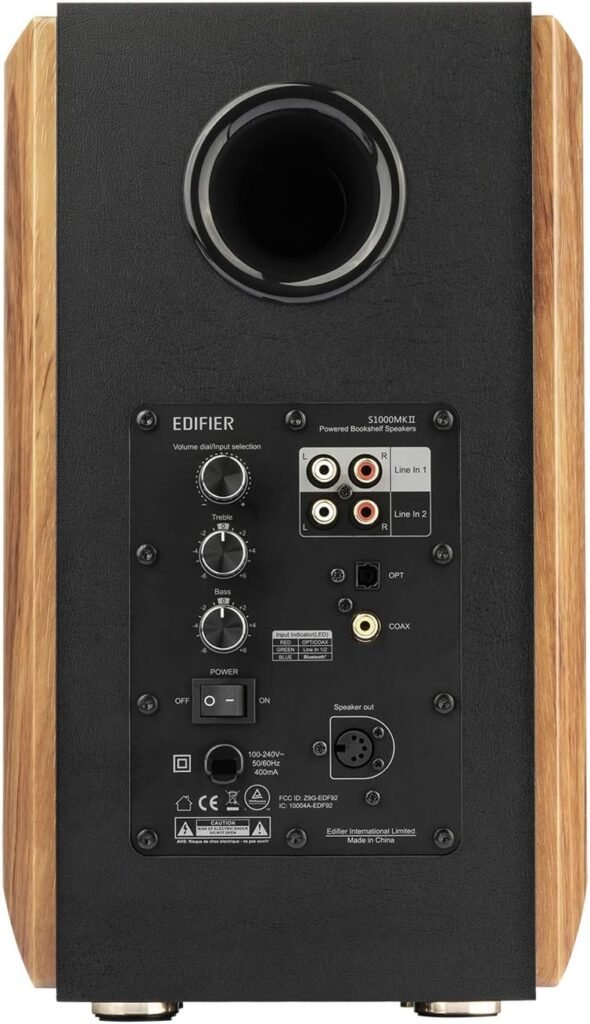
The S1000MKII includes optical input (along with other standard connections like analog line inputs), which opens the door to a wide range of devices.
Using the Optical Input with TVs and Media Players
Optical input is particularly valuable when we want to improve our TV audio. We can:
- Connect our TV’s optical output directly to the speakers.
- Bypass the TV’s often mediocre internal speakers entirely.
- Enjoy clearer dialogue, more impactful soundtracks, and a more immersive experience.
This makes the S1000MKII an easy upgrade path from built-in TV audio without needing a full AV receiver or bulky soundbar-plus-sub combo.
Pairing with Computers, CD/DVD/Blu-ray Players, and More
Beyond optical, the S1000MKII’s other inputs support a variety of devices:
- Laptops and desktops: either via analog output or digital (via another converter if needed).
- CD and Blu-ray players: with digital or analog connections, depending on the model.
- Game consoles and streaming boxes: routed through the TV or directly, depending on configuration.
We can realistically build a compact but potent audio system around these speakers, using them as the central audio hub.
Everyday Usage Scenarios: How Do They Fit Different Lifestyles?
The S1000MKII is marketed as an “ideal general-usage bookshelf system,” and that description is accurate. The question is how well they adapt to various roles in our home.
Desktop and Near-Field Listening
As near-field monitors, these speakers shine. Their power and clarity make them excellent companions for:
- Work-from-home setups where we alternate between calls, meetings, and music.
- Hobby-level audio editing, podcast editing, or light music production.
- Deep-focus music listening at the desk, where we sit within a meter or two of the speakers.
The level of detail from the titanium tweeters and the balanced bass response feels very natural at short listening distances.
TV and Living Room Setup
On a TV stand or media console, the S1000MKII can easily replace:
- Underpowered TV speakers that make dialogue feel muddy.
- Cheap soundbars that focus more on boom than clarity.
While the system remains 2.0 (no separate subwoofer), the 5.5-inch woofers provide enough low end for most content. If our room is not enormous and we do not crave wall-rattling explosions, the soundstage, clarity, and dynamic range should feel like a rewarding upgrade.
Music, Movies, and Gaming
For everyday content:
- Music: We get detailed, engaging stereo reproduction. Most genres sound clean and dynamic.
- Movies and shows: Voices are articulate, effects are clear, and the stereo imaging provides a sense of space.
- Gaming: Directional cues in stereo are well represented, and explosions and environmental effects have good weight without becoming boomy.
We may find that we start noticing better audio quality in the content we consume simply because these speakers are capable of reproducing subtleties that smaller speakers gloss over.
Comparing the S1000MKII to Typical Alternatives
To really know if these are right for us, it helps to think about what else we might buy instead. The S1000MKII sits at the intersection of PC speakers, studio monitors, and small home hi‑fi systems.
Versus Cheap or Mid-Range PC Speakers
Compared to standard PC speakers or 2.1 plastic systems:
- The S1000MKII wins by a huge margin in clarity, soundstage, and build quality.
- We get tighter bass instead of a boomy mini-subwoofer.
- Highs are cleaner and less harsh, and midrange (like vocals) feels much more natural.
If we are used to basic PC speakers, the step up will likely feel dramatic.
Versus Entry-Level Studio Monitors
Some might consider studio monitors from brands like KRK, JBL, or Yamaha. Those are designed for production work and tend to offer:
- Very neutral, analytical sound for mixing and mastering.
- Balanced XLR or TRS inputs instead of optical or Bluetooth.
The S1000MKII counters with:
- More consumer-friendly features: optical input, Bluetooth with aptX HD, a remote (depending on configuration), and multiple input options.
- Sound that is still highly detailed and accurate but tuned to be enjoyable for everyday listening, not just work.
If our main goal is pleasure listening with some light content creation on the side, the S1000MKII may be a more versatile and convenient choice.
Versus Soundbars
Soundbars can be tempting for TV setups, especially with virtual surround modes and built-in subwoofers. However:
- Proper stereo speakers like the S1000MKII usually produce a more natural soundstage and better stereo imaging.
- Dialogue clarity and music playback tend to sound more refined and detailed with quality bookshelf speakers.
If we want one system for both movies and serious music listening, the S1000MKII is often a superior option to a similarly priced soundbar, though it takes up a bit more space.
Setup, Placement, and Practical Considerations
Getting the most out of any speaker system requires basic attention to placement and setup. The S1000MKII is no exception, although it remains simple enough for non‑technical users.
Speaker Placement Tips
For ideal performance, especially in near-field use, we might try:
- Placing the speakers so that the tweeters are roughly at ear level.
- Forming an equilateral triangle: distance between the speakers similar to the distance between each speaker and our listening position.
- Keeping them at least a bit away from the wall to reduce excessive bass buildup or muddy reflections.
Even small adjustments in angle and spacing can make a noticeable difference in imaging and clarity.
Connection and Switching Between Sources
Once we connect our devices—maybe a TV via optical and a laptop or phone via Bluetooth—we can typically switch between inputs easily. The exact control method can vary, but in most use cases:
- It is quick to change from TV watching to music from a phone.
- Volume control is straightforward, whether we use the speakers’ controls or the included remote (when present with the retail package).
In daily life, this ease of switching helps us actually use the features we paid for, rather than sticking to one mode out of convenience.
Strengths and Weaknesses: A Balanced Look
No speaker is perfect, and part of making a good purchase is understanding tradeoffs. The S1000MKII excels in many areas, but we should identify where it might or might not match our priorities.
What the S1000MKII Does Especially Well
We gain some clear strengths with these speakers:
- Sound Quality per Dollar: Strong detail, decent bass, and a wide frequency range for the price bracket.
- Built-In Power: No need to buy a separate amplifier or receiver; that saves money, space, and complexity.
- Connectivity: Bluetooth 5.0 with aptX HD and optical input cover most modern needs.
- Build Quality: Solid cabinets and advanced driver materials that feel premium.
- Versatility: Suitable for desks, small living rooms, and general media use.
These combine to create a system that feels like a true hi‑fi step up without the intimidating complexity of separate components.
Potential Limitations to Keep in Mind
At the same time, we need to be aware of a few constraints:
- No Dedicated Subwoofer Out (in many configurations): If we want deep, cinema-level bass, we may miss a plug‑and‑play sub option. Bass is strong for bookshelves, but physics is physics.
- Size and Weight: Bigger and heavier than many PC speakers, so we need enough space and sturdy surfaces.
- Sound Signature: The detailed, slightly bright character may not suit listeners who prefer very warm, soft tuning.
If we know our preferences—especially around bass and treble balance—we can better judge whether this sound signature fits our taste.
Ideal Use Cases: Who Are These Speakers Really For?
Putting everything together, we can build a clear picture of the kinds of users who will get the most out of the S1000MKII.
Great Fit For
We would recommend these speakers strongly if we:
- Want a serious upgrade from built-in TV speakers or flimsy PC speakers.
- Enjoy detailed, articulate sound and care about hearing the nuances in music.
- Have a mixed-use setup: work, movies, music, and maybe some casual gaming.
- Appreciate premium materials and build without wanting to assemble a full component hi‑fi system.
- Value having both wireless convenience (aptX HD Bluetooth) and wired stability (optical, analog).
In many small to medium spaces, the S1000MKII can serve as the main, all-purpose sound system.
Maybe Not Ideal For
We might want to look elsewhere if we:
- Crave extreme sub-bass and cinematic rumble that only large subwoofers can deliver.
- Need ultra‑neutral studio monitors primarily for professional mixing and mastering.
- Have a very tight desk or shelf space where larger bookshelf speakers simply do not fit.
In those situations, a 2.1 system, compact studio monitors, or smaller satellites plus a sub might be better suited.
Value and Longevity: Are We Getting Our Money’s Worth?
Part of what makes the S1000MKII compelling is how many roles it can play. Instead of buying separate speakers for our desk, TV, and music setup, we can consolidate.
Long-Term Use and Future-Proofing
Several elements help these speakers stay relevant over time:
- Bluetooth 5.0 with aptX HD: Keeps pace with modern mobile devices and streaming.
- Optical input: Compatible with many current and future TVs and digital sources.
- Solid construction and materials: Less likely to feel outdated or worn out quickly.
As our devices change, as long as they offer Bluetooth or digital/analog output, the S1000MKII will likely remain compatible and useful.
Cost Versus Performance
When we factor in:
- Built-in 120W Class D amplification.
- High-quality drivers (aluminum alloy woofer and titanium tweeter).
- Wide compatibility with phones, tablets, laptops, TVs, Blu-ray, CD, DVD players, and more.
- The ability to handle both near-field and room-filling roles.
The ratio of performance to price stands out. We are not merely buying “computer speakers”; we are investing in a compact hi‑fi system that eliminates the need for multiple components.
Practical Tips for Getting the Best Sound from Our S1000MKII
If we choose these speakers, a few simple habits and adjustments can help us maximize their potential:
Placement and Isolation
- Use sturdy stands or a solid desk/shelf.
- Consider placing them on small isolation pads if our surface is resonant or thin.
- Give them a little breathing room from the wall, especially the rear, to prevent muddiness.
Source Quality
- Use higher-quality streaming where possible (e.g., high bitrate or lossless tiers).
- Prefer aptX HD Bluetooth if our device supports it, or wired connections for critical listening.
- Keep volume reasonable to avoid long-term strain on the drivers and our ears.
Regular Use and Adjustments
- Experiment with slight toe-in (angling the speakers toward our listening position) to refine imaging.
- If the treble feels too bright in a very reflective room, we might adjust positioning or add soft furnishings (curtains, rugs) to reduce harsh reflections.
Small tweaks like these can make a big difference in how refined and natural the sound feels.
Final Thoughts: Is the Edifier S1000MKII Right for Us?
When we put it all together, the Edifier S1000MKII Audiophile Active Bookshelf 2.0 Speakers strike a very compelling balance between audiophile aspirations and everyday practicality.
We get:
- Powerful, controlled sound from 120W of built-in Class D amplification.
- A wide frequency response of 45 Hz to 40 kHz, giving us convincing bass and detailed highs.
- Premium drivers, including 5.5‑inch aluminum alloy woofers and 1‑inch titanium dome tweeters.
- Modern connectivity, including Bluetooth 5.0 with aptX HD and optical input, ideal for phones, laptops, and TVs.
- Solid build quality that feels like it belongs in a serious audio setup, not a temporary gadget collection.
For those of us who want one speaker system to handle music, movies, work, and casual content creation—with both wired and wireless options—the S1000MKII offers real value and performance without the complexity of separate amps and passive speakers.
If we have the space and we care about sound quality enough to move beyond basic speakers, these Edifier S1000MKII units can easily become the centerpiece of our home audio experience for years to come.
Disclosure: As an Amazon Associate, I earn from qualifying purchases.