Are you trying to find bookshelf speakers that give your desk, living room, or small studio a warm look and satisfying sound without overcomplicating setup?

Product Overview
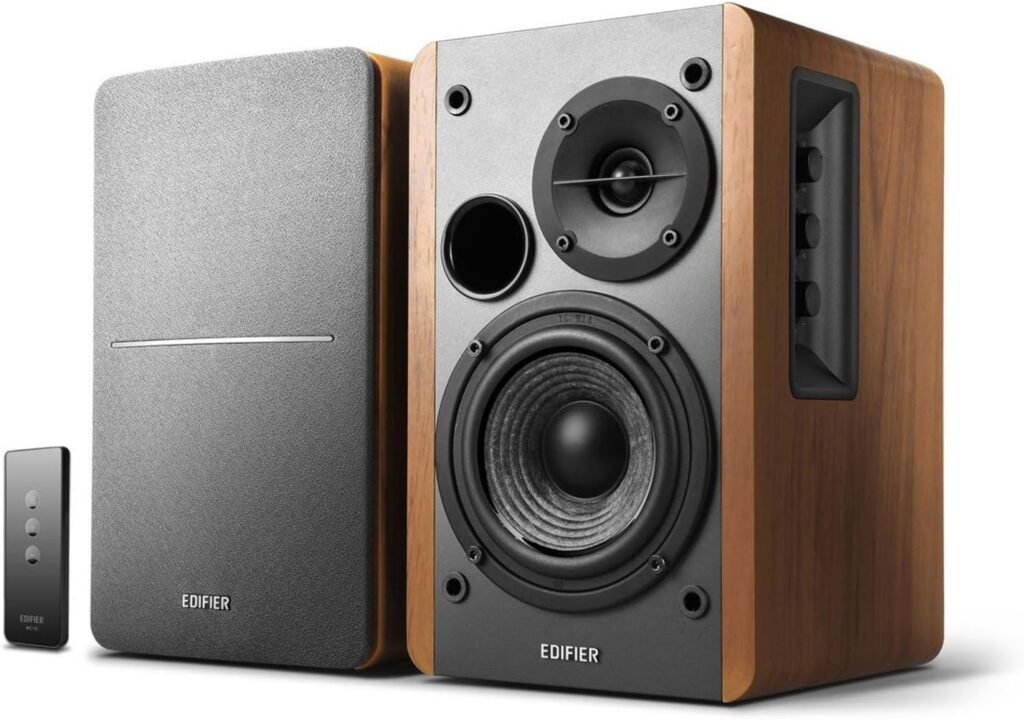
You’re looking at the Edifier R1280T Powered Bookshelf Speakers – 2.0 Active Near Field Studio Monitor Speaker – Wooden Enclosure – 42 Watts RMS Power, a pair of compact powered speakers that combine classic wood styling with a straightforward feature set. You’ll appreciate that these are active speakers, meaning you don’t need a separate amplifier to drive them — the power is built in and ready to go right out of the box.
These speakers are aimed at people who want better sound than typical computer speakers or TV speakers, but who don’t want an intimidating system to configure. You can use them as a desktop audio setup, casual listening system, or a near-field monitor for simple content creation tasks.
Quick Specification Breakdown
Below is a concise table that breaks down the most relevant specs and features so you can get a clear snapshot before reading the deeper sections. You’ll find the essentials at a glance and a short explanation of what each item means for your use.
| Feature | Detail | What it means for you |
|---|---|---|
| Power | 42 Watts RMS (total) | Enough volume for small-to-medium rooms and desk setups without distortion at moderate levels. |
| Configuration | 2.0 active bookshelf speakers | Two-channel stereo sound with built-in amplification — no external amp required. |
| Inputs | 2 x AUX (3.5mm & dual RCA) | Connect two devices simultaneously, like a computer and a turntable (with preamp) or a phone and a TV. |
| Controls | Side panel knobs + Remote | Adjust volume and EQ on the speaker; remote handles volume from your seat. |
| Enclosure | MDF wood with wood effect vinyl | Classic look that reduces cabinet resonance and matches most home decor. |
| EQ | Bass and treble knobs on active speaker | Quick, manual tonal adjustments to tailor sound to the room or music. |
| Use case | Near-field / desktop / casual listening | Great for desks, small rooms, or as simple monitors for editing and casual mixing. |
You’ll notice the table covers the features you’ll interact with most — power, inputs, controls, and build. These are the elements that determine how the speakers will fit into your space and daily routine.

Design and Build
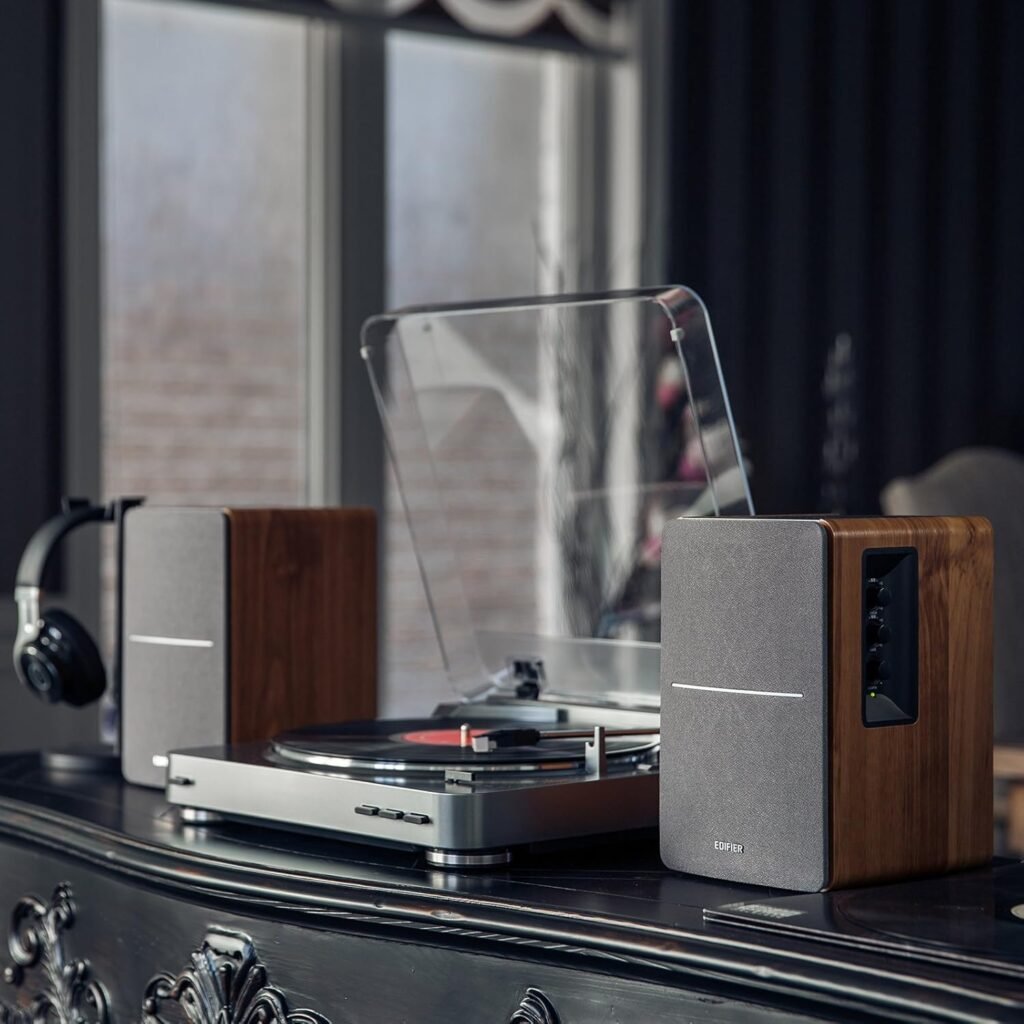
The R1280T’s aesthetic is deliberately classic: an MDF wooden enclosure finished with a wood-effect vinyl wrap that blends into many home setups. You’ll find the look warm and unobtrusive, which helps if you want your speakers to match furniture rather than dominate the room.
Beyond looks, the MDF construction is practical. MDF panels are used to reduce unwanted resonance and coloration compared with thinner plastic enclosures, so the cabinet’s build supports clearer midrange and better low-end control. You’ll also appreciate that the controls are easily accessible on the side of the active speaker, and the overall footprint is compact enough to sit on a bookshelf or desktop without overwhelming your workspace.
Inputs and Connectivity
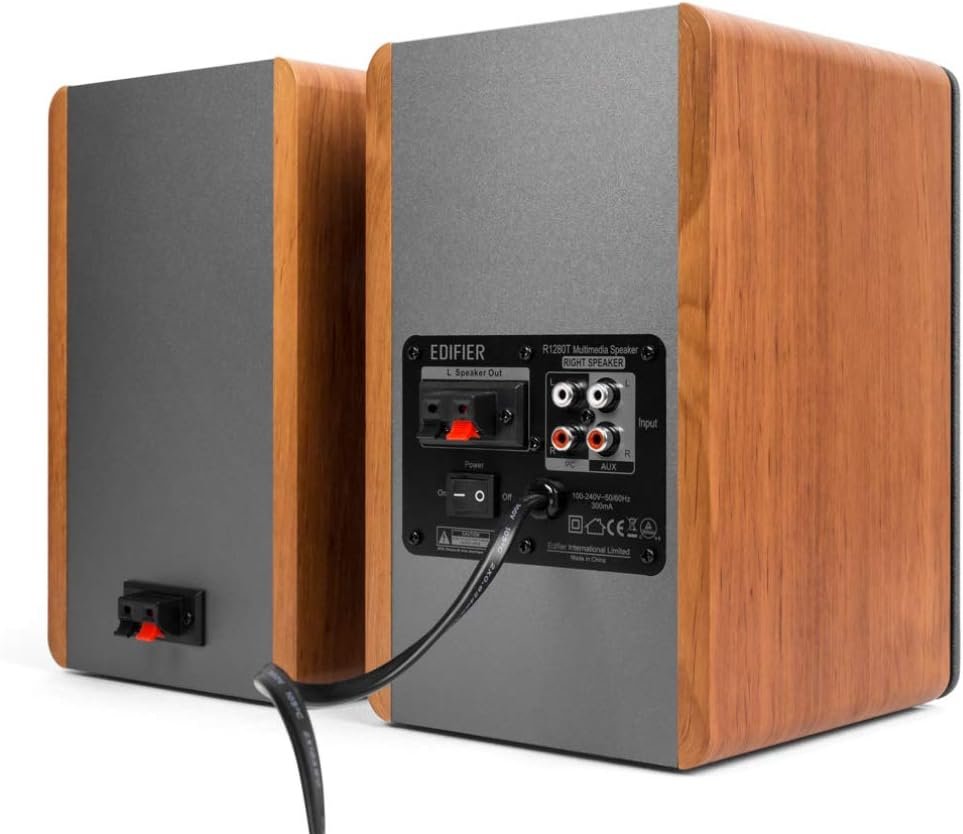
What sets these speakers apart for many people is the dual AUX input configuration: they accept both 3.5mm and dual RCA connections and allow two devices to remain connected at the same time. You’ll find it convenient to leave your computer and a media player connected simultaneously and switch sources without plugging and unplugging cables.
The 3.5mm jack makes hooking up laptops, phones, and tablets straightforward, while the RCA inputs are ideal for desktop DACs, CD players, or turntables that have a built-in phono preamp. Keep in mind that if your turntable does not have a phono preamp, you’ll need an external phono stage or a receiver with a phono input before connecting via RCA. You’ll also want to use well-shielded cables in noisy environments to minimize hum or interference.
Controls and Usability
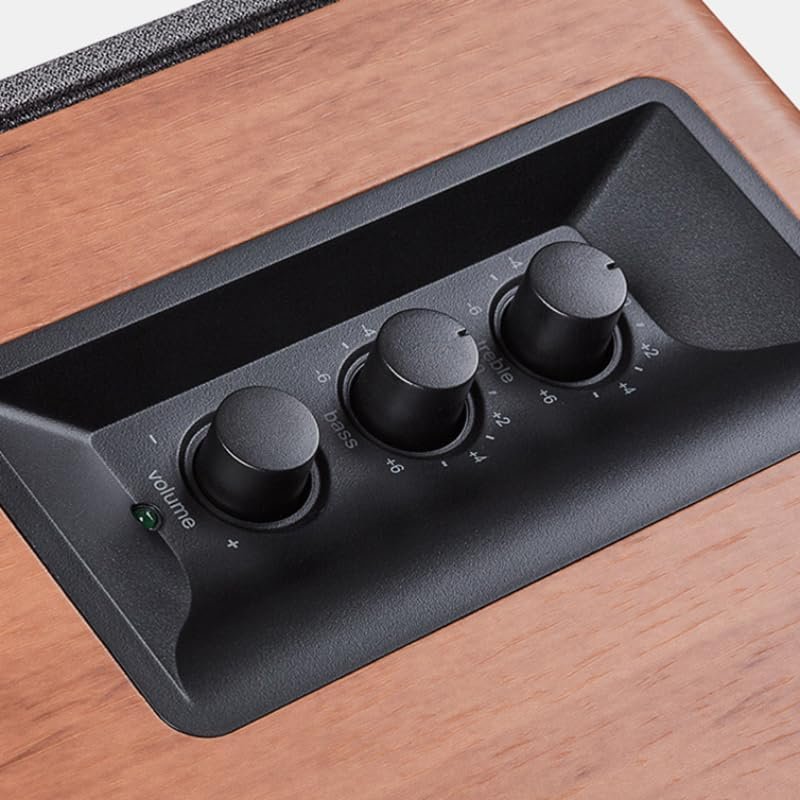
The R1280T gives you tactile control on the speaker itself and convenience with a small remote. You’ll find side-panel knobs for volume, bass, and treble on the active speaker so you can quickly tailor the sound to your liking without hunting for software settings. These knobs are easy to reach and adjust while listening.
The included remote primarily controls volume from across the room or from your desk, which saves you the trip to the speaker when you want to lower or raise the sound. The remote makes casual use more comfortable, and the physical knobs let you fine-tune the tonal balance once and then tweak volume remotely. You’ll likely settle into a preferred EQ position and then rely on the remote for level changes during normal listening.
Sound Quality and Performance
In everyday listening, you’ll notice the R1280T offers a clear midrange and balanced treble, which helps vocals and acoustic instruments sound natural and present. The speakers are tuned for general listening rather than clinical reference monitoring, so you’ll get an enjoyable, musical presentation that suits most genres.
With 42 Watts RMS power, you’ll have enough headroom to fill small to medium rooms with comfortable volume. The bass response is controlled rather than booming; because of the smaller cabinets and size of the drivers, you won’t get deep sub-bass extension like a floor-standing speaker or dedicated subwoofer. If you want more low-end impact for movie watching or bass-heavy music, you can add a subwoofer later via RCA if your setup supports it.
Near-Field Monitoring and Accuracy
Because these are marketed as near-field studio monitor speakers, you’ll get decent imaging and stereo separation when sitting relatively close to them — ideal for a desk or mixing at a small home setup. You’ll be able to hear panning, placement, and subtle mix details that laptop speakers would otherwise obscure.
That said, you should treat them as consumer-friendly near-field monitors: they’re more forgiving and musically colored than pro reference monitors. You’ll get a pleasant listening experience for editing podcasts or casual music production, but for critical mixing and mastering you may prefer a more neutral, higher-end reference monitor.
Listening Scenarios
You’ll find these speakers versatile across a range of listening contexts. For music, they excel with acoustic tracks, jazz, folk, and well-recorded pop where midrange clarity is important. The treble is responsive enough to render detail without becoming harsh at moderate volumes.
For gaming and movies, the speakers provide clear dialogue and soundstage, but you might miss very deep and felt low frequencies that add rumble to explosions or cinematic music. For podcasts, audiobooks, and video conferencing, your voice clarity will be significantly improved over laptop speakers, making them a strong choice for content creators and remote workers.
Setup and Placement Tips
Placement will dramatically affect your listening experience, so you’ll want to pay attention to where you set these speakers. Aim to place the speakers at ear height when you’re seated, forming an equilateral triangle between you and the two speaker fronts for optimal stereo imaging. You’ll get the best detail and balance when the speakers are slightly angled in toward your listening position.
Keep the speakers a few inches away from the wall to avoid boomy bass caused by boundary reinforcement, but not too far from the back wall or you’ll lose low-end support. You’ll also benefit from isolating pads or small stands to reduce cabinet vibration transfer to shelves or desks, which can muddy the sound.
EQ and Tuning Suggestions
The built-in bass and treble knobs let you quickly tailor sound to the room and content. You’ll want to start with both knobs at noon and make small adjustments based on what you hear. If you feel the bass is weak due to larger room size or distant placement, increase bass gradually. If the treble feels bright on certain recordings, back it down slightly.
If you’re using these for casual mixing or content creation, try to keep EQ adjustments modest so you don’t overcompensate and introduce misleading tonal balance. You’ll get the most reliable results by making incremental changes and listening critically across a few familiar tracks.
Comparison with Similar Options
You’ll find other bookshelf models in the same class that offer Bluetooth, digital inputs, or slightly more powerful amps, but the R1280T’s strengths are simplicity, classic look, and dual-aux convenience. If you prefer wireless streaming, a different Edifier model with Bluetooth or a model with digital optical inputs might better suit your needs.
Compared to basic computer speakers, the R1280T is a step up in build quality and sound. When compared to more studio-focused monitors, you’ll get a more pleasant and forgiving sound profile but less raw accuracy for technical mixing. You’ll need to weigh whether you want musical enjoyment or strict neutrality when choosing between options.
Pros and Cons
You’ll want a clear list of what you’ll gain and what to watch out for before making a purchase decision. Below are the main advantages and trade-offs to help you decide if these fit your needs.
Pros:
- You can connect two devices simultaneously without continually swapping cables, which is convenient for mixed-device setups. You’ll save time and avoid wear-and-tear on connectors.
- The built-in amp and accessible side controls make the speakers easy to use out of the box. You won’t need additional equipment to get going.
- The classic MDF wood finish looks good in most homes and contributes to better cabinet behavior than cheap plastics.
- A remote control for volume adds convenience for living-room or desk use.
Cons:
- If you want deep, room-shaking bass, you’ll likely need a subwoofer. You’ll get controlled and musical low end, but not the visceral punch of larger systems.
- These aren’t the most neutral monitors for professional mastering; you’ll hear a slightly colorized, consumer-leaning presentation. If you need clinical accuracy, consider higher-end studio monitors.
- There’s no Bluetooth, so you can’t stream directly from a phone without a wired connection or a separate Bluetooth adapter. You’ll need cables or an external wireless adapter for streaming.
Who Should Buy These
You should consider the R1280T if you want a compact, tasteful pair of speakers that are easy to use and sound better than typical computer or TV speakers. They’re great for students, remote workers, casual audiophiles, and anyone building a tasteful desktop or small living-room setup.
If you mainly listen to acoustic or vocal-centric music and appreciate a warm aesthetic, these will make you happy. If you do a lot of professional mixing that requires flat response or you demand a wireless streaming solution built into the speakers, you might want to compare other models first.
Practical Use Cases
You’ll get a lot of value if you use these speakers in the following ways:
- Desktop audio for work and leisure: Place them on either side of your monitor for clear voice and music reproduction.
- Casual content creation: Use them as near-field monitors for podcast editing and simple mixing tasks where you want better fidelity than laptop speakers.
- Living-room secondary speakers: Hook them to a TV or streaming device for improved dialogue clarity and music playback.
- Vinyl listening (with preamp): Connect a turntable that has a phono preamp and enjoy a warm, analog-friendly sound.
In each case, you’ll benefit from the simple setup and the physical controls, and you can scale the system later with a subwoofer if you need more bass.
Maintenance and Longevity
To keep your speakers looking and sounding their best, you’ll want to maintain them with a few simple practices. Wipe the wooden enclosures with a dry or slightly damp cloth; avoid using aggressive cleaners that can damage the vinyl finish. Keep spills and direct sunlight away to prevent warping or discoloration.
Electronics benefit from stable environmental conditions, so avoid placing them in very humid or extremely hot locations. You’ll also want to periodically check cable connections for oxidation or loose contacts, especially if you move the speakers frequently. With basic care, these speakers can serve you well for years.
Troubleshooting Common Issues
If you run into problems, most issues are simple to resolve and related to cabling, settings, or placement. If one speaker is silent, check the speaker connections and ensure the active (powered) speaker is the one that’s receiving power. You’ll want to verify the source device is sending signal and test different cables to rule out a faulty lead.
If you hear hum or noise, try moving cables away from power supplies or other electronics, and use shielded cables if needed. If the sound seems muddy or thin, reassess speaker placement and try small adjustments to the bass and treble knobs until the balance improves.
Final Recommendation
If you want an attractive, straightforward set of powered bookshelf speakers that deliver musically satisfying sound and flexible wired connectivity, the Edifier R1280T is a strong choice. You’ll get a good balance of build quality, ergonomic controls, and the convenience of connecting two sources at once without swapping cables.
These speakers are especially suited if you want to upgrade from basic computer speakers or are furnishing a small listening area where warmth and simplicity matter more than absolute reference precision. If you value ease of use, aesthetic integration, and a pleasing sound profile, you’ll likely be happy with your purchase.
Frequently Asked Questions
You’ll probably have some common questions before you buy. Below are answers to the most typical queries buyers ask about the R1280T.
Q: Can I use these with my TV? A: Yes, you can connect your TV using the RCA inputs if your TV has RCA outputs. You’ll need to manage TV volume and speaker volume to get consistent playback levels. If your TV only has digital outputs, you’ll need a DAC or converter for a proper connection.
Q: Do these speakers need an amplifier? A: No, they are powered (active) speakers with built-in amplification, so you don’t need a separate amp to drive them. You’ll only need source devices and the appropriate cables.
Q: Can I connect a subwoofer? A: You can add a subwoofer if your source or preamp supports a sub out. Some setups will allow connecting a sub via RCA, but if you plan to heavily extend low-frequency performance, choose a sub with its crossover control so you can blend it smoothly with the R1280T.
Q: Is Bluetooth available? A: These speakers do not have built-in Bluetooth. If you want wireless streaming, consider adding a Bluetooth receiver between your source and the speaker’s AUX input.
Q: Will they work as studio monitors? A: They can function as near-field monitors for non-critical mixing, podcast editing, and general content creation. For professional mixing or mastering where a flat frequency response is essential, you may prefer dedicated studio reference monitors.
If you have more specific concerns about how the speakers will fit into your setup, ask and you’ll get recommendations tailored to your system and listening habits.
Disclosure: As an Amazon Associate, I earn from qualifying purchases.