Have we ever wished our compact desktop or living room speakers could sound more like a proper set of studio monitors without the studio-level price tag?

Why We Chose the Edifier R1280T Powered Bookshelf Speakers
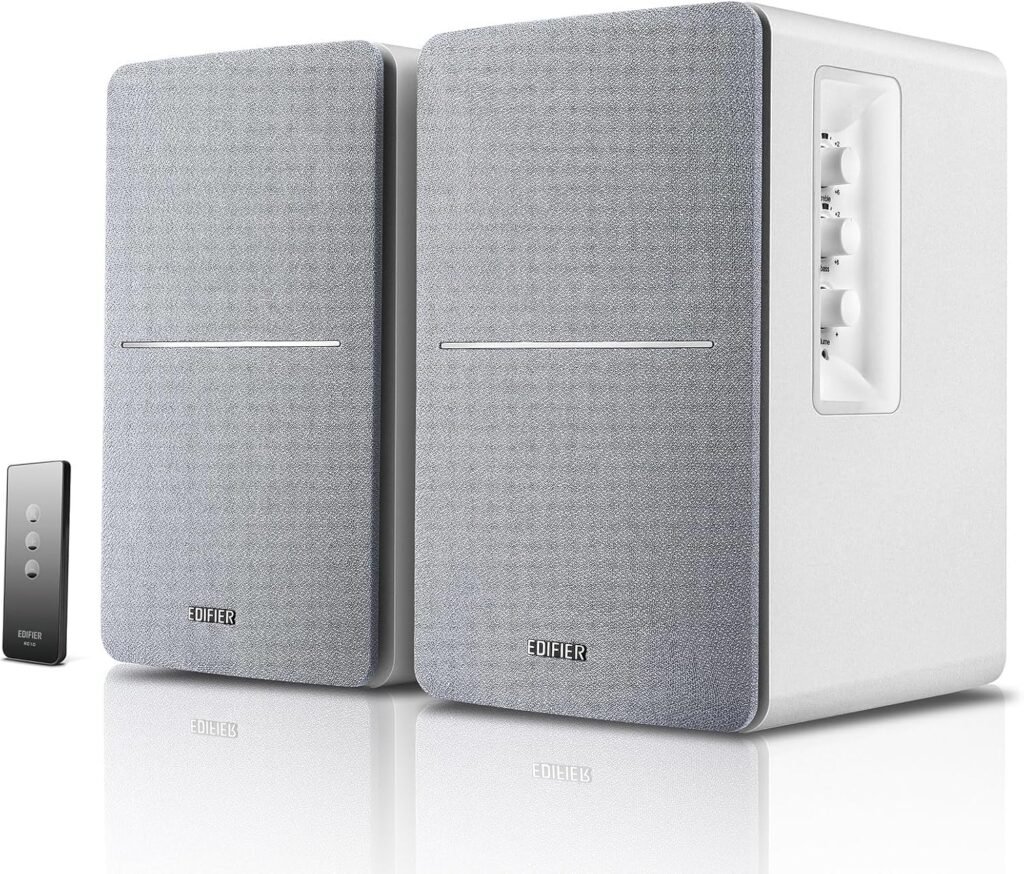
We picked up the Edifier R1280T Powered Bookshelf Speakers because we wanted an affordable, compact audio setup that still offered serious sound quality and flexible connectivity. On paper, these speakers promise a lot: 42 watts RMS power, dual AUX inputs, side-panel EQ, and a clean white enclosure that actually looks good in our space.
We were curious whether they could handle both casual listening and more focused near-field use—things like editing podcasts, watching movies on a PC, or simply enjoying our favorite playlists.
First Impressions and Design
Our first impression was that the R1280T looks more premium than its price suggests. The white enclosure, combined with the wood-effect side panels, gives the speakers a modern yet warm aesthetic that fits nicely into both minimalist and cozy rooms.
We also appreciated the compact footprint. They are small enough to sit on a desk beside a monitor or on a bookshelf without hogging space, yet they have enough presence that they do not feel like cheap plastic computer speakers.
Build Quality and Materials
The cabinets are made from high-quality MDF wood, finished with a wood-effect vinyl. That material choice matters because MDF tends to reduce unwanted resonance and vibration compared to thin plastic housings.
We handled them a bit while setting them up and noticed that they feel solid and dense rather than hollow. The front grilles are removable if we want a more “studio monitor” look, or we can keep them on for a more subtle, home-friendly silhouette.

Key Specifications at a Glance
To get a quick overview of what the Edifier R1280T brings to the table, we put together a simple breakdown.
| Feature | Specification / Detail |
|---|---|
| Product Name | Edifier R1280T Powered Bookshelf Speakers |
| Type | 2.0 Active Near Field Studio Monitor Speaker |
| Enclosure Color | White (with wood-effect side finish) |
| Power Output | 42 Watts RMS (combined) |
| Drivers | 13 mm silk dome tweeter, 4″ full-range woofer |
| Inputs | 2 × AUX (dual RCA), supports 3.5 mm and RCA connections |
| Controls | Side panel knobs (bass, treble, volume), remote control (volume, mute) |
| Enclosure Material | MDF wood with wood-effect vinyl finish |
| Use Case | PC audio, TV, music listening, near-field monitoring, small rooms |
| Included Accessories | Remote control, RCA-to-RCA cable, 3.5 mm-to-RCA cable, speaker interconnect |
We found this combination of specs surprisingly robust for the price range. The dual AUX inputs, in particular, are a standout feature for anyone juggling multiple sources.
Setup and Connectivity Experience
Setting up the R1280T was refreshingly straightforward. We did not need an external amplifier, DAC, or any complicated audio chain—everything essential is built into the active speakers.
Plug-and-Play Ease
We simply connected the main speaker to power, ran the included cable to the passive speaker, and then hooked up our devices via RCA or a 3.5 mm-to-RCA adapter. Within minutes, we were playing music from a laptop, then switching to a TV, and later to a phone—without replugging anything.
There’s something liberating about a setup that does not require constant fiddling. We just left two devices connected all the time and managed switching via the devices themselves.
Dual AUX Inputs in Real-World Use
One of the most practical aspects is the 2 × AUX input configuration. Both are always active, so we can keep, for example, a PC connected to one input and a turntable preamp or TV connected to the other.
In our day-to-day use, we enjoyed being able to:
- Keep our desktop PC plugged into one RCA input
- Plug a laptop or TV into the other
- Hit play on whichever device we wanted without touching the back of the speaker
There is no fancy input selector, but we did not find that to be a deal-breaker. As long as we did not play two devices at the same time, we were fine.
Sound Quality: Studio-Style Clarity on a Budget
When it comes to speakers, sound is what matters most. The R1280T is positioned as a near-field “studio monitor style” speaker, and our expectations were modest considering the price. We were pleasantly surprised by how natural and balanced they sounded.
Overall Sound Signature
The overall tonality of the R1280T leans toward neutral with a gentle warmth. That means:
- Voices sound clear and present without being harsh
- Highs have enough detail to bring out cymbals, strings, and subtle effects
- Lows have a respectable presence for 4″ drivers, though they do not rattle the walls
We found the speakers especially pleasing for vocals, acoustic instruments, jazz, podcasts, and general media consumption. They are not bass cannons, but they are musical and easy to listen to for long sessions.
Highs (Treble Performance)
The 13 mm silk dome tweeter does a commendable job with treble. We noticed:
- Crisp but not piercing high frequencies
- Clear separation of details like hi-hats, reverb tails, and string textures
- No obvious hiss or graininess at normal listening levels
We used the side-panel treble control to tweak the top end slightly depending on our room and source. In a brighter room, we rolled it back a bit; in a more dampened environment, we nudged it up for more air.
Mids (Vocals and Instruments)
Midrange is where these speakers shine. We used them to listen to podcasts, YouTube content, and a range of music genres, and voices tended to sit nicely in the mix.
We noticed:
- Dialog from movies and shows was easy to follow without cranking the volume
- Guitars, pianos, and strings sounded natural and not overly colored
- For light editing of voice recordings (like podcasts or videos), we could hear flaws and breathing noises clearly enough to make precise cuts
If we enjoy audiobooks, talk shows, or vocal-heavy playlists, these speakers deliver a satisfying, smooth midrange.
Lows (Bass Performance)
For a compact 4″ woofer, bass performance is respectable. We did not expect subwoofer-level rumble, and that is not what we get. But for music and films in a small-to-medium room, the low end feels full enough.
We noticed:
- Bass guitars and kick drums have definition rather than just thump
- Electronic and pop tracks have enough weight to feel engaging
- Very deep sub-bass (the stuff we feel more than hear) is limited, which is to be expected
The side-panel bass knob is especially handy. If we wanted a more relaxed background sound, we reduced the bass slightly. If we wanted a bit more punch for movies or gaming, we pushed it up.
Near-Field Performance: At the Desk and in the Studio
Since these are marketed as near-field, we paid particular attention to performance at a desk distance (around 2–3 feet from our ears).
At a Computer Desk
Placed on either side of our monitor and angled toward our ears, the R1280T created a coherent stereo image. Panning effects in games and music came through clearly, and we could pick out placement of instruments fairly well.
For everyday PC tasks, we found:
- System sounds and notifications were crisp but not obnoxious
- YouTube videos sounded fuller compared to basic PC speakers
- Streaming music and online radio felt immersive without needing high volume
The speakers’ relatively compact footprint also meant they did not dominate our workspace.
Light Monitoring and Creative Work
We would not put these in the same category as high-end studio monitors, yet we felt comfortable using them for:
- Rough mixing of audio projects
- Editing dialogue for video and podcasts
- Checking how tracks might sound on consumer-grade speakers
The near-neutral character is helpful when we want a realistic idea of how content might translate to other playback systems.
Volume and Power: 42 Watts RMS in Practice
With 42 watts RMS on tap, we were curious how loud these speakers could get before distortion kicked in. In a small or medium room, we rarely needed to push them beyond 60–70% of full volume.
We observed:
- More than enough output for near-field listening at a desk
- Sufficient loudness for a bedroom, office, or small living area
- At very high levels, like most compact speakers, some compression and strain can start to show, but we rarely had reason to push them that hard
The included remote control made adjusting volume from across the room simple, especially when we were using the speakers with a TV rather than a PC.
Controls and Everyday Usability
The R1280T is designed to be easy to live with. Once we got used to where everything is, we barely had to think about it.
Side Panel Controls
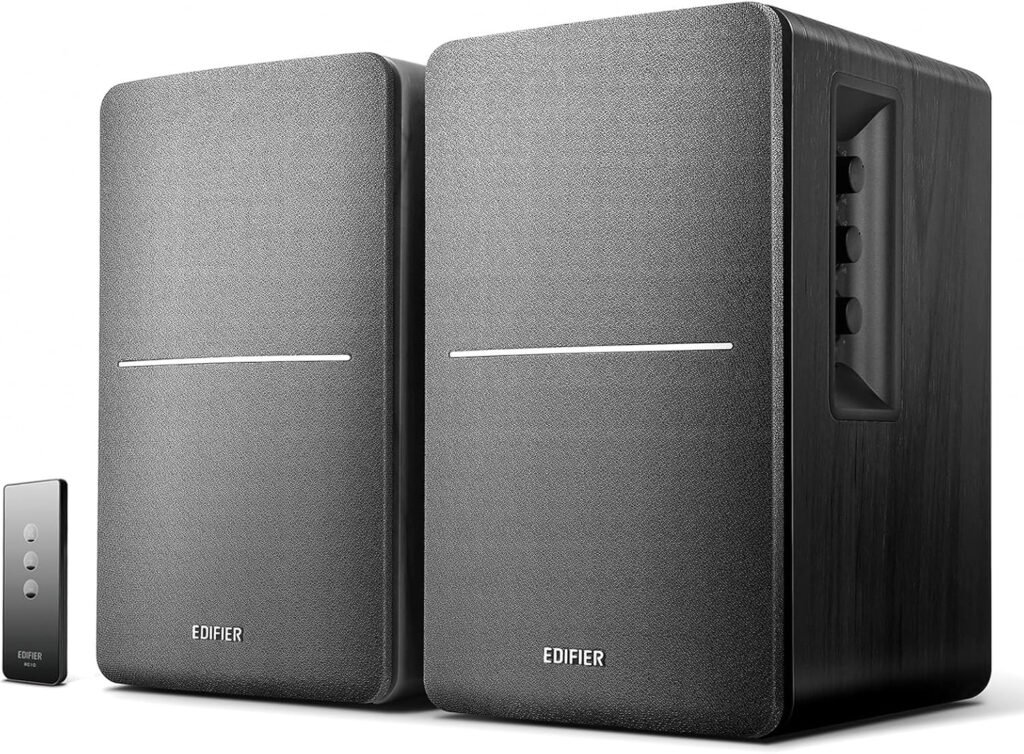
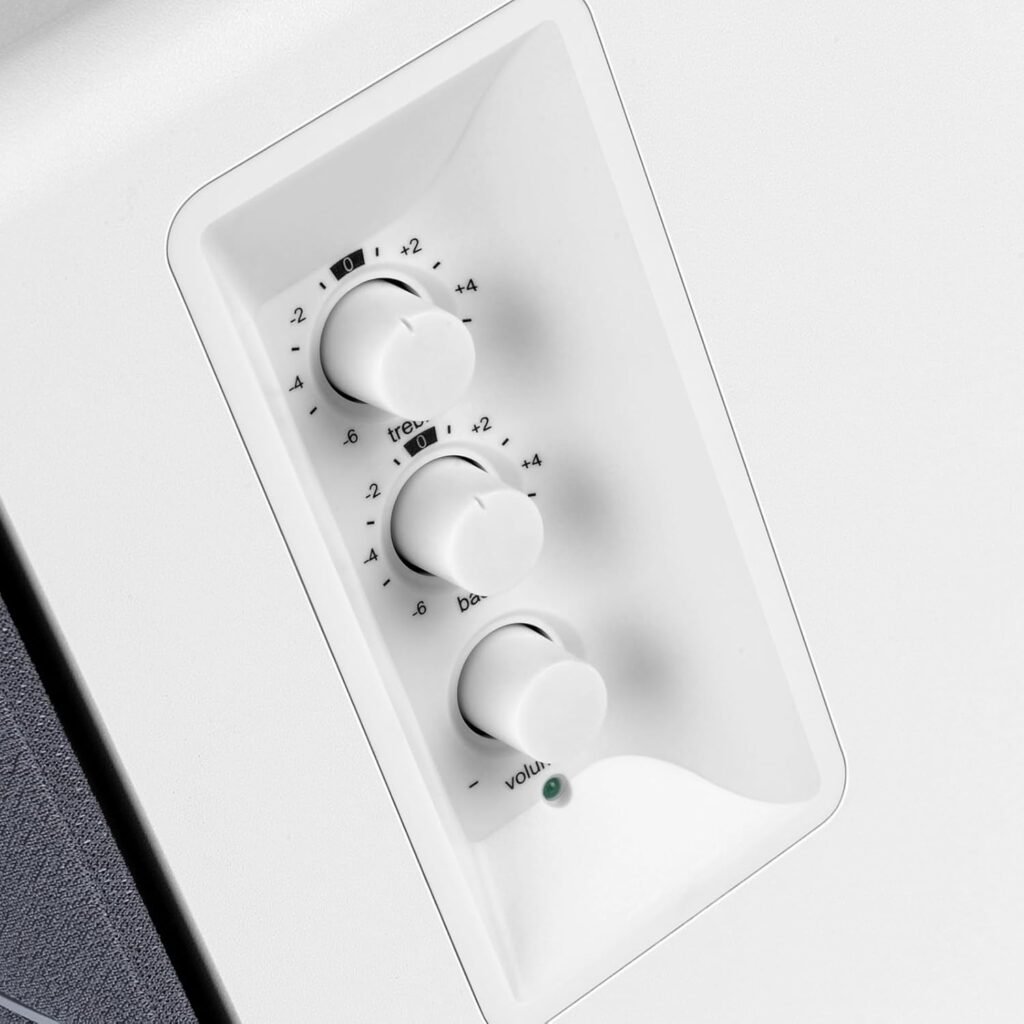
On the right speaker, there is a side panel with three primary knobs:
- Volume
- Bass
- Treble
We like this approach because it allows us to tailor sound quickly for different content. For example:
- For late-night viewing, we turn bass down slightly and keep volume low
- For upbeat music, we boost bass just a touch while keeping treble neutral or slightly enhanced
- For podcasts or audiobooks, we might keep bass flat and raise treble a little for extra articulation
Since the controls are on the side, we can reach them easily when the speakers are on a desk or TV stand without pulling the speakers forward.
Remote Control Convenience
The included remote is small and simple. We mainly used it for:
- Adjusting volume when away from the speakers
- Muting instantly when we needed to take a call or talk to someone
We appreciated having this flexibility, especially during movie nights or when we were lounging across the room.
Design and Aesthetic Appeal in Our Space
Sound matters, but we also care about how gear looks in our home. The white enclosure of the R1280T, paired with its classic wood-effect finish, ended up being one of our favorite aspects.
Fit with Different Room Styles
We tried them in a few different settings:
- On a white desk with a modern monitor setup
- On a wooden bookshelf in a cozy living room
- Next to a TV on a low console
In each case, the speakers looked like they belonged rather than standing out as utilitarian boxes. The white color fights the usual “tech clutter” feel and instead gives off a minimalist, clean vibe.
Removable Grill Versatility
Having removable front grilles adds a bit of customization. With grilles on, they look more like standard home audio speakers. With grilles off, they take on a more “studio monitor” look, showing off the drivers and giving an edgier visual style.
We tended to keep the grilles on in shared spaces for a softer look and take them off at the desk for that “studio gear” feel.
Use Cases: How We Actually Used the R1280T
Speakers this versatile naturally end up serving many roles. Over time, we found several scenarios where the R1280T fit in perfectly.
As PC and Mac Desktop Speakers
This was one of our primary uses. Connected to the PC via a 3.5 mm-to-RCA cable, the R1280T transformed basic system audio into a more hi-fi experience. Gaming felt more immersive, video calls were clearer, and music listening became genuinely satisfying.
We enjoyed:
- Better stereo width compared to typical soundbars or built-in laptop speakers
- Fuller, more natural sound than USB-powered plastic desktop speakers
- An overall sense that our computer had a “real” audio system attached
For TV and Movie Watching
We also tried using them as TV speakers. Many televisions, even newer ones, have thin, underwhelming sound. Connecting the R1280T via the analog audio output (often a headphone jack or RCA out, depending on the TV) brought:
- More impactful sound for movies and shows
- Clearer dialog, which is a big deal in modern content where voices can get buried under effects
- A more cinematic feel without going to a full 5.1 or soundbar system
They are not a substitute for a full home theater setup with a subwoofer, but in a smaller room, they are a big upgrade over stock TV speakers.
For Casual Music Listening
For background listening while cooking, working, or relaxing, we found the R1280T to be reliable and enjoyable. We would put on a playlist from a laptop or a phone (using a simple 3.5 mm connection) and let the speakers handle everything.
We liked:
- The way they handled varied genres from jazz and classical to pop and indie rock
- Their ease of use; we did not need to think about power amps or complex settings
- The ability to adjust bass and treble to match different mood and content types
Strengths and Limitations
No product is perfect, especially in this price bracket. We found plenty to like about the R1280T, along with a few limitations to keep in mind.
What We Appreciated Most
We were consistently impressed by:
- Value for Money: The balance of sound quality, design, and features for the price is excellent.
- Sound Quality: Natural, non-fatiguing timbre with good clarity and enough bass for most everyday listening.
- Dual AUX Inputs: Seamless switching between two wired sources without replugging cables.
- User-Friendly Controls: Side EQ knobs and the included remote make fine-tuning easy.
- Aesthetic: The white enclosure and wood finish can enhance the look of a room rather than detract from it.
These strengths made the R1280T a set of speakers we consistently wanted to keep using in different rooms.
Where We Noticed Limitations
There are a few trade-offs we noticed:
- No Bluetooth or Digital Inputs: Connectivity is strictly analog (AUX/RCA). If we want wireless streaming or optical inputs, we would need additional gear or a different model.
- Bass Extension: Bass is solid considering the size, but if we crave deep sub-bass for EDM or action movies, we might miss having a subwoofer.
- No Dedicated Input Selector: Both inputs are always active. This is usually fine, but if two devices play at once, the signals mix.
- Not True Studio Monitors: Although the sound is quite balanced for casual use, serious audio engineers might still prefer dedicated studio monitors with more detailed response and room correction options.
For most users, these limitations are not deal-breakers, but it is good to align expectations with what the speakers are built to do.
Comparison with Typical Alternatives
We often evaluate gear in context. Compared to other common speaker options at a similar price, the R1280T holds up well.
Versus Cheap Computer Speakers
Against basic plastic PC speakers that are powered over USB, the R1280T is in a different league. We noticed:
- A wider and deeper soundstage
- Much clearer midrange and treble
- Stronger, more controlled bass
If we spend most of our day at a desk, upgrading from cheap computer speakers to the R1280T feels like a significant quality-of-life improvement.
Versus TV Built-In Speakers
Compared to standard TV speakers, the R1280T offers:
- Greater volume without strain
- Far clearer dialog and richer sound effects
- A more engaging experience during movies and shows
For anyone not ready to invest in a full surround or high-end soundbar system, these speakers can be a very practical, budget-friendly stepping stone.
Versus More Expensive Studio Monitors
True studio monitors at higher prices may:
- Offer more extended frequency response, especially in the bass
- Include balanced inputs (XLR/TRS) and more advanced tuning controls
- Be more analytically neutral
However, they usually require more knowledge to integrate properly and don’t always include simple consumer-friendly touches like a remote or dual AUX. For many users, the R1280T strikes a more approachable balance.
Everyday Reliability and Maintenance
We also care about longevity and practicality. Over time, the R1280T showed itself to be relatively low-maintenance and dependable.
Longevity and Build Confidence
The MDF cabinet and quality finish help protect the internal components. We treated the speakers as normal household electronics—no special climate control or elaborate care—and they continued to perform without rattles, hums, or crackles.
We made sure to:
- Avoid blocking the bass reflex port (if present on the rear, depending on revision)
- Give them a few inches of space from walls to reduce boomy reflections
- Dust them lightly from time to time
With basic care, we see no reason these speakers would not last for years in typical home use.
Ease of Cleaning and Care
The surface finish responds well to a microfiber cloth for dusting. We avoided harsh solvents or abrasive cleaners, as those can damage the vinyl and painted surfaces.
Occasionally, we removed the grilles to dust gently around the drivers, being careful not to press directly on the cones.
Who the Edifier R1280T Is Best For
After spending time with the R1280T, we gained a clear sense of who would benefit most from them.
We think these speakers are ideal if we:
- Want a step up from basic PC speakers without breaking the bank
- Need a compact, powered solution that does not require a separate amplifier
- Prefer wired connections and do not mind the absence of Bluetooth or optical inputs
- Enjoy natural, well-balanced sound with enough bass for most genres, but not necessarily club-level low-end
- Care about appearance and want speakers that look good on a desk, shelf, or TV stand
They will fit nicely into a student dorm, home office, bedroom, small living room, or creative workspace.
Practical Tips for Getting the Best Sound
To get the maximum benefit from the R1280T, we found a few simple setup choices made a big difference.
Speaker Placement Suggestions
We found better results when we:
- Placed the speakers at ear level or slightly above
- Created a small triangle between our head and the two speakers (roughly equal distance from each speaker to us)
- Avoided pushing them flush against a wall or into a tight, enclosed space
Even small adjustments in angle and distance helped improve imaging and reduce muddiness.
Basic EQ Tuning with the Side Knobs
We liked that the EQ knobs were analog and easy to adjust. Some general starting points we used:
- Neutral listening: Bass at 0, treble at 0 (center position)
- Movies and games: Bass slightly above 0, treble at 0 or slightly above for more excitement
- Long work sessions: Bass just below 0 and treble slightly below 0 for a more relaxed tone
We then fine-tuned by ear depending on the content and room acoustics.
Final Thoughts: Our Overall Verdict on the Edifier R1280T
After living with the Edifier R1280T Powered Bookshelf Speakers, we came away impressed with how much they offer for a modest price. We feel they strike a strong balance between aesthetics, usability, and performance.
We appreciated the natural sound signature, the convenience of dual AUX inputs, and the easy-to-reach EQ controls. We liked that we could use them at a desk for focused listening, with a TV for better home entertainment, or simply as all-purpose music speakers in a small space.
These are not meant to replace high-end studio monitors or a full-blown home theater system, but for many of us, that is not the goal. Instead, the R1280T aims to provide a clean, enjoyable listening experience with a simple setup and a stylish design—and in that mission, it succeeds convincingly.
If we are looking for compact, powered bookshelf speakers that can handle near-field monitoring, casual music, and TV duties without demanding a complex setup, the Edifier R1280T Powered Bookshelf Speakers in the white enclosure earn a strong recommendation from us.
Disclosure: As an Amazon Associate, I earn from qualifying purchases.