Have we ever wished our favorite albums could fill the entire room with rich, detailed sound without needing a full stack of audio equipment?

What Makes the Denon Home 350 Stand Out?
When we first look at the Denon Home 350, it may just seem like another wireless speaker. But the more we get to know it, the more it feels like a compact hi-fi system disguised as a single box. It is big, powerful, and surprisingly refined for a wireless speaker that wants to be the center of our home audio.
The combination of advanced acoustic hardware, Denon’s tuning, and broad streaming options makes this speaker more than just a Bluetooth device. It is designed to be the main music hub in our living room, office, or open-plan space.
Design and Build Quality
A product like this has to live in our space every day, so design matters almost as much as sound. The Denon Home 350 aims for a mix of understated style and purposeful engineering, and we can feel that as soon as we put it on a shelf or sideboard.
Overall Look and Aesthetic
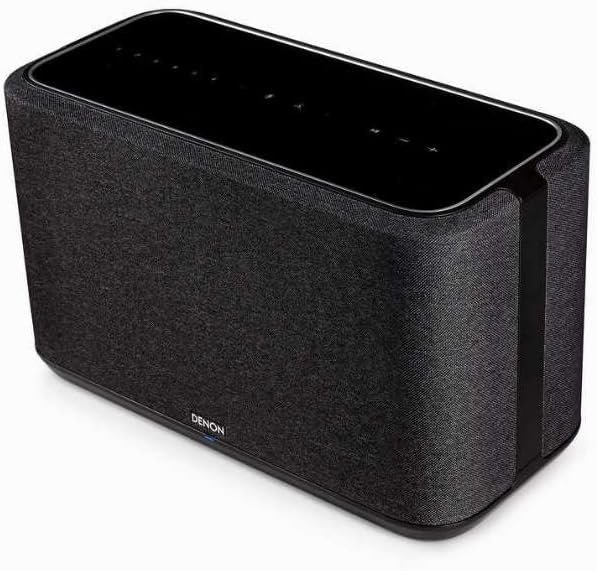
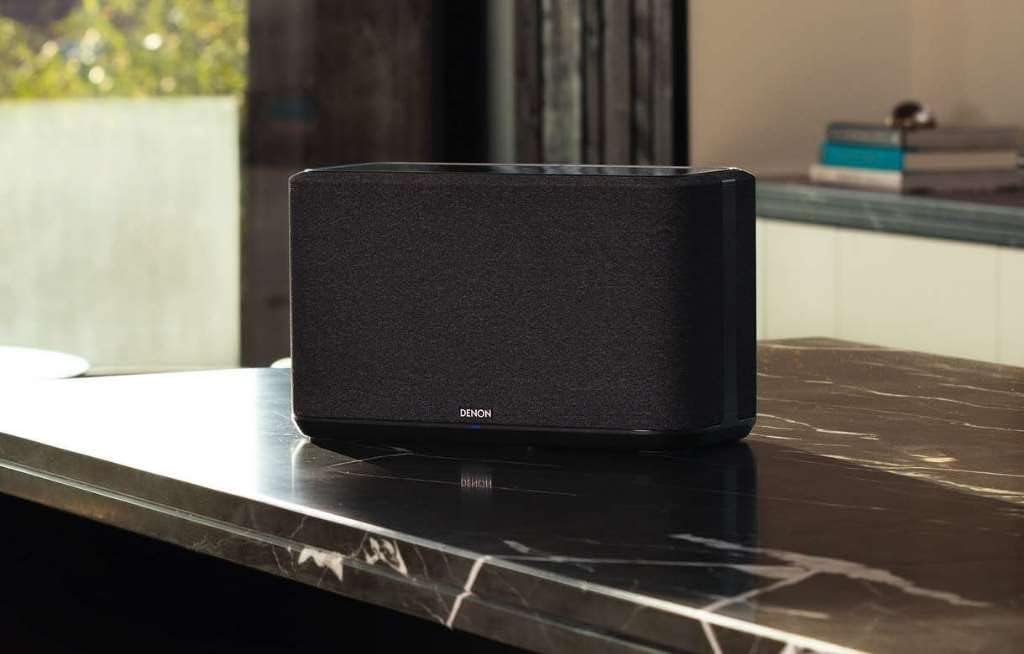
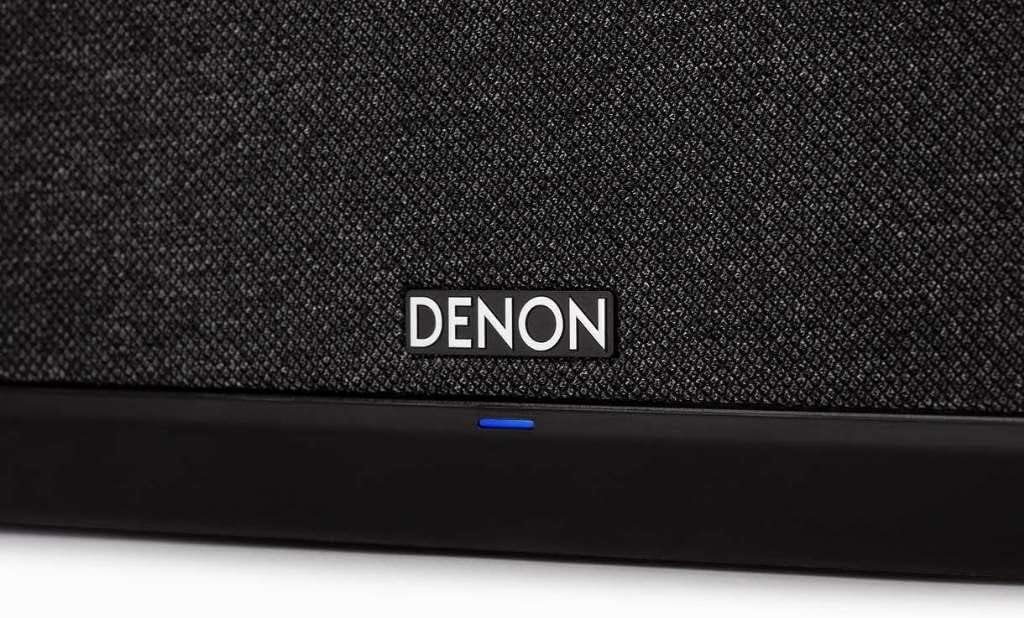
The Denon Home 350 in black has a clean, minimal look that blends into most interiors. It is wrapped in a fabric grille with a smooth top panel that lights up touch controls when we approach. This kind of design helps it look modern without shouting for attention.
We get the sense that Denon wants this to sit comfortably in a living room or office without clashing with our furniture. It has that “premium but not flashy” vibe that fits both casual and more sophisticated setups.
Build Quality and Materials
In the hand (or when we try to lift it), the Home 350 feels dense and substantial. That weight usually signals a robust enclosure and serious internal components. The cabinet feels solid, reducing unwanted resonance and helping the drivers perform at their best.
The fabric wrap, top panel, and touch controls all feel well finished. Nothing rattles or feels cheap. We feel confident placing it in a busy home environment, knowing it does not feel fragile or flimsy.
Size and Room Placement
Because this speaker is larger than many other “smart speakers,” it is worth thinking about where we plan to place it. Denon built the Home 350 to fill medium to large rooms, and its physical footprint reflects that.
Suitable Room Sizes
This is not a tiny desktop speaker. It is designed for spaces like living rooms, open kitchen-living areas, large bedrooms, or home offices. The power and driver configuration allow it to push sound across a wide area without sounding thin.
In smaller rooms, we may only need part of its volume capability, but the added headroom means cleaner, more effortless sound even at low to moderate listening levels. For large rooms, that extra muscle really starts to show.
Placement Tips
We get the best sound if we give the Home 350 some breathing room. Placing it near a wall can help reinforce bass, but shoving it into a tight corner might make the low end a bit boomy. A sturdy shelf, sideboard, or TV unit works nicely.
Keeping it at roughly ear height when seated is ideal, but because it is a single-box stereo speaker, we still get a wide image from a variety of positions. We just want to avoid blocking the front or covering the top panel where the controls and sensors are.

Core Audio Hardware
At the heart of the Denon Home 350 is its driver array and internal amplification. This is where we really start to understand why it sounds more like a component system than a basic wireless speaker.
Tweeters and Woofers
The Home 350 uses multiple drivers to cover the full frequency range. Denon specifically highlights two 0.75″ tweeters and two 6.5″ woofers as key parts of the system, backed by other full-range elements and internal amps.
The tweeters handle the high frequencies, giving clarity to vocals, cymbals, acoustic guitars, and fine details in recordings. The big 6.5″ woofers are responsible for the low end—kick drums, bass guitars, synth bass, and cinematic rumbles.
Multiple Amplifiers and Tuned DSP
Each driver is powered by its own efficient amplifiers, and everything is managed by Denon’s DSP (digital signal processing). That DSP helps balance the drivers, manage distortion, and keep the sound clean even when we push the volume.
We can feel that careful tuning when we listen at high levels. Instead of becoming harsh or muddy, the speaker maintains control. Denon has been in the audio game for decades, and this tuning experience shows up here.
Sound Quality Overview
What matters most is how this speaker actually sounds in real-world listening. With the Denon Home 350, the overall impression is big, confident, and notably refined for a wireless all-in-one unit.
Tonal Balance
The tonal balance leans toward a rich, full-bodied presentation with a strong, deep bass foundation. At the same time, the midrange remains articulate, and the highs are detailed without being painfully bright.
We get the feeling that Denon tuned it to please a wide audience: punchy enough for modern pop, hip-hop, and electronic, yet clean and balanced enough for jazz, classical, and acoustic music. It is not a bass-only box; it is a full-range system.
Volume and Headroom
The Home 350 can play loud enough to fill a large room and even spill into adjacent spaces. More importantly, it keeps its composure at those higher levels. Vocals do not disappear, and instruments do not blur together when we turn it up.
We can comfortably use it for parties, movie nights, or just high-energy listening without feeling like the speaker is straining. That lack of audible stress is one of the things that makes it feel genuinely “hi-fi” for a wireless unit.
Bass Performance
For many of us, bass performance is where a speaker either wins us over or disappoints. The Denon Home 350’s dual 6.5″ woofers give it a serious advantage in this regard.
Depth and Impact
We can expect deep, room-shaking bass from this speaker, especially in medium-sized spaces. Kick drums have punch, electronic bass lines are satisfying, and movie soundtracks carry weight. It reaches into those lower registers that smaller speakers simply cannot.
That said, the bass is not just about sheer quantity. There is a sense of control and definition, so bass notes are distinguishable rather than muddy. It supports the music instead of swallowing it.
Control at Different Volumes
At lower volumes, the speaker still maintains a pleasant bass presence, so our music does not sound thin when we are just relaxing or working. As we raise the volume, the internal DSP keeps the woofers from overextending, preserving clarity.
In more reflective rooms or tight corners, we may notice stronger bass. If we find it a little overwhelming, adjusting placement or any available tone controls in the app can help tailor the response to our space.
Midrange and Vocals
While bass and treble get a lot of attention, the midrange is where the soul of most music lives. Vocals, guitars, pianos, and many instruments sit in this area, and the Denon Home 350 does a solid job of presenting them clearly.
Clarity of Voices
Vocals come through present and intelligible, whether we are listening to podcasts, news, or our favorite singers. Dialog in movies and TV shows is clean enough that we do not feel like we must constantly adjust volume to catch what people are saying.
The midrange is not recessed behind the bass. Instead, it stands forward enough to make lyrics and speech easy to follow, giving a sense of intimacy even in a big-sounding speaker.
Instrument Presence and Detail
Acoustic instruments like guitar, piano, strings, and brass benefit from the controlled, even midrange. We can pick out separate parts in complex mixes more easily than with many basic wireless speakers.
For those of us who like to sit and really listen, we will appreciate that the Home 350 does not just blast sound; it reveals layers in the music, especially when we use high-quality streams or files.
High Frequencies and Detail
The higher frequencies add sparkle, air, and sense of space to music. The Home 350’s 0.75″ tweeters handle this range with a good balance of clarity and smoothness.
Treble Texture
The treble feels crisp but not overly sharp. Hi-hats, cymbals, and upper harmonics of instruments have a clean edge, but we do not get the piercing brightness that can cause fatigue over long listening sessions.
We can listen for hours without feeling like we need to turn down the speaker just to avoid harshness. That is important for background music as well as serious listening.
Micro-Details and Nuance
With good recordings and streaming quality, we will hear subtle details—fingers sliding on guitar strings, room ambience, and small production touches that can be lost on less capable speakers.
That level of detail helps us connect more deeply with the music, giving the impression that we are hearing more of what the artist and engineer intended.
Stereo Imaging and Soundstage
For a single-box speaker, stereo imaging is always a challenge. The Denon Home 350, however, does a commendable job of making sound feel wide and immersive.
Perception of Width
The built-in drivers and Denon’s processing create a sense of width that extends beyond the physical boundaries of the cabinet. We can often feel instruments and effects coming from a broader area than the actual box.
It is not going to equal a properly set-up pair of separate speakers, but among single-unit systems, it gives a convincing sense of separation between elements in the mix.
Depth and Placement of Sounds
The soundstage also has a bit of depth. Certain elements seem closer to us, while others sit further back, mimicking what a traditional hi-fi system would do.
If we decide later to add a second Denon Home 350 for true left-right stereo pairing, that imaging improves even more dramatically, turning two of these into a powerful stereo setup.
Connectivity and Streaming Options
One of the major strengths of the Denon Home 350 is how many ways we can feed it music. It is not limited to one ecosystem or one protocol; it is built to accept almost anything we want to throw at it.
Bluetooth and Wi‑Fi
We have the familiar Bluetooth option for quick pairing with phones, tablets, or laptops. This is great when guests want to play something or when we do not want to think about network setups.
However, for better sound quality and more stability, Wi‑Fi-based playback is available. The speaker can connect to our home network and stream directly from services via the HEOS platform or AirPlay 2, reducing compression and often improving audio performance.
AirPlay 2 Support
For those of us inside the Apple ecosystem, AirPlay 2 integration is a big plus. From iPhones, iPads, or Macs, we can send audio directly to the Denon Home 350 and even group it with other AirPlay 2-compatible speakers around the house.
AirPlay 2 is especially convenient for streaming from Apple Music, YouTube, or any app that does not have direct HEOS integration. We simply select the speaker from the AirPlay menu and start listening.
HEOS Built-in: Multi-Room and Control
Denon’s HEOS platform is at the center of this speaker’s “smart” capabilities. With HEOS built-in, our Home 350 becomes a part of a broader Denon ecosystem rather than a standalone gadget.
Multi-Room Streaming
With HEOS, we can link multiple Denon Home speakers, Denon soundbars, or even compatible Denon AV receivers into a whole-home audio system. We can play the same song in every room or different music in each space.
Imagine having the Home 350 in the living room, a smaller Denon Home speaker in the kitchen, and a Denon AVR in the home theater. All of them can be controlled from one app, giving us a unified audio experience across the house.
App Control and Convenience
The HEOS app lets us choose sources, adjust volume in each room, group or ungroup speakers, and manage our streaming services. It is designed to be our command center for all Denon Home products.
Once we set it up, daily use becomes simple. We can quickly queue up playlists, switch rooms, or switch services without having to jump between multiple apps and remotes.
Supported Streaming Services and Formats
The Denon Home 350 supports both online and offline music playback, giving us flexibility regardless of where our music collection lives.
Online Streaming Services
Through HEOS and other integrations, we can access popular streaming platforms such as:
- Spotify
- TIDAL
- Pandora
- And various other major services, depending on region and app support
We can browse and play these services directly in the app, so the speaker streams from the internet rather than relying on a phone connection.
File Formats and Local Playback
For those of us with digital libraries, the Home 350 can play music from:
- USB drives (via the built-in USB port)
- Network libraries (through HEOS, if set up)
- Bluetooth connections
- AirPlay 2 streaming
It supports common file formats like MP3, WAV, AAC, and WMA, among others. This flexibility makes it suitable for both streaming enthusiasts and collectors with older libraries.
USB and Offline Playback
Sometimes we want to listen without depending on cloud services or a constant network connection. The USB port on the Denon Home 350 helps us do that.
Using the USB Port
We can plug a USB thumb drive or compatible external storage into the speaker and access our stored music directly. This is ideal for curated collections, high-bitrate files, or mixes we keep offline.
The HEOS app can usually browse the USB content, letting us select albums, artists, or folders. It effectively turns the speaker into a simple music player for our portable library.
Benefits of Local Files
Local playback can deliver more consistent quality and reliability than some low-bandwidth streams. It is also handy if our internet goes down but we still want music.
For users who have spent years building a digital collection, the Home 350 respects that effort by giving an easy way to actually hear those files on a high-quality system.
Smart Speaker Features and Integration
While this product focuses strongly on sound quality, it also has a smart side that helps it fit into modern connected homes.
Quick-Access Controls
On the top panel, we have touch-sensitive controls for volume, play/pause, and other functions. Some models in the Denon Home series also offer quick-select presets we can assign to favorite stations or playlists.
We do not always need our phone; we can simply tap the top of the speaker to control it. The backlighting that awakens as we approach adds a nice modern touch and makes nighttime use easier.
Voice and Ecosystem Compatibility
Depending on our broader system, we may integrate the Home 350 through HEOS and AirPlay 2 with platforms like Alexa or other ecosystem controllers, using them as hubs rather than the speaker itself.
The emphasis here is less on being a talkative, assistant-driven device and more on being a high-quality, controllable audio endpoint that plays nicely with our broader smart home.
Simple Setup Experience
A powerful speaker that is painful to set up is not much fun. Denon clearly tried to keep the first-time experience straightforward so we spend more time listening and less time troubleshooting.
Getting Started
We generally begin by plugging in the speaker, downloading the HEOS app, and following on-screen instructions. The app walks us through connecting the Home 350 to our Wi‑Fi network and associating it with streaming accounts.
Bluetooth pairing is even simpler: we just set the speaker to pairing mode and connect from our phone’s Bluetooth menu. For many users, that will be enough for quick music playback on day one.
Naming and Room Assignment
Within the HEOS app, we can give the speaker a room name like “Living Room” or “Office.” This makes managing multiple Denon devices more intuitive later on.
The setup also lets us join the speaker to existing HEOS groups, making it part of an established multi-room system if we already own Denon gear.
Multi-Room and Home Theater Expansion
One of the most appealing aspects of the Home 350 is that it does not have to remain a solo act. It can serve as a building block for a more complex system.
Pairing Two Home 350s
If we add a second Denon Home 350, we can pair the two as a left-right stereo system. This setup can rival many traditional hi-fi systems in terms of impact and imaging, especially in larger rooms.
Stereo pairing spreads the sound across the room more evenly, improves localization of instruments, and can make movies and music feel far more immersive.
Adding a Soundbar and Subwoofer
For full cinematic immersion, we can link the Home 350 speakers with the Denon Home Soundbar 550 and a Denon Home subwoofer to form a 5.1-like setup. In that case, the 350s can serve as rear surround speakers.
This turns what started as a single wireless speaker into the foundation of a home theater. We get surround effects behind us, clear fronts, and powerful bass for movies and games.
Everyday Usability
Beyond specs and features, how we live with the Denon Home 350 every day is what really matters. It is designed to be the speaker we actually want to use, not just one we admire on paper.
Switching Between Sources
We can jump between Bluetooth, Wi‑Fi streaming, USB, and multi-room sources fairly smoothly through the HEOS app or our devices. If we get a call on our phone, we can pause the music with a tap on the top panel.
Because it works with AirPlay 2 and HEOS, it is easy to hand off audio from our phone, let someone else control the playlist, or move the music from one room to another.
For Background and Critical Listening
The speaker is flexible enough to play quietly in the background while we work, cook, or relax, and then step up when we want to sit down and listen more attentively.
We do not have to choose between a “party speaker” and a “serious speaker.” The Home 350 does both roles well, adjusting comfortably to whatever listening mode we are in.
Key Specifications at a Glance
Sometimes it helps to see the main features laid out in one place. Here is a quick reference table summarizing what we get with the Denon Home 350:
| Feature | Details |
|---|---|
| Product Type | Wireless Home Stereo Speaker |
| Color | Black |
| Tweeters | Two 0.75″ tweeters |
| Woofers | Two 6.5″ woofers |
| Amplification | Multiple efficient amplifiers with tuned DSP |
| Wireless Connectivity | Wi‑Fi, Bluetooth, AirPlay 2, HEOS Built-in |
| Multi-Room Support | Yes, via HEOS (works with other Denon Home speakers, soundbars, and AVRs) |
| Supported Streaming Services | Spotify, TIDAL, Pandora, and more via HEOS (varies by region) |
| Local Playback | USB port, Bluetooth, AirPlay 2, network libraries |
| Supported File Formats | MP3, WAV, AAC, WMA, and more |
| Use in Home Theater | Can pair as stereo, and integrate with Denon Home Soundbar 550 and sub as rear surrounds |
| Setup | App-guided via HEOS; simple Bluetooth pairing |
| Ideal Room Size | Medium to large rooms; living rooms, open spaces, large bedrooms |
| Design Style | Modern, fabric-wrapped cabinet with touch-sensitive top controls |
This table does not capture the sound itself, but it does show how many functions are packed into this one unit.
Who Is the Denon Home 350 Best For?
Matching the product to our needs is crucial. The Denon Home 350 is not for every scenario, but when it fits, it fits extremely well.
Ideal Users and Use Cases
We will appreciate the Home 350 most if we:
- Want a powerful yet refined single-box speaker for a main living area
- Care about sound quality but prefer the simplicity of a wireless solution
- Plan to use streaming services heavily but still value local files
- May want to expand into a multi-room or home theater setup later
It is particularly suitable as a central music hub in a living room, or as part of a whole-home Denon/HEOS system.
When It Might Be Overkill
If we only need quiet background music in a very small room, or we rarely listen at higher volumes, the Home 350 might be more power than we truly need. A smaller Denon Home model could be more appropriate in that situation.
Also, if we already own a full separates-based hi-fi system and just want a tiny portable speaker for occasional outdoor use, this larger, more stationary design might not match that specific use case.
Pros and Cons
Every product has strengths and trade-offs. Summarizing them can help us decide whether this speaker aligns with our priorities.
Strengths
- Powerful, room-filling sound with deep, controlled bass and good clarity
- High build quality and a premium, understated design that fits most spaces
- Versatile connectivity, including Bluetooth, Wi‑Fi, AirPlay 2, and USB
- HEOS multi-room integration for a scalable whole-home audio solution
- Expandable into stereo pairs and full surround systems with other Denon Home products
- Support for major streaming services and common file formats
Possible Limitations
- Physical size may be larger than we expect if we are used to compact smart speakers
- Overkill for very small rooms or purely casual listening scenarios
- Full capability relies on using the HEOS app and network connectivity, which adds a layer of complexity compared to a simple, solely Bluetooth box
These points are not deal-breakers for most people, but they are worth considering so we choose the right speaker for our particular environment and habits.
Our Overall Impression
When we step back and look at the Denon Home 350 as a complete package, it feels like Denon set out to create a genuine hi-fi-grade wireless speaker for people who want both ease of use and serious audio performance.
We get a large, confident sound, deep bass, and nuanced detail in a single, cleanly designed unit. On top of that, we get HEOS multi-room support, AirPlay 2, USB playback, and straightforward setup. For many households, this can easily be the main sound system, not just a secondary speaker.
If we are looking for a powerful home stereo wireless speaker that can handle everything from casual background listening to energetic parties, and that can grow into a larger Denon ecosystem over time, the Denon Home 350 Home Stereo Wireless Speaker (Black) stands out as a compelling and capable choice.
Disclosure: As an Amazon Associate, I earn from qualifying purchases.